Sustainable finance
Luxembourg trades on its green-finance record as climate-money summit opens
The Grand Duchy's first International Climate Finance Days gather ministers, the EIB and the Green Climate Fund to turn climate pledges into investible deals.
By Jonas Thill · · · 5 min read
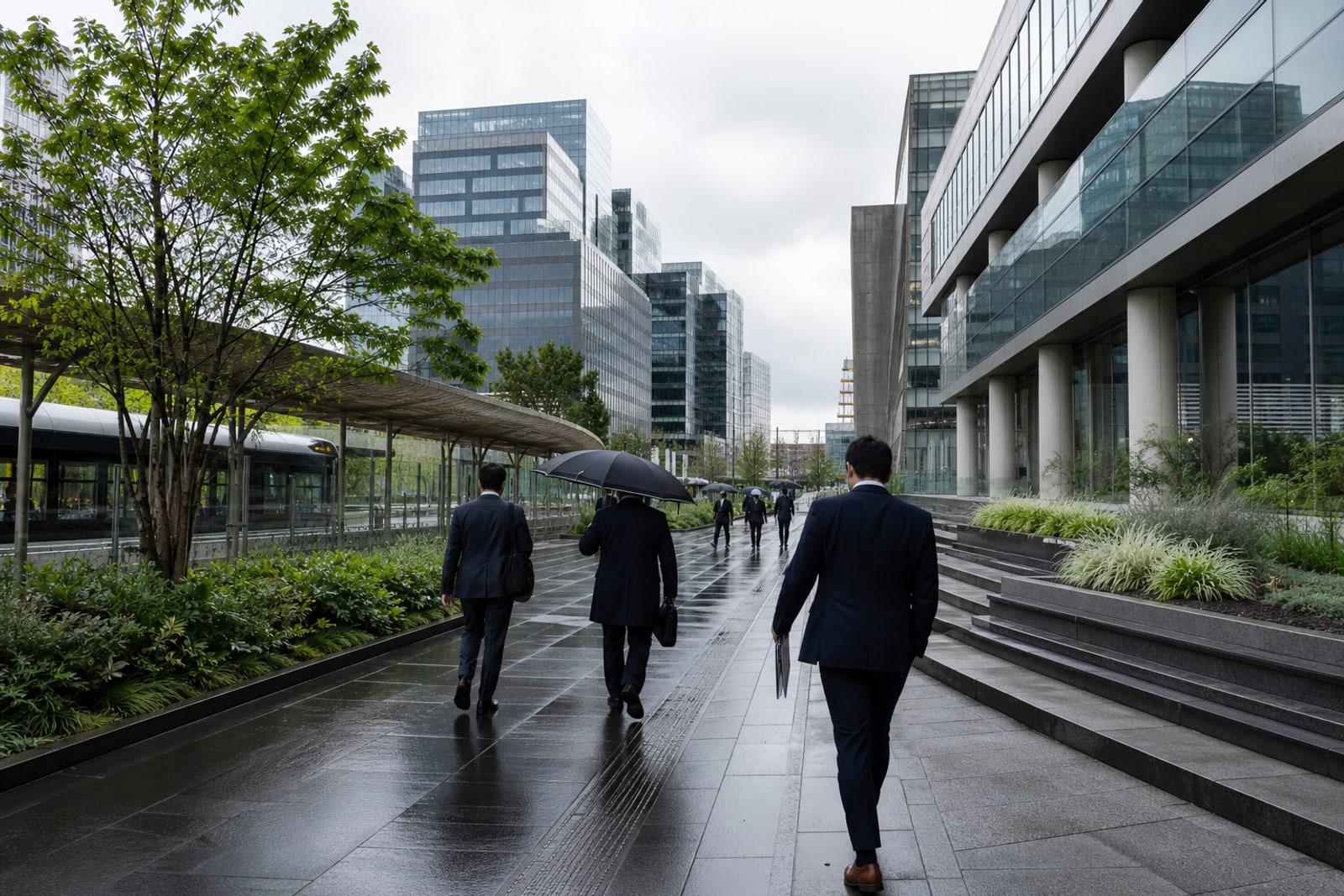
For three days in early June, Luxembourg City set out to do something the global climate negotiations have struggled with for a decade: move from headline pledges to deals that actually close. The Grand Duchy's first International Climate Finance Days, held from 3 to 5 June at the Cercle Cité, gathered ministers, multilateral lenders and private fund managers around a single, unglamorous question of how public and private money can be combined to finance the low-carbon transition at the scale science demands.
The event opened against a deliberately chosen backdrop. According to the Luxembourg government, the gathering was convened by the Ministry for the Environment, Climate and Biodiversity and brought together Environment Minister Serge Wilmes, Finance Minister Gilles Roth and the European Commissioner for Climate, Net Zero and Clean Growth, Wopke Hoekstra. Timed to fall between last year's COP in Belém and the United Nations climate talks in Bonn, it was billed as a bridge moment, intended to align decision-makers on what the organisers called "high-impact action and investible opportunities."
A summit built on a niche the country already owns
Luxembourg's pitch rests on a financial-centre specialisation it has cultivated since the mid-2010s. The headline institutions of the climate-finance world were in the room. The European Investment Bank, the Green Climate Fund, the World Federation of Exchanges, the Global Green Growth Institute and Brazil's nascent Tropical Forest Forever Facility all took part, alongside the Luxembourg Stock Exchange and its sustainable-securities platform.
That platform is the centrepiece of the country's claim. The Luxembourg Green Exchange (LGX), launched by the Luxembourg Stock Exchange in 2016, was the world's first trading venue dedicated exclusively to sustainable securities. It has since become a reference point for the asset class: the exchange reports that the platform now displays more than 2,100 sustainable bonds and, as of early 2024, had surpassed one trillion euros in green, social, sustainability and sustainability-linked debt, according to figures cited by the UN Sustainable Stock Exchanges initiative. By the exchange's own count, roughly half of the world's listed green bonds are quoted in Luxembourg.
The EIB anchor
No institution has tied its sustainable-debt story to Luxembourg more closely than the European Investment Bank, which is headquartered in the city. The EIB issued what it describes as the world's first green bond in 2007, listing it on the Luxembourg Stock Exchange, and in August 2024 it passed 100 billion euros in cumulative Climate Awareness Bond and Sustainability Awareness Bond issuance, making it the largest such issuer with dedicated use of proceeds among the multilateral development banks.
Addressing the summit, EIB President Nadia Calviño framed climate investment in hard economic terms. The bank, she said in remarks published by the EIB, mobilised more than 100 billion euros in clean-energy investment in the European Union last year, finances roughly half of the bloc's grid and interconnector projects, and has issued some 145 billion euros in green and sustainability bonds. She pointed to a recent five-billion-euro green bond, priced on the Luxembourg exchange, that drew bids seven times the amount on offer, and praised the venue as "the world's first platform which is fully dedicated to trading green securities." Climate investment, she argued, is "not only the right thing to do for the planet, but also the smart thing to do for our economies," linking the energy transition to European strategic autonomy.
Labels, accelerators and the plumbing of blended finance
Beyond the listing venue, Luxembourg has assembled a supporting cast of institutions designed to give sustainable products credibility and to seed new ones. The Luxembourg Finance Labelling Agency (LuxFLAG), a non-profit founded in 2006, certifies funds against environmental and social criteria; its Climate Finance Label, introduced in 2016, requires that at least three-quarters of a product's assets be linked to climate-change mitigation or adaptation.
The country has also tried to fund the managers themselves. The International Climate Finance Accelerator (ICFA), a public-private partnership established in 2018 under Luxembourg's Climate Finance Strategy, offers working capital, training and coaching to first- and second-time fund managers building climate-focused vehicles. Luxembourg for Finance reports that managers supported by the programme have collectively raised some 937 million dollars, and the initiative has since been broadened with a sister International Social Finance Accelerator.
These tools point to the harder problem the summit was meant to address: how to channel scarce public and philanthropic money in a way that draws in far larger volumes of private capital, the practice known as blended finance. It is a niche Luxembourg has cultivated, including by hosting the world's largest green-bond fund for emerging markets, structured with the International Finance Corporation.
A small centre with outsized fund weight
The strategy is plausible only because of the sheer size of Luxembourg's underlying fund industry, the second-largest in the world after the United States. The Grand Duchy's edge in sustainable assets specifically is pronounced. Luxembourg for Finance, the public-private promotional agency, says the country accounts for 31 percent of the funds and 39 percent of the assets in Europe's responsible-investment fund sector, that two of every three European impact-investment funds are domiciled there, and that it holds 61 percent of global microfinance fund assets.
None of that resolves the central tension that hung over the three days. The capital gap remains vast, and routing money through a Western European listing venue does little on its own to lower the cost of capital for projects in the developing economies that need finance most. By staging the event and putting its institutional machinery on display, Luxembourg was making a narrower argument: that the infrastructure to scale climate finance already exists, and that the constraint is less a shortage of plumbing than of bankable projects and the political will to fund them. Whether the deals follow the declarations is the test the next edition will be judged against.
Frequently asked
- What are the Luxembourg International Climate Finance Days?
- A high-level event held for the first time from 3 to 5 June 2026 in Luxembourg City, convened by the Ministry for the Environment, Climate and Biodiversity to gather governments, multilateral institutions and private investors around scaling up climate finance and combining public and private capital.
- Why is Luxembourg considered a green-finance hub?
- It hosts the Luxembourg Green Exchange, the world's first platform dedicated to sustainable securities, which quotes about half of the world's listed green bonds; it is Europe's largest sustainable-fund domicile; and it is home to the EIB, the LuxFLAG labelling agency and the International Climate Finance Accelerator.
- What is the Luxembourg Green Exchange?
- Launched by the Luxembourg Stock Exchange in 2016, the LGX was the first trading venue exclusively for green, social and sustainability bonds and funds. It now displays more than 2,100 sustainable bonds and has surpassed EUR 1 trillion in such debt.
- What role does the EIB play?
- The European Investment Bank, headquartered in Luxembourg, issued the world's first green bond in 2007 on the Luxembourg Stock Exchange and passed EUR 100 billion in cumulative climate and sustainability bond issuance in 2024, the largest such programme among multilateral development banks.
Sources(6)
- 1Mobilising Capital for Climate Impact: Luxembourg Launches International Climate Finance DaysThe Luxembourg Government · gouvernement.lu
- 2President Calviño at Luxembourg ICF Days 2026European Investment Bank · eib.org
- 3EIB and Luxembourg Stock Exchange mark €100 billion milestone in sustainability fundingEuropean Investment Bank · eib.org
- 4The Luxembourg Green Exchange (LGX) now counts EUR 1 trillion worth of GSSS bondsUN Sustainable Stock Exchanges Initiative · sseinitiative.org
- 5Luxembourg: breaking new ground in sustainable financeLuxembourg for Finance · luxembourgforfinance.com
- 6Home | ICFA - International Climate Finance AcceleratorInternational Climate Finance Accelerator · icfa.lu
Related by topic