EU support for Ukraine
EU Sends Ukraine First €3.2 Billion Tranche of €90 Billion Loan
Brussels released the opening payment of its 2026-2027 support loan as Ukraine's recovery conference opened in Gdansk, with billions more — and a frozen-asset backstop — to follow.
By Camille Reuter · · 4 min read
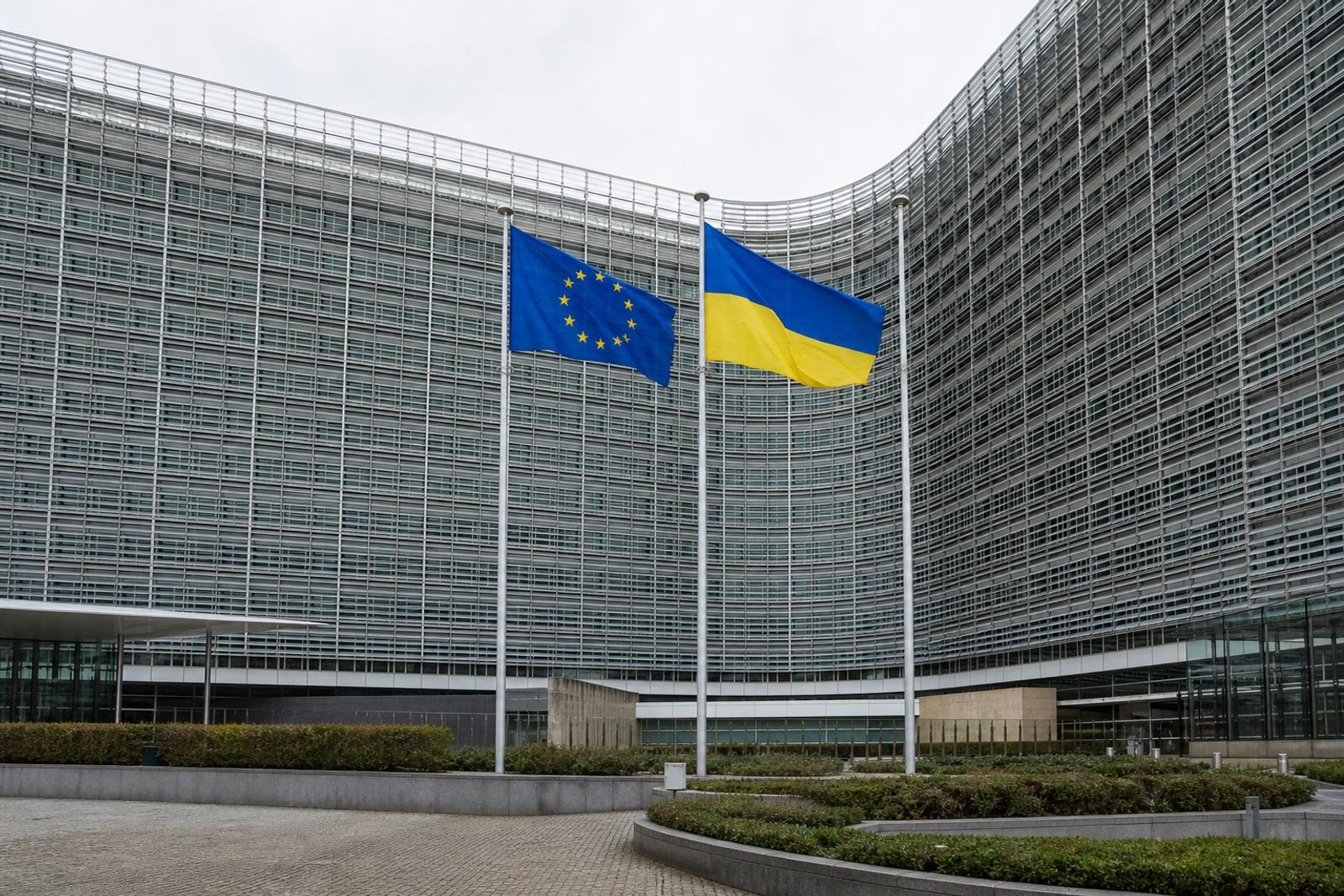
The European Union began paying out the largest financing package it has yet assembled for Ukraine on Thursday, transferring a first tranche of €3.2 billion to Kyiv as the opening day of the Ukraine Recovery Conference got under way in Gdansk, Poland. The payment is the down payment on a €90 billion loan designed to keep Ukraine's state running and its army supplied through 2026 and 2027.
The money was disbursed as macro-financial assistance — budgetary support that flows into Ukraine's treasury rather than to any single project. European Commission President Ursula von der Leyen, announcing the transfer, said it was the start of a steady flow rather than a one-off gesture.
Today, we are transferring the first tranche of this loan — €3.2 billion in macro-financial assistance. In the coming days, we will also begin disbursing the first €6 billion for drone production.
The €3.2 billion is the first of three macro-financial payments planned for this year, a channel worth €8.35 billion in 2026. A further tranche of roughly €6 billion, earmarked for drone manufacturing and the military, is expected to follow within days, according to von der Leyen and Ukrainian officials. The timing was set deliberately: an EU official quoted by Ukrainian media said the first payment was scheduled to coincide with the Gdansk conference, where governments and investors gather to organise Ukraine's reconstruction.
What the €90 billion is for
The loan, covering 2026 and 2027, breaks down into about €60 billion in military aid and €30 billion in budgetary support. Brussels has said roughly €45 billion of it should be made accessible during 2026 alone, drawn from several channels including macro-financial assistance and the separate Ukraine Facility.
It is a distinct instrument from the earlier G7-coordinated loan repaid out of windfall profits on immobilised Russian assets. This package is raised directly by the Commission on capital markets, on terms more favourable than Ukraine could obtain alone, and is backed by guarantees from EU member states and the bloc's budget. Euronews reported that participating governments collectively shoulder around €3 billion a year in interest costs.
Repayment hinges on Russian reparations
The defining feature of the loan is how — and whether — it is ever repaid. Under the deal struck by EU leaders, Ukraine is obliged to pay the money back only if Russia compensates it for war damage once the fighting ends. Moscow has rejected any notion of reparations.
Should no compensation materialise, the EU has reserved the option of drawing on immobilised Russian central-bank assets — estimated at around €210 billion, the bulk of them held at the Euroclear depository in Belgium — to cover repayment. That structure lets Brussels channel cash to Kyiv now while leaving the ultimate bill, in principle, with the aggressor.
Getting to this point was politically fraught. The European Council agreed the package in December 2025 and the European Parliament approved it in February 2026, but Hungary, then led by Prime Minister Viktor Orban, blocked the final legislation for months. The Council adopted it on 23 April 2026 once the veto was lifted. Euronews reported that Hungary, Slovakia and the Czech Republic stayed out of the joint borrowing.
Conditions and the Ukraine Facility
The macro-financial payments are not unconditional. Disbursement requires a signed memorandum of understanding, an updated Ukraine Plan and progress on reforms, with the funds intended to help Kyiv raise more of its own revenue, improve the quality of public spending and strengthen financial management.
Thursday's payment sits alongside the EU's other main instrument, the Ukraine Facility, which can provide up to €50 billion between 2024 and 2027. In late May the Council approved that programme's seventh payment of nearly €2.8 billion, released in early June, lifting total Facility disbursements above €29.5 billion. Taken together, the two streams underline a shift from pledges to predictable, sustained budget support.
Luxembourg's stake
For a small member state, Luxembourg's exposure to the loan is real if indirect: as a net contributor to the EU budget, it is among the countries whose guarantees stand behind the common borrowing now reaching Kyiv. The Grand Duchy has also matched the collective effort with its own.
Prime Minister Luc Frieden and President Volodymyr Zelenskyy signed a bilateral security cooperation and long-term support agreement in Washington on 10 July 2024, on the margins of the NATO summit. The ten-year accord foresees around €80 million a year in defence aid. According to Chronicle.lu, Luxembourg's total contribution to Ukraine now exceeds €550 million, including €259 million in military aid since 2022, €196 million for displaced persons and €96.2 million in humanitarian and food assistance. Luxembourg co-leads the alliance's IT Capability Coalition alongside Estonia.
At the signing two years ago, Zelenskyy framed the partnership in plain terms: "I thank Luxembourg for choosing justice and peace."
The €3.2 billion landing in Kyiv this week is, for now, the clearest evidence that the EU's promises have become payments — money that helps cover salaries, pensions and the machinery of a state at war, with more, the Commission says, on the way.
Frequently asked
- How much did the EU send Ukraine and when?
- On 25 June 2026 the European Commission disbursed €3.2 billion (about $3.6 billion) in macro-financial assistance, the first tranche of a €90 billion support loan, timed to coincide with the Ukraine Recovery Conference in Gdansk.
- Does Ukraine have to repay the loan?
- Only if Russia pays war-damage reparations after the conflict, which Moscow has rejected. If no compensation comes, the EU may use immobilised Russian central-bank assets — about €210 billion, mostly held at Euroclear in Belgium — to cover repayment.
- How big is the overall package and what is it for?
- The €90 billion loan runs over 2026-2027, with roughly €60 billion for military aid and €30 billion in budgetary support. Around €45 billion is to be made accessible in 2026 through several channels, including the Ukraine Facility.
- How is Luxembourg involved?
- As an EU member and net budget contributor, Luxembourg helps underwrite the common borrowing behind the loan. It also backs Kyiv bilaterally, with more than €550 million in total aid and a ten-year security agreement worth about €80 million a year, signed in July 2024.
Sources(14)
- 1Ukraine receives first tranche from €90 billion EU support loandpa via Yahoo Finance · finance.yahoo.com
- 2EU Announces First Tranche of New €3.2 Billion Loan for UkraineLIGA.net · finance.liga.net
- 3Ukraine to receive first €3.2bn tranche of EU loan at conference in PolandUkrainska Pravda · pravda.com.ua
- 4Ukraine to receive first EU loan tranche on June 25-26The New Voice of Ukraine · english.nv.ua
- 5EU approves €90 billion loan for Ukraine after Hungary lifts controversial vetoEuronews · euronews.com
- 6Council finalises €90 billion support loan to UkraineCouncil of the EU (Consilium) · consilium.europa.eu
- 7EU formally approves 90bn euro Ukraine loan and new sanctions on RussiaAl Jazeera · aljazeera.com
- 8Parliament approves €90 billion Ukraine support loan packageEuropean Parliament · europarl.europa.eu
- 9Ukraine Facility: Council approves seventh payment of nearly €2.8 billion to KyivCouncil of the EU (Consilium) · consilium.europa.eu
- 10EU disburses nearly €2.8 billion to support Ukraine's financial stability and reform effortsEuropean Commission - Enlargement · enlargement.ec.europa.eu
- 11The Ukraine FacilityEuropean Commission · commission.europa.eu
- 12Ukraine and Luxembourg sign security agreementThe Kyiv Independent · kyivindependent.com
- 13Agreement on security cooperation and long-term support between Ukraine and the Grand-Duchy of LuxembourgOffice of the President of Ukraine · president.gov.ua
- 14Luxembourg's Aid to Ukraine ExplainedChronicle.lu · chronicle.lu
Related by topic