Tripartite
Luxembourg's €450m crisis pact buys price relief — and a climate quarrel
The Resilienzpak shields households from a fresh energy shock, but environmentalists say its fuel and heating subsidies steer the country away from its 2030 targets.
By Camille Reuter · · · 5 min read
When Luxembourg's government and social partners emerged from Senningen Castle on 8 June after three days of talks, they had a deal worth roughly €450 million and a name to match the moment: the Resilienzpak 2026. The package is meant to absorb a fresh energy shock — set off, the government says, by disruption to maritime traffic through the Strait of Hormuz since February — and to keep inflation, jobs and purchasing power from buckling. Yet within a day the country's largest environmental organisation had reframed the achievement as a warning: that buying cheaper fuel today risks paying for it in missed climate targets tomorrow.
What the Resilienzpak contains
The agreement is built on three pillars: shoring up purchasing power, protecting employment and the economy, and advancing the energy transition. Finance Minister Gilles Roth put the total cost at €432.5 million over two years — about €180 million in 2026 and €252.5 million in 2027 — describing the bill as "raisonnable" and arguing that "this impact must be accepted in the interest of cohesion."
At the heart of the package, presented by Economy and Energy Minister Lex Delles, sit four temporary, broadly available price cuts for the rest of 2026:
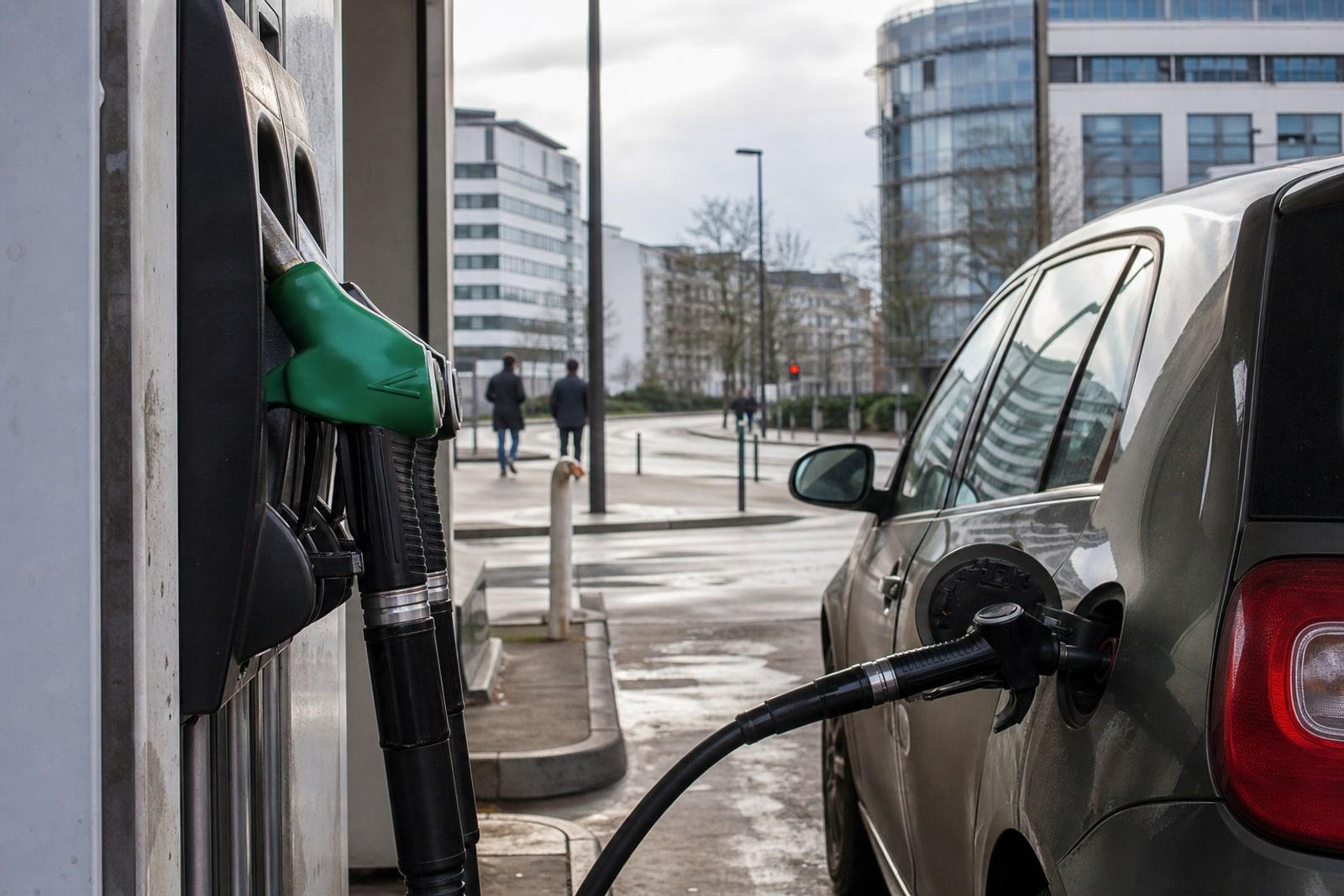
- Petrol and diesel: 5 cents per litre, from 1 July to 31 December;
- Electricity: 4 cents per kWh for households consuming under 25,000 kWh a year, from 1 August to 31 December;
- Heating oil: 15 cents per litre over the same August-to-December window;
- Natural gas: 15 cents per cubic metre for smaller meters, also to year-end.
According to figures relayed by the finance ministry, the energy price support accounts for roughly €60 million and is confined to 2026. The bulk of the money goes elsewhere: about €190 million to tax adjustments tied to wage indexation, a structural 3.8% rise in the minimum wage from January 2027, and a sharp increase in the social minimum-wage tax credit, which the parties said would add some €200 net per month for the lowest earners in two steps. A separate transition pillar — worth about €7.5 million — raises heat-pump grants by around €2,000, lifts renovation support from 15% to 20% and launches social leasing for electric vehicles in 2027.
Why Mouvement Écologique sees a missed chance
The Mouvement Écologique, the environmental NGO long led by Blanche Weber, published a statement urging that the decisions "be critically examined from the perspective of climate protection and the energy transition." Its central objection is one of priorities: mobilising substantial public money to hold prices down in the short term, it argues, must not come at the expense of the structural reforms that would make the country genuinely resilient to the next crisis.
The group's specific complaints target the breadth and signal of the subsidies rather than the principle of help itself:
- The fuel rebate, it says, contradicts e-mobility goals and risks reviving cross-border "fuel tourism" by keeping Luxembourg's pumps cheaper than its neighbours';
- An electricity cut extended to almost every household offers no real incentive to save energy, and over barely four months is too brief to change behaviour;
- Subsidising gas and heating oil regardless of income amounts, in the NGO's words, to a "climate policy error" — support, it contends, should be aimed at financially vulnerable households, not spread to wealthier ones.
Instead, the organisation wants money channelled into the slow work of decarbonisation: reformed building rules to unlock retrofits in rental and multi-family housing, pre-financed heat-pump leasing, unified installation standards, clearer district-heating frameworks, fewer administrative barriers to renovation aid, and direct state investment in the grid rather than subsidies for network charges.
The collision with the 2030 targets
The friction is sharpest against Luxembourg's own commitments. The 2020 Climate Law binds the country to cut greenhouse-gas emissions by 55% by 2030 and to reach climate neutrality by 2050, with the national energy and climate plan targeting a 25% renewables share and a fleet that is 49% electric or plug-in hybrid by the end of the decade. With electric and plug-in vehicles still a minority of registrations, the Mouvement Écologique argues that cheaper petrol pulls in precisely the wrong direction. It also notes that since Russia's full-scale invasion of Ukraine in 2022, the state has repeatedly spent heavily to stabilise energy prices while transition milestones slipped — a pattern it fears is now being repeated.
The government's defence
Prime Minister Luc Frieden said he was "extremely satisfied to have been able to find an agreement after intense discussions," framing the deal around three goals: slowing inflation and lifting purchasing power, protecting companies and jobs, and accelerating the shift to renewables to cut fossil-fuel dependence. The government's case is that the price cuts are explicitly temporary — a bridge over a geopolitical spike — while the renovation grants, heat-pump aid and EV leasing represent the lasting investment. Delles argued the measures "strengthen the purchasing power of citizens" while preserving climate objectives and energy security, and the package was presented to the Chamber of Deputies the following day.
Unions and employers
The social partners largely closed ranks. The public-sector confederation CGFP formally approved the accord, stressing that it preserves the automatic wage-indexation system and insisting on a revision clause, with a follow-up committee to reassess the measures by October. OGBL president Nora Back welcomed an improved social dialogue while noting the text still needed validation by her union's bodies, and LCGB president Patrick Dury said the parties had "found solutions together," singling out the defence of purchasing power and of indexation. The employers' federation UEL, for its part, welcomed the stability offered to businesses and the absence of any minimum-wage increase beyond the agreed 3.8%. What unites the table, in other words, is cost-of-living politics — the very ground on which the climate critique now lands.
Frequently asked
- How much does the 2026 tripartite agreement cost?
- Finance Minister Gilles Roth put the total at about €432.5 million over two years — roughly €180 million in 2026 and €252.5 million in 2027 — within the package commonly described as worth around €450 million.
- What energy price measures does the Resilienzpak contain?
- Until end-2026 it cuts petrol and diesel by 5 cents per litre (from July), electricity by 4 cents per kWh for households under 25,000 kWh a year, and heating oil and natural gas by 15 cents each (from August).
- Why does Mouvement Écologique oppose the energy measures?
- It argues the broad fuel and heating subsidies send counterproductive signals, encourage fuel tourism and offer no incentive to save energy, diverting money from the structural reforms needed to meet Luxembourg's 2030 climate targets.
Sources(6)
- 1Resilienzpak 2026 — signature of the tripartite agreementThe Luxembourg Government · gouvernement.lu
- 2Tripartite Agreement Sees Increase to Minimum Wage, Energy Subsidies, Business SupportChronicle.lu · chronicle.lu
- 3PM Frieden 'Extremely Satisfied' to Reach Tripartite AgreementChronicle.lu · chronicle.lu
- 4Tripartite: les mesures coûteront 432,5 millions d'euros au LuxembourgL'essentiel · lessentiel.lu
- 5Tripartite decisions: to be critically examined from the perspective of climate protection and the energy transitionMouvement Écologique · meco.lu
- 6La CGFP soutient l'accord tripartitePaperjam · paperjam.lu
Related by topic