Financial centre
ECB fines BIL €3.26 million for overstating its capital strength over three quarters
The ECB says Luxembourg's oldest private bank failed to apply its approved risk models, inflating reported capital ratios from late 2023 to mid-2024 — a breach it classes as 'severe'.
By Jonas Thill · · 4 min read
The European Central Bank has fined Banque Internationale à Luxembourg (BIL) €3.255 million for failing to apply its approved internal models when calculating expected credit losses — a lapse that led one of the country's oldest and largest banks to report a stronger capital position than it actually had for three consecutive quarters.
Announcing the penalty on Monday, the ECB's banking supervision arm said BIL had been sanctioned for "intentionally failing to apply its approved internal models for the calculation of the expected loss for retail and corporate exposures in default". It classified the breach as "severe" — the third step on its five-point scale running from "minor" to "extremely severe" — and set the fine using its published methodology for administrative penalties.
The mechanics matter. Under the internal-ratings-based approach, a bank must compare the expected losses generated by its supervisor-approved models with the provisions it has actually booked. If expected losses are higher, the difference — the so-called IRB shortfall — must be deducted from the bank's capital, so that its reported strength genuinely reflects the risk on its books. Because BIL did not run the calculation as approved, the ECB said, it could not accurately determine that shortfall.
"The bank therefore reported higher capital than it should have for three consecutive quarters, from the fourth quarter of 2023 to the second quarter of 2024," the ECB said in its statement, adding that BIL consequently reported higher capital ratios — "key indicators of a bank's capital strength and ability to absorb losses" — than warranted.
A 'severe' breach — and a dispute over intent
BIL, which has the right to challenge the decision before the Court of Justice of the European Union, responded a day later with a statement framing the episode rather differently: as "a reporting error affecting a limited number of regulatory filings" between December 2023 and June 2024 — language notably softer than the ECB's finding of an intentional failure.
The bank said it had itself uncovered the problem, corrected the data, republished the affected quarterly reports and informed supervisors and rating agencies, and that it has since reinforced its internal control platform and processes. Throughout the period, it said, it remained prudently managed and in compliance with its minimum capital requirements.
"The ECB's decision does not indicate any weakness in BIL's overall risk profile and financial strength," the bank said, adding that "the issue was identified through BIL's internal control framework, demonstrating the effectiveness of the Bank's monitoring mechanisms."
The bank gave no indication that it intends to appeal.
A pillar of the financial centre
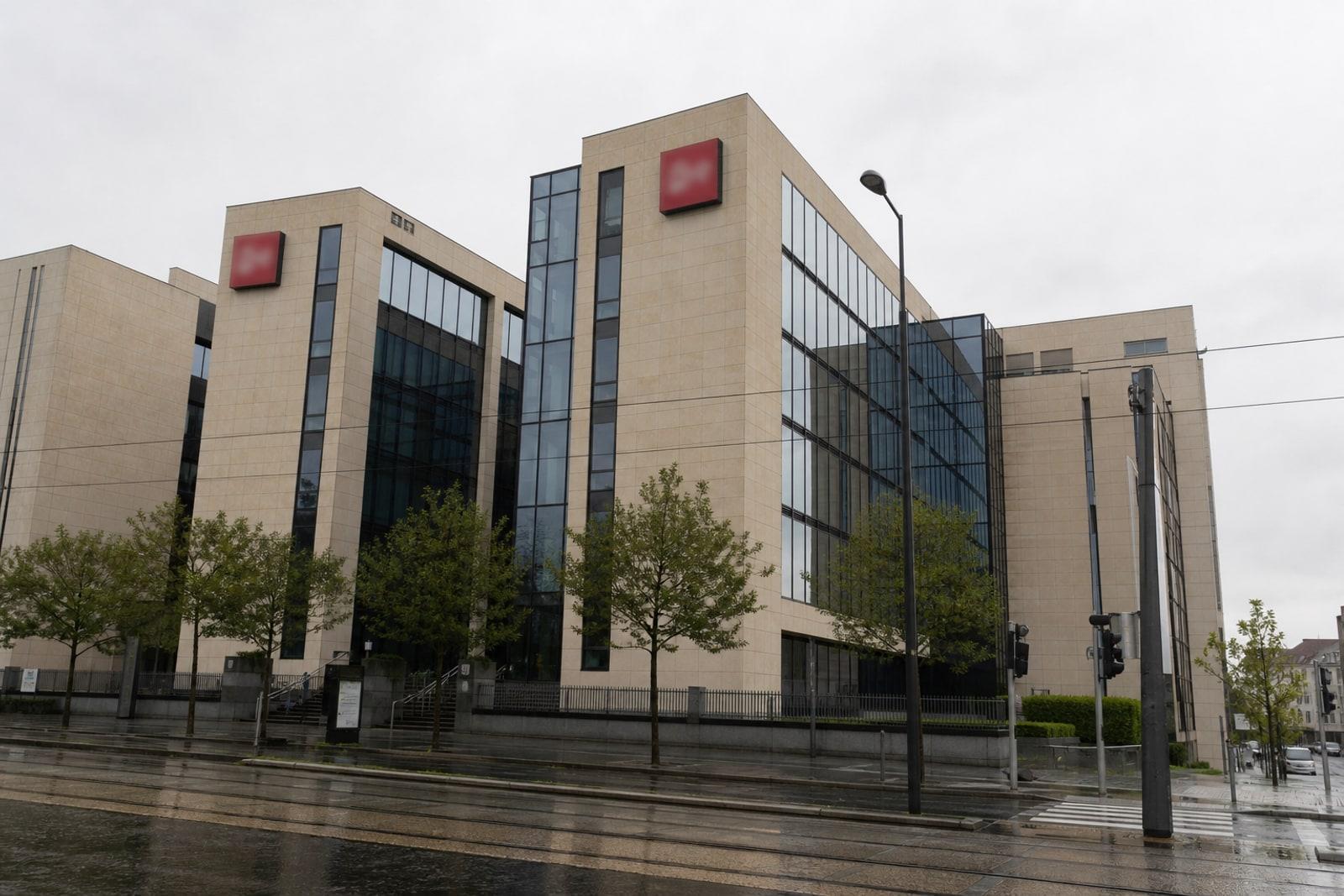
The sanction lands on an institution woven into Luxembourg's economic history. BIL opened its first counter in 1856, making it the country's oldest private bank, and today serves retail, corporate and private-banking clients from its headquarters on route d'Esch in Luxembourg City. Since 2018 it has been majority-owned by Beijing-based investment group Legend Holdings, which holds 89.936 per cent, with the Luxembourg state retaining 9.993 per cent.
Nor is BIL a stranger to supervisory censure. In 2020, Luxembourg's national regulator, the Commission de Surveillance du Secteur Financier (CSSF), fined the bank €4.6 million — one of its heaviest penalties against a bank — over weaknesses in its anti-money-laundering and counter-terrorist-financing framework, identified during 2017–2018 inspections that focused on a sample of clients from Commonwealth of Independent States countries. No money laundering or terrorist financing was identified, and BIL said at the time it had moved quickly to fix the shortcomings.
The new fine also fits a wider pattern of European supervisors penalising Luxembourg banks over the accuracy of their capital reporting:
- In March 2022, the ECB fined the state savings bank Banque et Caisse d'Épargne de l'État (Spuerkeess) €3.755 million for misreporting risk-weighted assets on exposures to other banks over seven consecutive quarters in 2017 and 2018 — a breach likewise classed as "severe".
- In November 2024, the same bank was fined a further €1.685 million for understating risk-weighted assets over multiple years, including foreign-exchange exposures across 17 consecutive quarters.
Tighter supervision ahead
The penalty underscores how closely Frankfurt now polices the numbers reported by the euro area's significant banks — and it arrives as Luxembourg's financial centre, the country's most important industry, prepares for another layer of European oversight.
The EU's new Anti-Money Laundering Authority (AMLA), also seated in Frankfurt, is due to take over direct supervision of roughly 40 selected financial groups with significant cross-border business from 2028. The authority plans to finalise its risk-assessment methodology this year and run its first selection process in 2027, and said in February that it would be fully operational by 2028. For Luxembourg's banks, that means the scrutiny that produced BIL's 2020 anti-money-laundering fine will increasingly be applied from EU level rather than solely by the CSSF.
For BIL, the immediate financial impact of the €3.255 million penalty is modest relative to its balance sheet. The reputational message is less so: whether the issue is money-laundering controls or the integrity of capital figures, supervisors have shown they are willing to put even the pillars of the Luxembourg banking establishment on public notice.
Frequently asked
- Why did the ECB fine BIL?
- The ECB found that BIL failed to apply its supervisor-approved internal models when calculating expected losses on defaulted retail and corporate exposures. As a result, the bank could not correctly determine the capital deduction known as the IRB shortfall and reported higher capital and capital ratios than it should have for three consecutive quarters, from Q4 2023 to Q2 2024.
- How much is the fine and how serious is the breach?
- The administrative penalty is €3.255 million. The ECB classified the breach as 'severe', the middle category on its five-step scale from 'minor' to 'extremely severe'.
- How has BIL responded?
- BIL describes the matter as a reporting error affecting a limited number of regulatory filings between December 2023 and June 2024. It says it detected the issue itself, corrected and republished the affected reports, informed supervisors and rating agencies, and remained in compliance with minimum capital requirements throughout. It can challenge the decision before the EU Court of Justice but has not said it will.
- Has BIL been sanctioned before?
- Yes. In 2020 Luxembourg's regulator, the CSSF, fined BIL €4.6 million over weaknesses in its anti-money-laundering and counter-terrorist-financing framework found in 2017–2018 inspections, although no actual money laundering or terrorist financing was identified.
Sources(14)
- 1ECB sanctions BIL for breaching ECB decision on internal modelsEuropean Central Bank – Banking Supervision · bankingsupervision.europa.eu
- 2La BCE inflige une sanction de 3,26 millions d'euros à la BILL'essentiel · lessentiel.lu
- 3BIL: la BCE inflige une amende de 3,26 millions d'euros à la banque luxembourgeoiseL'essentiel · lessentiel.lu
- 4La BCE inflige une sanction de 3,26 millions d'euros à la Banque Internationale à LuxembourgLa Libre · lalibre.be
- 5BIL reaffirms its regulatory readiness and resilience following an ECB administrative decisionBanque Internationale à Luxembourg via MarketScreener · marketscreener.com
- 6ECB fines BIL €3.3mn for internal model breachFinadium · finadium.com
- 7Luxembourg bank fined by ECB over capital reporting breachMLex · mlex.com
- 8La BIL lourdement sanctionnée par la CSSFPaperjam · paperjam.lu
- 9CSSF issues BIL with hefty fineDelano · delano.lu
- 10ECB sanctions Banque et Caisse d'Epargne de l'Etat, Luxembourg for misreporting capital needsEuropean Central Bank – Banking Supervision · bankingsupervision.europa.eu
- 11ECB sanctions Banque et Caisse d'Epargne de l'Etat, Luxembourg for misreporting capital requirementsEuropean Central Bank – Banking Supervision · bankingsupervision.europa.eu
- 12About AMLAEU Anti-Money Laundering Authority · amla.europa.eu
- 13Banque Internationale à LuxembourgWikipedia · en.wikipedia.org
- 141856: creation of BIL and SpuerkeessDelano · delano.lu
Related by topic