Public health
Cannabis stays Luxembourg's most-used drug, three years after home-grow law
EU and national figures show roughly one in seven adults used cannabis in the past year, as Luxembourg weighs the first results of its 2023 cultivation rules.
By Tom Schmit · · · 5 min read
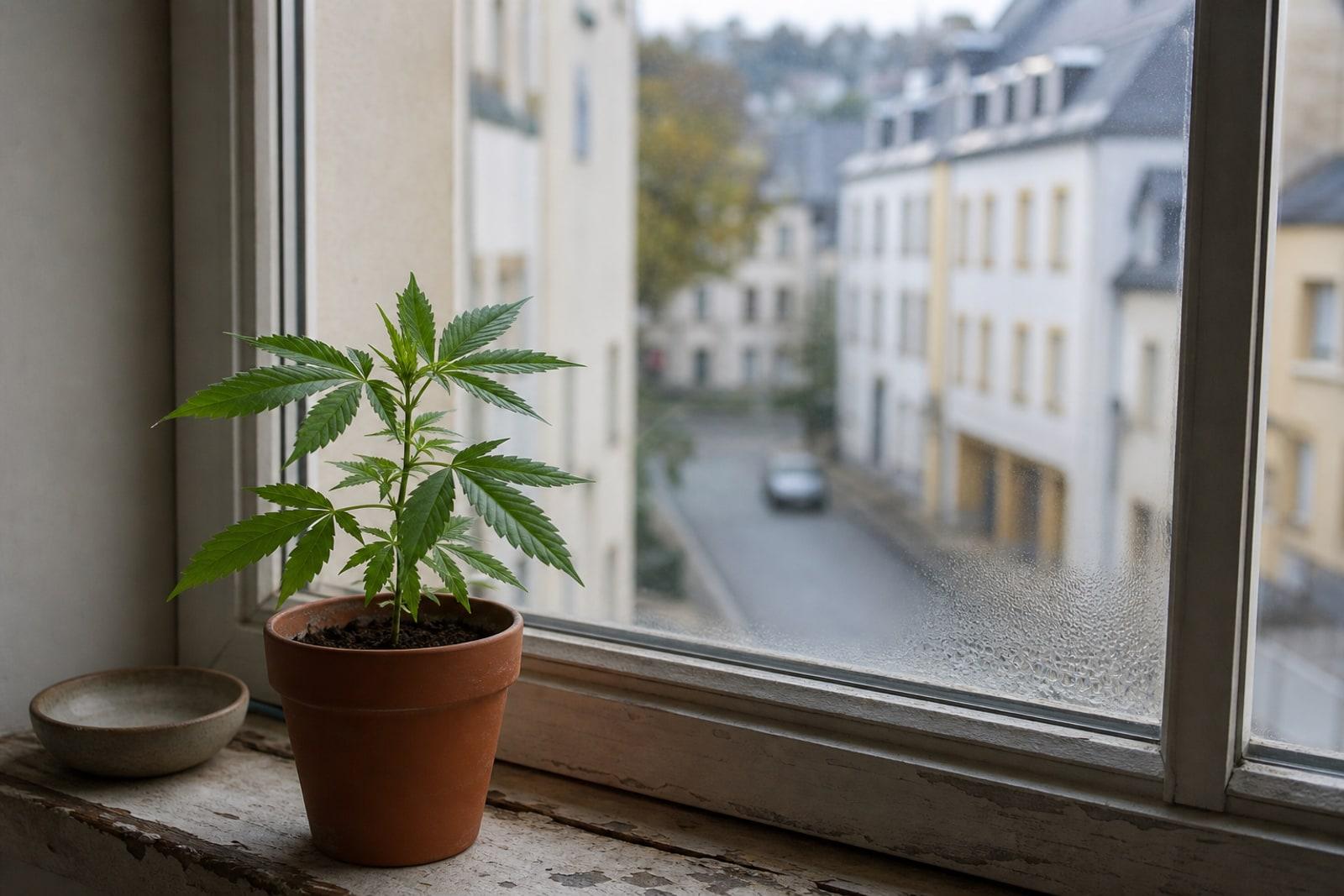
Cannabis remains the most commonly used illicit drug in Luxembourg, according to the latest national and European monitoring, which together sketch a picture of steady, widespread use set against one of the continent's more permissive legal frameworks. The findings, drawn from the European Union Drugs Agency (EUDA) and Luxembourg's own surveillance network, land almost three years after the Grand Duchy became one of the first EU states to legalise limited home growing and private consumption.
The figures are not dramatic so much as durable. Cannabis sits well ahead of cocaine and ecstasy in every available measure of consumption, and the data offer an early, cautious read on whether a law designed to push users away from the illicit market is changing behaviour on the ground.
What the figures show
According to the 2025 National Drug Report compiled by RELIS, Luxembourg's information network on drugs and addiction, an estimated 14.6% of adults reported using cannabis in the twelve months before being surveyed. Among young adults aged 15 to 34, 32.7% said they had tried cannabis at least once in their lifetime, with use more common among men than women. The reports were published on 5 June 2025 by the Ministry of Health and Social Security.
Those national numbers run somewhat above the European average. Across the EU, the EUDA's European Drug Report estimates that around 8.4% of adults aged 15 to 64 used cannabis in the past year, rising to roughly 15.4% among 15-to-34-year-olds — about 15.5 million young Europeans. The agency also estimates that some 1.5% of EU adults, around 4.3 million people, use cannabis daily or almost daily, the pattern most closely associated with health harm.
The substance's dominance is equally visible in treatment data. Across the EU, Norway and Türkiye, cannabis accounted for the largest single share of people entering drug treatment for the first time — around 42% of first-time entrants — underscoring that a drug widely treated as low-risk still generates substantial demand on health services.
A law without a marketplace
Luxembourg's legal context is unusual. Since 21 July 2023, adults have been permitted to grow up to four cannabis plants per household for personal use and to consume the drug in private, out of sight of minors and of public spaces. The reform also softened penalties for possession: holding three grams or less now draws a reduced fine rather than the prospect of a criminal record.
Crucially, the law stops short of creating a commercial market. There are no shops, cafés or licensed dispensaries; buying cannabis remains illegal, and the only lawful route to supply is to cultivate it at home. That makes Luxembourg's model narrower than the regulated retail systems debated elsewhere, and closer in spirit to Malta's 2021 reform than to a fully commercial framework.
Early indications suggest the cultivation rules are being taken up. In the preliminary assessment cited by Luxembourg authorities, 11.5% of cannabis users said they had begun growing the plant at home — a small but telling shift toward the self-supply the legislation was intended to encourage. Luxembourg and Germany were among the EU states that had published interim evaluations of their cannabis policy changes by the end of 2025, a sign that governments are watching closely for evidence before drawing firm conclusions.
What the wastewater reveals
Beyond surveys, Luxembourg tracks drug use through wastewater analysis, part of a Europe-wide effort coordinated under the EUDA-backed SCORE project, which in its 2024 round examined sewage from 128 cities across 26 countries. The method measures drug residues excreted into the sewer system, offering a near-real-time snapshot that does not rely on what people are willing to report.
In Luxembourg, the analyses found the regular presence of cannabis, cocaine and MDMA across all monitored areas, with notable peaks in MDMA at weekends — a signature of recreational, nightlife-driven use. The wastewater picture reinforces the survey rankings: cannabis first, followed by cocaine and ecstasy. Across Europe as a whole, the 2024 wastewater data pointed to a softening in cannabis residues even as stimulants climbed, with most cities reporting year-on-year declines in the main cannabis metabolite.
The public-health response
Officials have framed the data less as cause for alarm than as a prompt to keep services current. Health Minister Martine Deprez stressed the need to "continuously adapt our prevention, treatment and harm reduction programmes" in light of the findings.
On several measures, Luxembourg's drug indicators compare favourably with the European picture. Harm-reduction services recorded more than 109,000 contacts in 2023, reflecting an established network of outreach and support. Drug-induced deaths remained comparatively low, with nine recorded in 2023 — a figure the authorities note sits well below the European average, even if every such death represents a policy failure of its own.
The broader challenge, the EUDA argues, is that cannabis is changing. Resin and herb potency have risen over the past decade, and newer semi-synthetic cannabinoids such as HHC have appeared on European markets, complicating any assumption that today's product resembles the cannabis of a generation ago. For Luxembourg, the early evidence suggests a population that uses cannabis more than most of its neighbours, within a legal regime still too young to judge — and a health system bracing to keep pace with a drug that has lost none of its prevalence.
Frequently asked
- What is the most commonly used drug in Luxembourg?
- Cannabis is the most commonly used illicit drug in Luxembourg, ahead of cocaine and ecstasy/MDMA, according to the 2025 National Drug Report (RELIS) and the European Union Drugs Agency (EUDA).
- How many people in Luxembourg use cannabis?
- An estimated 14.6% of adults reported using cannabis in the past year, and 32.7% of people aged 15 to 34 have used it at least once in their lifetime, according to Luxembourg's 2025 National Drug Report.
- Is cannabis legal in Luxembourg?
- Since 21 July 2023, adults in Luxembourg may grow up to four cannabis plants per household and consume cannabis privately. There is no legal retail market, so buying cannabis remains illegal; possession of three grams or less now draws a reduced fine.
- How does Luxembourg's cannabis use compare with the EU?
- Luxembourg's past-year adult use of about 14.6% is higher than the EU average of roughly 8.4% for adults aged 15 to 64, as estimated by the EUDA's European Drug Report.
Sources(6)
- 1Cannabis remains most widely consumed drug in Luxembourg (2025 national and European drug reports)Chronicle.lu · chronicle.lu
- 2Cannabis – the current situation in Europe (European Drug Report 2025)European Union Drugs Agency (EUDA) · euda.europa.eu
- 3Understanding Europe's drug situation in 2025 – key developments (European Drug Report 2025)European Union Drugs Agency (EUDA) · euda.europa.eu
- 4Latest wastewater data from 128 European cities: more stimulants but less cannabis foundEuropean Union Drugs Agency (EUDA) · euda.europa.eu
- 5National Drug Report 2025 (RELIS)Ministry of Health and Social Security, Luxembourg · santesecu.public.lu
- 6New regulations for the use and cultivation of cannabisPolice Grand-Ducale, Luxembourg · police.public.lu
Related by topic