Mobility
Bolt brings driverless taxis to Bissen as Luxembourg bids to be Europe's test track
A year-long pilot with Pony.ai and Stellantis puts robotaxis on public roads, advancing the Grand Duchy's plan to legalise autonomous driving by 2028.
By Marc Weber · · · 5 min read
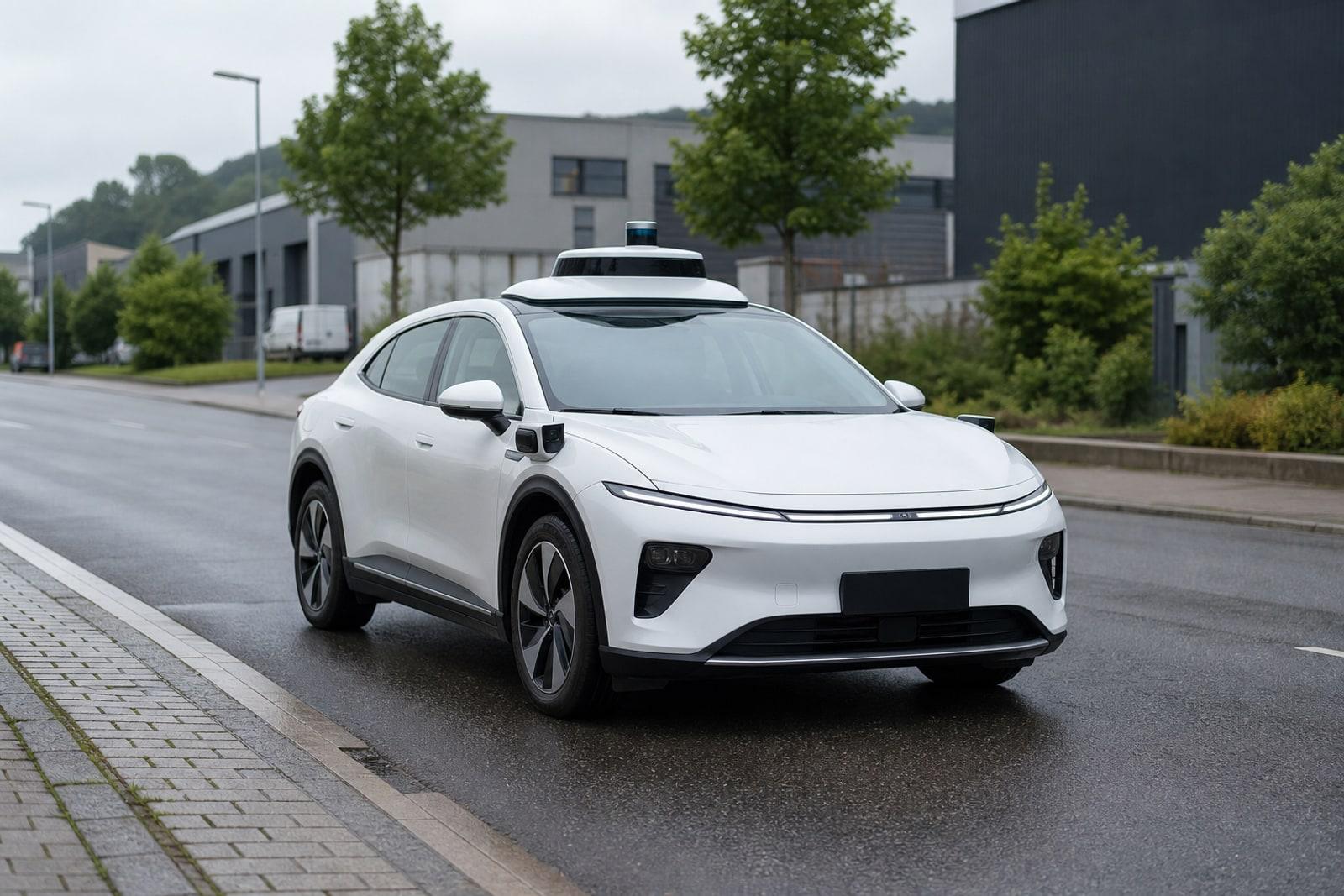
Luxembourg has spent six years building a reputation as the country where getting around costs nothing. On 10 June it added a more experimental claim: a place where the car may eventually drive itself. Bolt, the Estonian ride-hailing company, said it would put autonomous "robotaxis" on the Grand Duchy's public roads in a year-long trial, working with the Chinese self-driving developer Pony.ai and the carmaker Stellantis. The three partners describe the project as a "living lab" intended to test, in real urban traffic rather than on a closed circuit, whether driverless ride-hailing can work in Europe.
For a company that has long styled itself as the continent's home-grown answer to Uber, it is a notable first. "Autonomous mobility technology is already transforming transportation around the world, and as the only independent, European-founded ride-hailing platform competing globally, we want to be at the forefront of scaling this revolutionary technology in Europe," Bolt's founder and chief executive, Markus Villig, said in a statement announcing the pilot.
What the trial involves
The pilot begins modestly. According to the partners and coverage by RTL Today, it will start with about five vehicles in Bissen, a small commune in central Luxembourg, before expanding over the year to roughly 30 vehicles and extending into Luxembourg City, where heavier traffic and pedestrians offer a sterner test. The cars are Pony.ai's seventh-generation ("Gen-7") autonomous system fitted to a midsize van built on Stellantis' so-called L4-Ready Platform, a vehicle architecture designed to support Level 4 driving, the industry term for a car that can operate without a human at the wheel within a defined area.
Crucially, no one will be riding without a chaperone. Under the terms of Luxembourg's testing regime and broader European rules, a trained safety driver must sit in each vehicle throughout this phase, monitoring the system and ready to intervene. The stated goal is to reach "driverless readiness" by the end of the programme. The division of labour is straightforward: Pony.ai supplies the autonomous-driving software and operational experience accumulated in China and the United States; Stellantis provides the vehicle and its engineering; and Bolt contributes the ride-hailing marketplace that would, in time, dispatch the cars to paying passengers.
"Luxembourg's forward-looking regulatory environment provides a strong foundation for autonomous mobility testing in Europe." — Dr James Peng, founder and chief executive of Pony.ai
Why Luxembourg
The choice of country is not incidental. Luxembourg has made mobility a signature policy. In March 2020 it became the first nation in the world to make nearly all public transport free, scrapping fares on buses, trains and trams in an effort to ease congestion fed by more than 200,000 cross-border commuters who pour in each day from France, Germany and Belgium. The capital's tram, reopened in 2017, continues to expand.
The autonomous push is the next chapter. In October 2025 the ministers Lex Delles and Yuriko Backes unveiled a national strategy, branded "Automatiséiert Fueren 2028", that sets out an explicit goal: to make Luxembourg the first European country with a complete legal framework for the everyday use of self-driving vehicles by 2028, and to position the territory, in the government's own words, as a "living laboratory" for future mobility. The strategy identifies five priority use cases for gradual rollout, among them robotaxis, automated last-mile shuttles and freight automation.
Pony.ai had already laid the groundwork. On 27 March 2025 Luxembourg's Ministry of Mobility and Public Works granted the company an authorisation to conduct scientific tests of Level 4 cars on public roads, and Pony.ai chose the country for its first European research and testing hub. Backes called the permit "an important milestone for the future of mobility", arguing that autonomous driving "can transform our daily lives".
A regulatory race across Europe
The Bolt announcement landed alongside a wider continental move. On 8 June, on the margins of a Transport Council meeting in Luxembourg, transport ministers from a group of European Union member states signed a joint declaration backing cross-border "testbeds" for autonomous vehicles. The aim is to spare developers the cost of seeking approval country by country by aligning permitting and approval procedures and clustering practical deployments in public transport, freight and logistics. "It's important to think cross-border, to think European, also for autonomous driving," Backes said.
That coordination matters because European caution has, until now, kept driverless cars largely off the road while operators such as Waymo expand in American cities. Bolt has framed its ambitions in deliberately large terms, saying it wants to build toward 100,000 autonomous vehicles on its platform by the mid-2030s. Whether the technology, the economics and public trust mature on that timescale is far from settled.
The stakes for a small country
For Luxembourg, the calculation is partly economic. A nation of some 670,000 people with a heavily financial economy has spent years trying to diversify into technology, from space resources to data infrastructure, and autonomous mobility offers a chance to host research, jobs and regulatory expertise that larger neighbours have been slower to court. Founded in 2013 in Tallinn as Taxify by a then-19-year-old Villig, Bolt is now valued at around €7.4bn and operates in more than 50 countries; its decision to run its first autonomous pilot in the Grand Duchy is the kind of validation the strategy was designed to attract.
The risks are equally clear. Trials are not deployments, safety drivers are not absent, and a five-vehicle pilot in a quiet commune is a long way from a city full of unsupervised robotaxis. But for a country that built its mobility identity on making transport free, the next ambition is to make at least part of it autonomous, and to be the place where Europe finds out whether that works.
Frequently asked
- Where and when does the Bolt robotaxi trial take place?
- The one-year pilot was announced on 10 June 2026 and begins in Bissen, a commune in central Luxembourg, with about five vehicles. It is planned to expand to roughly 30 vehicles and extend into Luxembourg City over the course of the trial.
- Are the cars fully driverless?
- No. Although the vehicles use Level 4 autonomous technology, Luxembourg and European rules require a trained safety driver to be present in each car during the testing phase, ready to take over if needed. The partners aim to reach 'driverless readiness' by the end of the programme.
- Who are the partners and what does each contribute?
- Bolt, the Estonian ride-hailing company, provides the marketplace and platform integration. Pony.ai, a Chinese developer, supplies the autonomous-driving software and operational experience. Stellantis contributes the vehicle, a midsize van built on its Level 4-ready platform.
- Why was Luxembourg chosen for the trial?
- Luxembourg has positioned itself as a 'living laboratory' for mobility. It made public transport free nationwide in 2020 and, through its 'Automatiséiert Fueren 2028' strategy, aims to be the first European country with a complete legal framework for everyday autonomous driving by 2028. Pony.ai obtained the country's first Level 4 testing permit in March 2025.
Sources(6)
- 1Bolt, Pony.ai and Stellantis to launch autonomous mobility testing program in LuxembourgStellantis Media · media.stellantis.com
- 2EU Ministers back cross-border initiative for autonomous vehicle testbedsEuropean Commission, Mobility and Transport · transport.ec.europa.eu
- 3Pony.ai obtains Luxembourg permit for Level 4 robotaxi testingJust Auto · just-auto.com
- 4Automatiséiert Fueren 2028 — the Luxembourg Strategy for Automated DrivingThe Luxembourg Government · gouvernement.lu
- 5Bolt, Pony.ai and Stellantis launch AV pilot in LuxembourgJust Auto · just-auto.com
- 6Bolt tests self-driving taxi in LuxembourgThe Star (Reuters) · thestar.com.my
Related by topic