Football governance
Luxembourg's Anne Brasseur and the Council of Europe case against Infantino's FIFA
As the 2026 World Cup unfolds across North America, the former Council of Europe assembly president's warnings about FIFA under Gianni Infantino read as freshly relevant.
By Marc Weber · · 4 min read
The 2026 World Cup is only weeks old, and its impresario — FIFA president Gianni Infantino — is everywhere: touring stadiums across the United States, Mexico and Canada, defending the tournament against criticism over visas and entry refusals, and basking in football's biggest stage. Yet the most forceful institutional challenge his presidency has ever faced still carries the name of a politician from Luxembourg.
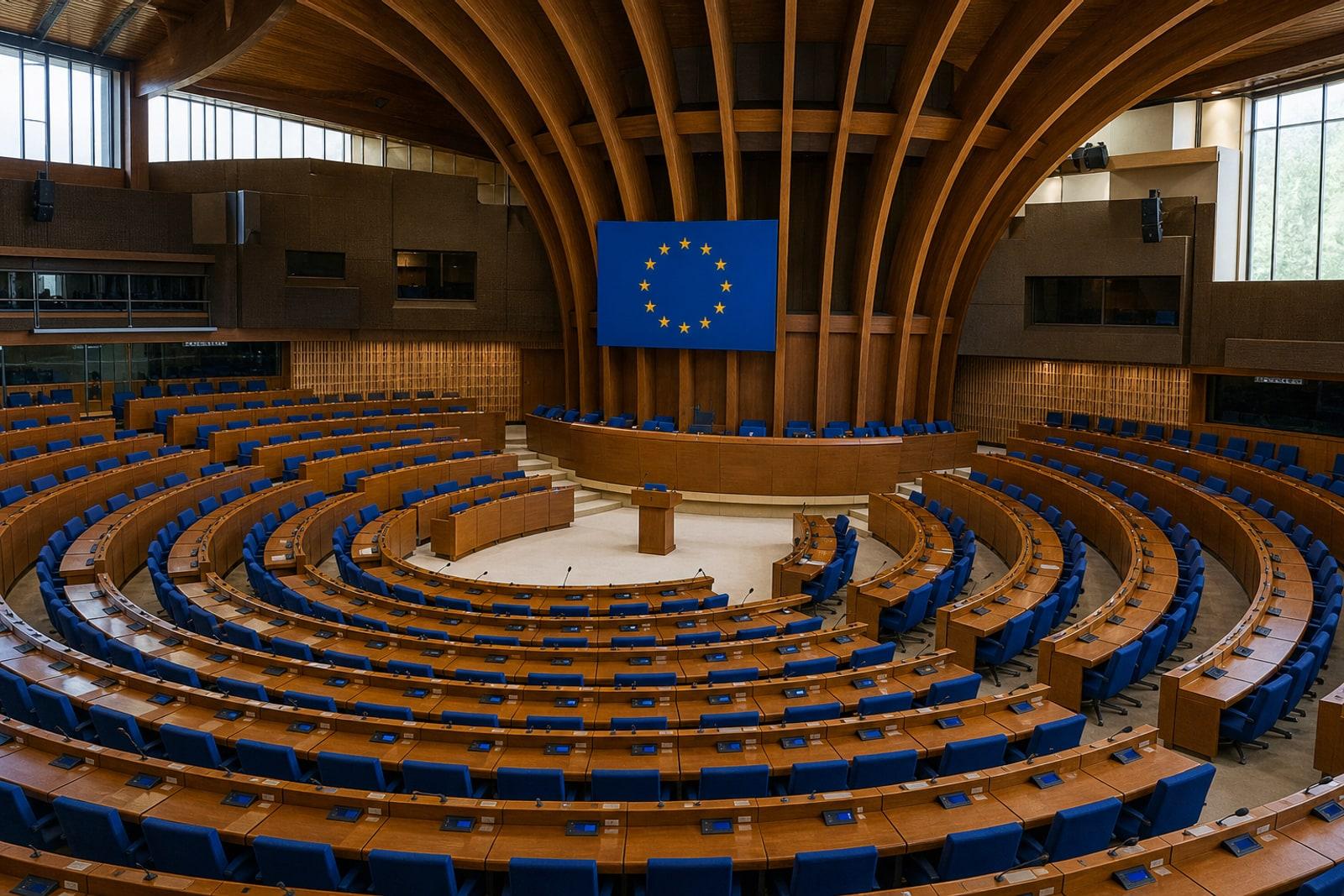
Anne Brasseur, a veteran of the Grand Duchy's Democratic Party and a former president of the Parliamentary Assembly of the Council of Europe (PACE), spent years pressing world football's governing body to reform. In a 2018 report adopted by the assembly that brings together parliamentarians from the Council of Europe's member states, she accused Infantino's reshaped FIFA of looking unsettlingly like the scandal-ridden organisation he had promised to replace.
A reformer's warning from Strasbourg
Brasseur, born in Luxembourg City in 1950, served as the country's minister for education, vocational training and sport from 1999 to 2004 before becoming, in 2014, only the second woman to lead PACE, the Strasbourg body that scrutinises democracy, human rights and the rule of law across the continent.
Her engagement with football's governance crisis predates Infantino. In May 2015, days after Swiss police arrested senior FIFA officials in Zurich as part of a United States-led corruption investigation, Brasseur — then PACE president — urged the organisation to confront its problems rather than disguise them. It was "now time to lance the boil," she said, calling for "a reformed FIFA, capable of upholding sporting ethics and human rights, starting with Qatar."
That was the twilight of the Sepp Blatter era. Blatter resigned within days; Infantino, his former colleague at European football's governing body UEFA, was elected FIFA president in February 2016 on a promise of a clean break. Brasseur's verdict, delivered two years later, was that the break had not arrived.
The 2018 report that named Infantino
As rapporteur for PACE's culture committee, Brasseur authored a report titled Good football governance, debated in Strasbourg on 24 January 2018. Its central charge was that the bodies meant to hold FIFA's leadership accountable had been quietly stripped of their independence — among them the Audit and Compliance Committee, both chambers of the Ethics Committee and the Governance Committee.
She pointed in particular to the abrupt removal, during FIFA's 2017 congress in Bahrain, of the heads of its key oversight committees: ethics adjudicator Hans-Joachim Eckert, ethics investigator Cornel Borbély and governance chief Miguel Maduro, part of a clearout of 13 of the ethics committee's 15 members. In her report Brasseur wrote that the independence of FIFA's supervisory bodies "does not seem to be secured," and set out the pattern bluntly:
In less than one year the four chairpersons of the FIFA key supervisory bodies were changed... the general feeling is that FIFA Council and Mr Infantino in particular wished to get rid of persons who might have embarrassed them.
Brasseur accused Infantino of "micro-management" and drew attention to the high number of officials dismissed since his election. Her recommendations were concrete:
- restore genuine independence to FIFA's ethics, audit and governance committees;
- anchor sports governance in democracy, human rights and the rule of law;
- create an independent observatory to monitor football governance without governing the sport itself.
FIFA fought the report — and lost the vote
FIFA did not take the critique quietly. Ahead of the debate, the organisation circulated an 11-page memo to parliamentarians titled Good governance at FIFA: a factual account, dismissing some of Brasseur's findings as "rumours" and "personal suppositions" and parts of her report as "incomplete, missing or downright wrong," according to accounts in Inside World Football and the watchdog Play the Game.
The lobbying failed. The assembly adopted the report by 131 votes to five — one of the most pointed verdicts an inter-governmental body has delivered on Infantino's stewardship of the game.
Why it resonates as the World Cup unfolds
Brasseur's interventions belong to 2015 and 2018, not to the tournament now underway. Yet the questions she raised — about accountability, independence and human rights — frame much of the scrutiny FIFA faces in 2026.
The 48-team World Cup that kicked off on 11 June across three countries has drawn warnings from Human Rights Watch, which said the event would "kick off in a climate of fear," and from Amnesty International over the treatment of migrants, LGBT people and journalists. Infantino, who in December 2025 awarded United States president Donald Trump an inaugural "FIFA Peace Prize," has resisted pressure to use the body's leverage on host-government policy. Defending the United States as host amid visa disputes and entry denials, he insisted FIFA could not act as a political referee: "We are not the kings of the world who can rule over governments," he said. "We are a sports organisation."
The irony is not lost on Strasbourg-watchers. The institution that once rebuked Infantino has since announced cooperation with FIFA on human rights, with the FIFA president meeting the Council of Europe's secretary general, Alain Berset. For Brasseur, long retired from front-line politics, the substance of her warning stands on the record: that world football's reforms would be judged not by their announcement but by whether the watchdogs meant to enforce them were allowed to keep their teeth.
Frequently asked
- Who is Anne Brasseur?
- A Luxembourg politician of the Democratic Party, born in 1950. She was the country's minister for education, training and sport from 1999 to 2004 and served as president of the Parliamentary Assembly of the Council of Europe from 2014 to 2016.
- What did she accuse Infantino's FIFA of?
- In her 2018 Council of Europe report 'Good football governance', she charged that FIFA had eroded the independence of its ethics, audit and governance committees, citing the 2017 removal of four supervisory chairpersons, and accused Infantino of 'micro-management'.
- What happened to her report?
- The Parliamentary Assembly of the Council of Europe adopted it on 24 January 2018 by 131 votes to five, despite an 11-page FIFA memo lobbying parliamentarians to reject it.
- Has Brasseur commented on the 2026 World Cup itself?
- Her documented criticism of FIFA dates from 2015 and 2018. This article revisits that record as the 2026 World Cup, hosted by the US, Canada and Mexico, brings FIFA's governance back into focus; current tournament concerns are voiced by groups such as Human Rights Watch and Amnesty International.
Sources(11)
- 1European politicians demand radical change of sports governancePlay the Game · playthegame.org
- 2FIFA lobbies new friends at PACE to kill Brasseur report but are slaughtered by the voteInside World Football · insideworldfootball.com
- 3Anne Brasseur: 'To be credible, FIFA must lance the boil and overhaul its governance'Parliamentary Assembly of the Council of Europe (PACE) · pace.coe.int
- 4Good football governance (report, fileid 24284)Parliamentary Assembly of the Council of Europe · assembly.coe.int
- 5Anne Brasseur: FIFA must overhaul its governanceHumanRightsEurope / Council of Europe · humanrightseurope.coe.int
- 6Infantino's FIFA: Ten years of power, politics, and so-called ethicsPlay the Game (Stanis Elsborg, 13 April 2026) · playthegame.org
- 7FIFA's Infantino defends US as World Cup host amid visa row, entry denialsAl Jazeera (11 June 2026) · aljazeera.com
- 82026 World Cup: Tournament Will Kick Off in Climate of FearHuman Rights Watch (27 April 2026) · hrw.org
- 9Humanity Must Win: Defending Rights, Tackling Repression at the 2026 FIFA World CupAmnesty International (2026) · amnesty.org
- 10Anne BrasseurWikipedia · en.wikipedia.org
- 11FIFA and the Council of Europe to promote human rightsCouncil of Europe (Portal) · coe.int
Related by topic