Middle East diplomacy
US and Iran Agree 60-Day Roadmap at Swiss Talks as Trump Threatens Fresh Strikes
Negotiators meeting on neutral ground at Switzerland's Bürgenstock resort agreed a path toward a final deal — even as President Trump warned he would hit Iran 'very hard again.'
By Camille Reuter · · 5 min read
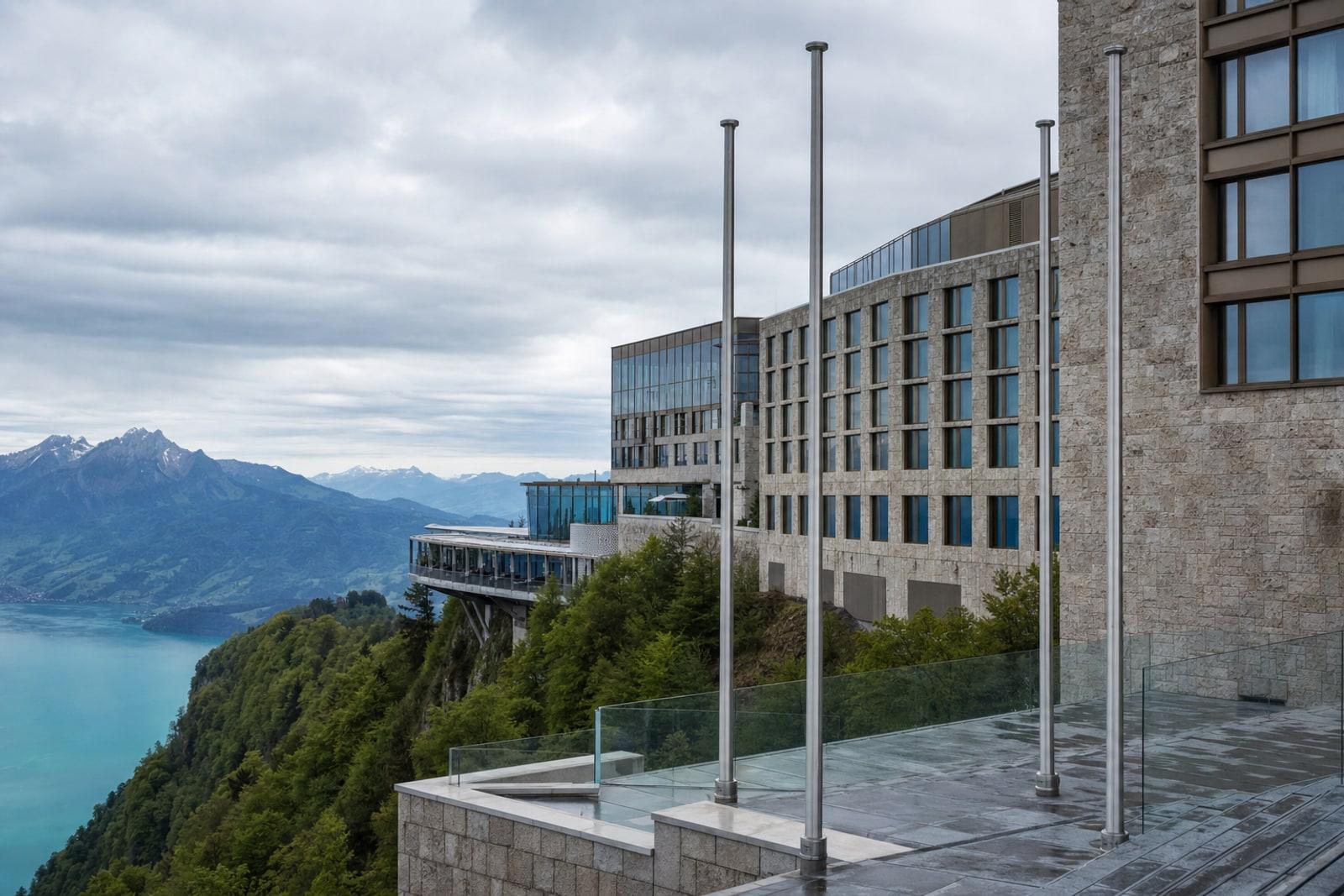
Negotiators from the United States and Iran wrapped a first round of high-stakes talks at Switzerland's Bürgenstock mountain resort on Monday, agreeing what mediators called a roadmap toward a final deal within 60 days — even as President Donald Trump publicly threatened to strike Iran "very hard again" while his vice-president sat across the table from Tehran's delegation.
The negotiations, which opened on Sunday above Lake Lucerne, are the most substantive direct contact between Washington and Tehran since a war that has now run for more than 100 days. The mediators, Qatar and Pakistan, said the two sides made "encouraging progress" and agreed on "a roadmap towards reaching a final deal within 60 days." The talks followed a preliminary memorandum of understanding signed on 17 June by Mr Trump and Iranian President Masoud Pezeshkian during a dinner with French President Emmanuel Macron at the Palace of Versailles, which opened a 60-day ceasefire window for negotiations on Iran's nuclear programme, its regional proxies and sanctions relief.
On neutral ground
Switzerland served as host rather than mediator. Bern has been the protecting power for US interests in Iran since 1980 — a channel that has survived even the worst periods between the two capitals — and the Swiss Federal Council approved an army assistance mission to secure the meeting. A signing ceremony first scheduled for 19 June at the Bürgenstock was abruptly postponed, with the White House citing logistical reasons, before the delegations and mediators reconvened at the cliffside resort.
The US side was led by Vice President JD Vance; reporting on the delegation also placed special envoys Steve Witkoff and Jared Kushner in the US team. Iran's delegation was headed by parliament speaker Mohammad Bagher Ghalibaf as chief negotiator, alongside Foreign Minister Abbas Araghchi. Mr Vance framed the encounter as a chance to reset a half-century of hostility, asking, according to Al Jazeera: "Can we turn over a new leaf? Can we change relations in the Middle East permanently?"
Threats across the table
The diplomacy was nearly derailed before it began. As negotiators met, Mr Trump posted on Truth Social a warning that Iran's foreign ministry branded an "insulting message," briefly prompting Tehran to say talks had paused — a suspension US officials disputed.
Iran must immediately stop their highly paid PROXIES in Lebanon from causing trouble. If they don't, we'll hit Iran very hard again, just like we did last week, only harder!!!
Iran answered in kind. "They would do better to be careful with their statements; our armed forces are ready to respond," Mr Ghalibaf said. The exchange came barely a week after a sharp military escalation in which the US fired 49 Tomahawk missiles at Iranian targets and Mr Trump threatened to take "total control" of Iran's oil and gas sector, including Kharg Island, the terminal that handles more than 90 percent of Iranian crude exports.
What was agreed — and what wasn't
According to the mediators and accounts from both delegations, the first round produced a set of confidence-building mechanisms rather than a settlement:
- A dedicated communication line on the Strait of Hormuz to "avoid incidents and miscommunication," with the stated aim of "safe passage for commercial vessels."
- A Lebanon "de-confliction cell" intended to "ensure the adherence of the termination of military operations in Lebanon" — which Mr Araghchi called the first real test of the agreement.
- A High-Level Committee of chief negotiators reporting on the nuclear file, sanctions, and monitoring and dispute resolution.
- An invitation for International Atomic Energy Agency inspectors to return to Iran, which Mr Vance called "a major milestone."
The hardest questions were left for the technical teams: whether Iran continues to enrich uranium, the fate of its enriched stockpile, the scope of inspections, the timeline for sanctions relief and the need for US congressional approval. Mr Araghchi said sanctions on Iranian oil exports had been waived and some frozen assets released; Washington had not publicly confirmed those claims.
Oil markets and Europe's exposure
For Europe, the stakes are measured in barrels and cargoes as much as communiqués. The Strait of Hormuz normally carries roughly a quarter of the world's seaborne oil — about 20 million barrels a day — and around a fifth of global liquefied natural gas. Iran closed the waterway earlier in the year and again on 20 June, citing Israeli ceasefire violations, with more than 500 vessels estimated to be waiting to exit the Gulf.
Markets have nonetheless been pricing in peace. Brent crude, which spiked to about $126 a barrel in March and rose more than 50 percent during the conflict, had fallen back to roughly $78 by mid-June — its lowest since early March and down about a fifth from the year's highs. "Crude's slide is entirely sentiment-driven," said Vandana Hari of Vanda Insights, describing traders as "front-running the prospective reopening of the Strait of Hormuz." Tamas Varga of PVM Oil Associates called a $17 drop in Brent over four sessions "a discernible vote of confidence that the worst, at least as far as supply disruptions are concerned, is behind us."
For the European Union, a heavy LNG importer that has spent three years rewiring its energy supply, the calculus is stark: a durable ceasefire would relieve pressure on power and gas bills, while a return to strikes around Hormuz would ripple straight into European energy security. With a 60-day clock now running and the principals still trading threats, whether talks or strikes prevail remains the question that will move prices from the Gulf to the continent.
Frequently asked
- Where were the US-Iran talks held and who hosted them?
- At the Bürgenstock Resort above Lake Lucerne, Switzerland. Switzerland was the neutral host and has been the protecting power for US interests in Iran since 1980; Qatar and Pakistan were the mediators.
- What did the first round actually agree?
- Mediators said the sides agreed a roadmap toward a final deal within 60 days, plus a Strait of Hormuz communication line, a Lebanon de-confliction cell, a High-Level Committee of negotiators and the return of IAEA inspectors. Core nuclear and sanctions questions were left unresolved.
- What did Trump threaten?
- On Truth Social on 21 June 2026 he wrote that if Iran did not stop its 'PROXIES in Lebanon' the US would 'hit Iran very hard again... only harder.' Iran called it an 'insulting message' and briefly said talks had paused.
- Why does this matter for Europe's energy?
- The Strait of Hormuz carries about a quarter of seaborne oil and a fifth of global LNG. Europe, a major LNG importer, is exposed to any disruption; a durable ceasefire eases prices, while renewed strikes would threaten European energy security.
Sources(12)
- 1US, Iran agree on 'roadmap' towards final deal in Switzerland talksAl Jazeera · aljazeera.com
- 2Key outcomes of Iran-US talks in Switzerland; what next?Al Jazeera · aljazeera.com
- 3The U.S. and Iran agree to a 'road map' for a final deal, mediators sayNPR · npr.org
- 4U.S. and Iranian negotiators meet as Trump threatens to 'hit Iran very hard again' over HezbollahCBS News · cbsnews.com
- 52025–2026 Iran–United States negotiationsWikipedia · en.wikipedia.org
- 62026 Strait of Hormuz crisisWikipedia · en.wikipedia.org
- 7Oil prices continue slide amid hopes for peace, opening of Strait of HormuzAl Jazeera · aljazeera.com
- 8U.S. and Iran wrap high-level talks in Switzerland after making 'encouraging progress,' mediators saySpectrum News (AP) · spectrumlocalnews.com
- 9First round of U.S.-Iran talks in Switzerland postponedThe Washington Times · washingtontimes.com
- 10Memorandum of Understanding between the USA and IranSwiss Federal Department of Foreign Affairs (FDFA) · eda.admin.ch
- 11US and Iran publicly trade threats as talks take place in SwitzerlandEuronews · euronews.com
- 12Trump vows to hit Iran 'very hard tonight' and later take over its oil and gas sectorsNPR · npr.org
Related by topic