Tripartite
Roth defends €432.5m tripartite package as 'social dialogue' returns
Luxembourg's finance minister calls the cost of the Resilienzpak 2026 reasonable as unions and employers endorse fuel relief, a higher minimum wage and a protected index.
By Jonas Thill · · · 5 min read
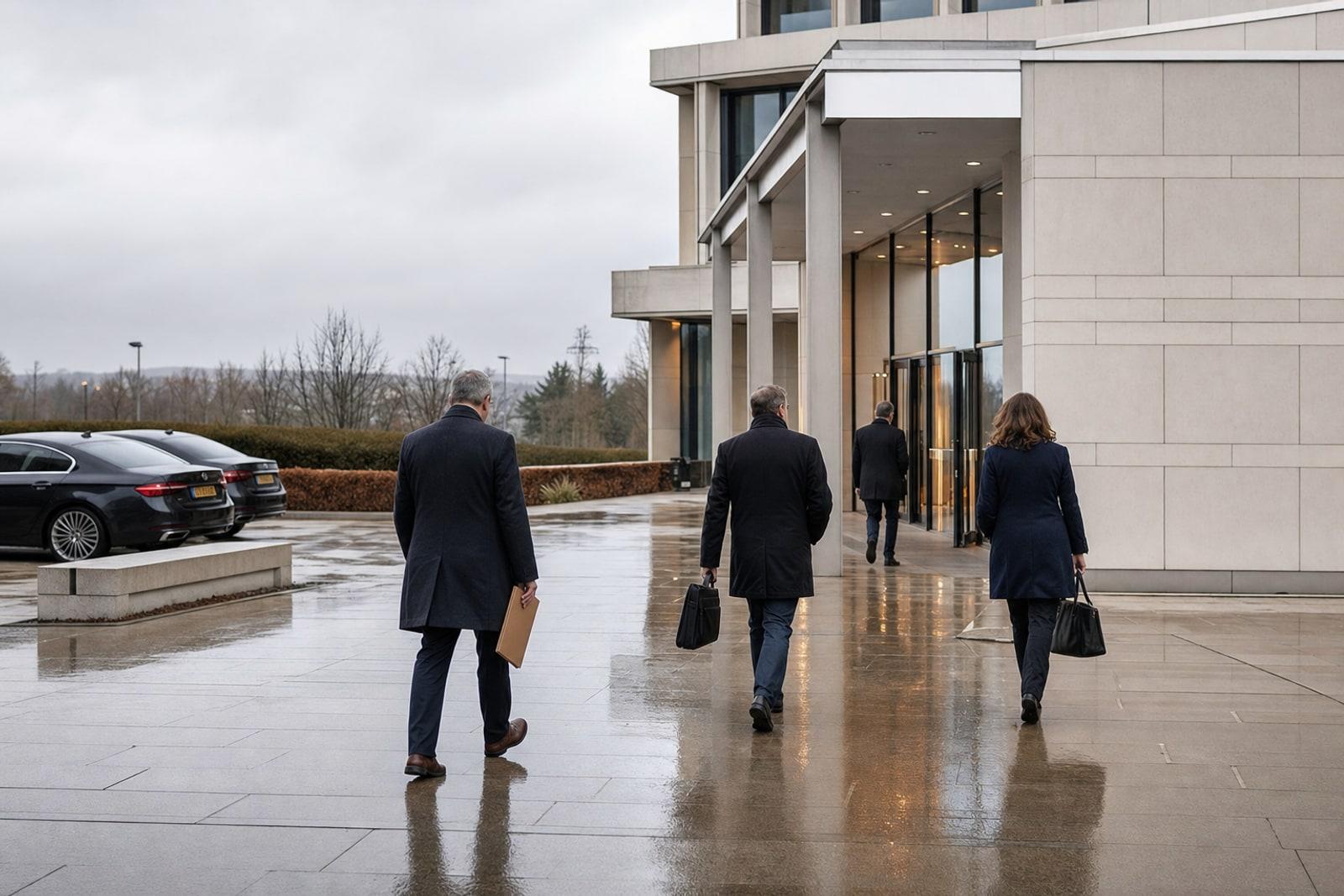
Luxembourg's government and its social partners have signed a roughly €432.5 million package of measures intended to cushion households and businesses from a fresh surge in energy prices, an agreement that Finance Minister Gilles Roth defended this week as both affordable and a sign that the country's tripartite model is working again. The deal, branded the Resilienzpak 2026, was reached after three days of negotiations at Senningen and formally signed on 8 June.
Presenting the outcome, Mr Roth described the cost as "raisonnable" and framed the spending as an investment in social cohesion, telling reporters the state had "the necessary financial margins to finance these measures" without raising taxes. The package will cost an estimated €180 million in 2026 and €252.5 million in 2027, according to figures reported by L'essentiel.
What the tripartite is
The Tripartite Coordination Committee is Luxembourg's standing forum for social dialogue, a mechanism rooted in the country's response to the steel crisis of the 1970s. It brings the government together with the main trade unions and employers to negotiate the national response to economic shocks. For the 2026 round the table included the government, the OGBL-LCGB union confederation, the General Confederation of the Civil Service (CGFP), the Union des Entreprises Luxembourgeoises (UEL) representing employers, and the Chamber of Agriculture. Committee sessions were held on 12 May and again on 2, 3 and 4 June before the text was finalised.
The talks were prompted, the government said, by a deterioration in the geopolitical situation in the Middle East since February. The interruption of maritime traffic through the Strait of Hormuz has disrupted supply chains and pushed up the price of oil and its derivatives. According to scenarios drawn up by the national statistics institute STATEC, the macroeconomic outlook risked worsening through slower growth, higher inflation and rising unemployment.
What the package contains
The agreement is built around three stated objectives that Prime Minister Luc Frieden summarised as slowing inflation and strengthening purchasing power, protecting companies and jobs, and accelerating the energy transition. Its main measures include:
- Fuel and energy relief. The state will absorb part of the cost of motor fuels with a €0.05 per litre reduction on diesel and petrol from 1 July to 31 December 2026, alongside a €0.04 per kWh electricity subsidy for residential customers consuming under 25,000 kWh a year, a €0.15 per litre compensation on heating oil and €0.15 per cubic metre on gas, the latter three running from August to December.
- A higher minimum wage. The social minimum wage will rise by a structural 3.8% (about €105) from 1 January 2027, part of a staged increase the government values at roughly €200 net.
- Tax credits. A temporary "conjuncture" tax credit will offset the income-tax effect of indexation through end-2026 before being built permanently into the tax scale, while the minimum-wage tax credit (CISSM) rises from €81 to €179 in January 2027 and to €200 from July 2027.
- Business and housing support. The cap on the super-reduced VAT housing refund doubles from €50,000 to €100,000, with temporary state-aid frameworks for energy-exposed firms and dedicated assistance for farmers facing higher fertiliser costs.
By the government's own breakdown, the two largest items are the adjustment of the tax scale for indexation and the minimum-wage tax credit, each estimated at about €120 million from 2027, followed by roughly €60 million in energy relief in 2026 and €40 million in business support.
The index in the background
The agreement sits against the backdrop of Luxembourg's automatic wage indexation, the index, which raises salaries, pensions and benefits by 2.5% whenever the cost of living crosses a threshold. A tranche took effect on 1 June 2026 after annual inflation reached 2.3% in May. STATEC's central scenario anticipates a further tranche in 2027. Employers used the talks to press for predictability: the UEL has argued that a minimum twelve-month gap between index tranches is a priority for cost stability and competitiveness, and on current projections the next adjustment would not fall before May 2027.
Reactions
The tone among the partners was notably calmer than in 2025. Nora Back, president of the OGBL, welcomed what she called an improvement in social dialogue while cautioning that the measures still had to be validated by the union's internal bodies. Patrick Dury, president of the LCGB, said the tripartite had "allowed us to find solutions together" and singled out the preservation of purchasing power and of the index system as among the agreement's most positive elements.
For the employers, UEL president Michel Reckinger described the atmosphere as different from a year earlier and welcomed action on inflation, but warned that "the crisis is not over" and cast the deal as a temporary response rather than a settlement. Mr Frieden, for his part, said he was "extremely satisfied to have been able to find an agreement after intense discussions", arguing the government did not want a crisis driven by conflict in the Gulf to undo the gains of its first two and a half years in office. A follow-up committee is to review the measures quarterly from October.
Frequently asked
- How much does the 2026 tripartite package cost?
- The Resilienzpak 2026 is estimated at about €432.5 million, split between roughly €180 million in 2026 and €252.5 million in 2027, according to figures reported by L'essentiel.
- Who took part in the tripartite negotiations?
- The Tripartite Coordination Committee brought together the government, the OGBL-LCGB union confederation, the CGFP civil-service union, the UEL employers' federation and the Chamber of Agriculture. It met on 12 May and on 2-4 June 2026, signing the agreement on 8 June.
- What energy relief does the agreement provide?
- Diesel and petrol prices are cut by €0.05 per litre from 1 July to 31 December 2026, with a €0.04 per kWh electricity subsidy for households under 25,000 kWh a year, plus €0.15 per litre on heating oil and €0.15 per cubic metre on gas from August to December 2026.
- What happens to the minimum wage and the index?
- The social minimum wage rises by a structural 3.8% (about €105) from 1 January 2027 as part of a staged increase worth roughly €200 net. Separately, an automatic index tranche of 2.5% took effect on 1 June 2026, and STATEC anticipates a further tranche in 2027.
Sources(6)
- 1Resilienzpak 2026The Luxembourg Government · gouvernement.lu
- 2Tripartite: les mesures coûteront 432,5 millions d'euros au LuxembourgL'essentiel · lessentiel.lu
- 3Dialogue au Luxembourg: Un accord à la tripartite, avec hausse du salaire minimumL'essentiel · lessentiel.lu
- 4Tripartite: un salarié au minimum gagne 252 euros nets de plus d'ici 2027L'essentiel · lessentiel.lu
- 5PM Frieden 'Extremely Satisfied' to Reach Tripartite AgreementChronicle.lu · chronicle.lu
- 6Tripartite Agreement Sees Increase to Minimum Wage, Energy Subsidies, Business SupportChronicle.lu · chronicle.lu
Related by topic