Governance
Traversini verdict sharpens Luxembourg's line on officials' conflicts of interest
A Luxembourg court gave former Differdange mayor Roberto Traversini a suspended prison term and a five-year ban, in a ruling that redraws how far personal liability reaches for elected officials.
By Camille Reuter · · 4 min read
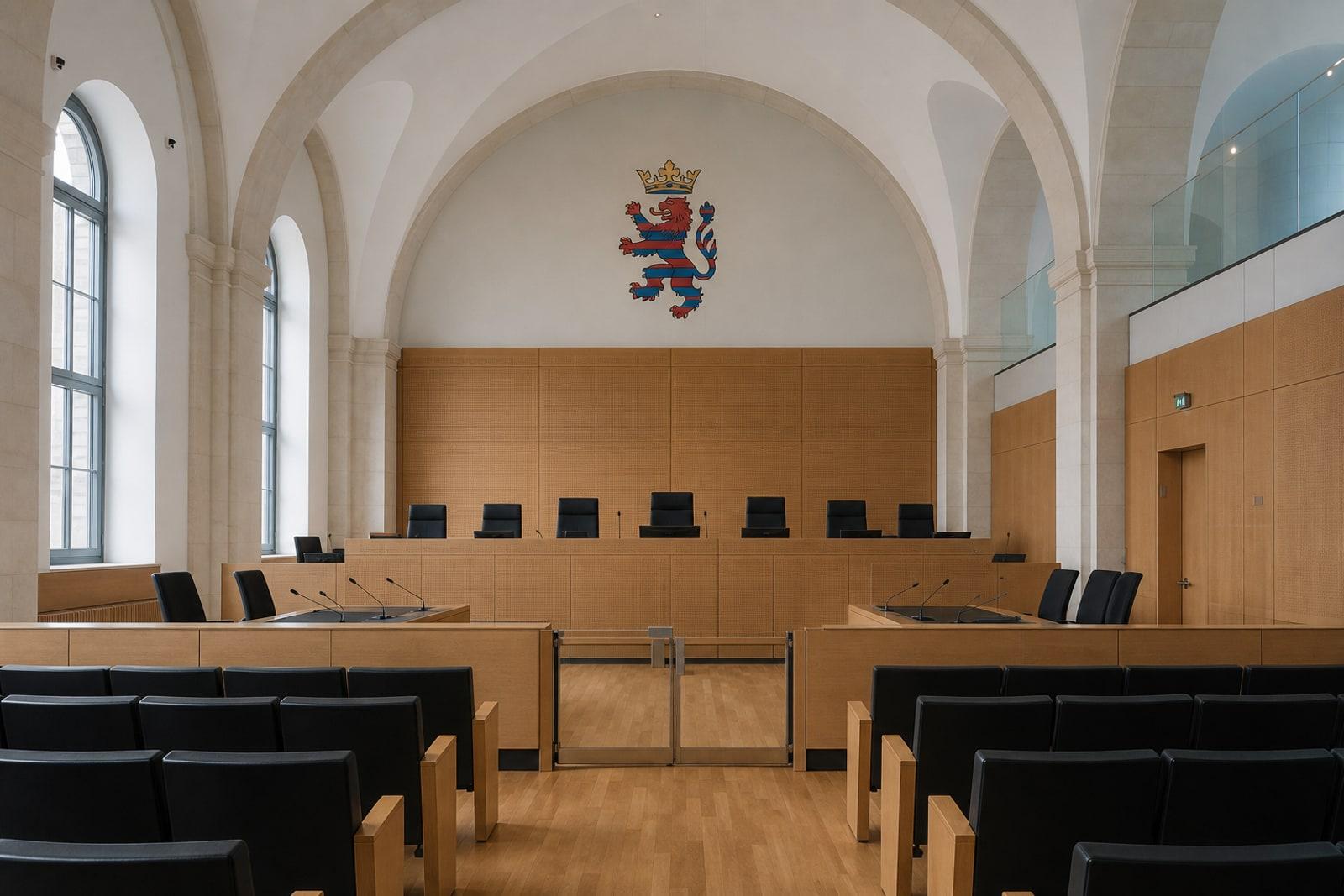
A Luxembourg court has handed Roberto Traversini, the former mayor of Differdange, a three-year prison sentence — fully suspended — together with a €10,000 fine and a five-year ban from standing for election or holding public office, closing one of the country's most closely watched political-corruption trials and setting a marker for how far the personal criminal liability of elected officials now reaches.
The 7th correctional chamber of the Luxembourg District Court delivered its first-instance ruling on 12 March 2026, after a trial that ran across five sittings in January. Traversini, a former member of the Greens (déi gréng) who also gave up a seat in the Chamber of Deputies, was convicted of illegal taking of interest — prise illégale d'intérêts — as well as embezzlement of public funds and forgery, for acts committed between November 2016 and July 2019 while he led the southern steel town. The judgment is not final: the parties have 40 days to appeal.
What the court ruled
At the centre of the case was a vote that, on paper, looked routine. In June 2019 the Differdange council adopted a new general development plan (PAG); Traversini took part in the vote even though it reclassified a house and garden he had inherited months earlier in Niederkorn from a garden zone (zone de jardins) to residential zone 1 — a change prosecutors said increased the property's value. He was also accused of drawing on the municipality's resources and on trainees of the local employment initiative CIGL, which he chaired, to carry out work and drawings for his private properties.
The bench convicted him on the core counts while acquitting him on several others. Prosecutors had asked for four years, fully suspended; the court settled on three. The penalties imposed were:
- three years' imprisonment, fully suspended;
- a €10,000 fine;
- a five-year ban on eligibility — the right to stand for election — and on holding any public office.
According to Le Quotidien, his partner was fined €5,000, while a municipal technical-services employee was acquitted. Traversini's lawyer, Rosario Grasso, noted that the court had come down close to the legal minimum and that his client had been cleared on a number of points.
A 'brutal and merciless' offence
The significance of the verdict lies less in the suspended sentence than in the legal principle it confirms. Under Luxembourg's penal code, the offence of prise illégale d'intérêts is made out as soon as a public official's duty collides with a private interest — financial or merely moral — regardless of whether any advantage is actually obtained. Intent and personal enrichment are, in this reading, beside the point.
The public prosecutor, Stéphane Decker, pressed exactly that interpretation, describing the provision as brutal et impitoyable — "brutal and merciless" — and warning that it leaves no room for the well-meaning official who cuts a corner.
"Il n'y a pas d'égalité dans l'illégalité" — "there is no equality in illegality," Decker told the court, adding that the case "should serve as a warning to all."
Traversini denied acting out of self-interest and cast his conduct as the rough-and-ready style of a hands-on local politician. "Je suis assez pragmatique, je veux résoudre les problèmes et non en créer de nouveaux" — "I'm fairly pragmatic; I want to solve problems, not create new ones," he told the court.
Why local officials are uneasy
It is that breadth that has unsettled town halls. In small communes, mayors and councillors routinely vote on planning, contracts and grants that touch land, businesses or associations close to them, and the ruling underlines that a vote can become a crime even where no money changes hands. Commentators who followed the trial argued that many officeholders still underestimate where the line falls — and that the case has dented public trust in elected representatives.
The affair grew out of the so-called "Gaardenhäischen" controversy — a garden chalet Traversini had built in a protected forest zone — which forced his resignation as Differdange mayor in September 2019 and later fed the political storm that ended Environment Minister Carole Dieschbourg's career in 2022. That narrower file was closed without indictment, but the wider investigation produced the convictions handed down in March.
Reaction has since centred on prevention rather than punishment. A code of conduct (code de déontologie) for municipal politicians is being drawn up, and Syvicol, the association of Luxembourg's towns and communes, has pushed for officials to declare gifts and interests in a public register — a modest safeguard, its critics on the press bench argued, against the kind of blurred boundary that brought Traversini down. Whether the precedent hardens or softens will depend on the appeal courts, should Traversini choose to fight on.
Frequently asked
- What was Roberto Traversini convicted of?
- The Luxembourg District Court's 7th correctional chamber convicted him of illegal taking of interest (prise illégale d'intérêts), embezzlement of public funds and forgery, for acts between November 2016 and July 2019 while he was mayor of Differdange.
- What sentence did he receive?
- Three years' imprisonment, fully suspended, a €10,000 fine, and a five-year ban on eligibility and on holding public office. Prosecutors had sought four years suspended. The ruling is first-instance and can be appealed within 40 days.
- Why does the case matter for other elected officials?
- It confirms that the conflict-of-interest offence is triggered as soon as an official's public duty conflicts with a private interest — financial or moral — even without proven intent or actual gain, which leaves councillors who vote on matters touching their own affairs broadly exposed.
Sources(8)
- 1Roberto Traversini reconnu coupable de détournement de fonds publicsLe Quotidien · lequotidien.lu
- 2Ex-Grünen-Politiker: Bewährungsstrafe für Roberto TraversiniReporter.lu · reporter.lu
- 3Les leçons à tirer de l'affaire TraversiniReporter.lu · reporter.lu
- 4Roberto Traversini muss sich vor Gericht verantwortenTageblatt · tageblatt.lu
- 5Was von der Affäre Traversini bleibtReporter.lu · reporter.lu
- 6Podcast: D'Léieren aus der Affär TraversiniReporter.lu · reporter.lu
- 7Former Differdange Mayor Banned From Holding Political Office for Five Years (aggregating RTL, Luxembourg Times, Wort, Virgule)Ground News · ground.news
- 8L'affaire Dieschbourg-Traversini est close sans inculpationPaperjam · paperjam.lu
Related by topic