Heritage
Into the rock: Luxembourg reopens its fortress casemates for the summer
The Bock and Pétrusse galleries, carved by Spanish, French and Austrian engineers and listed by UNESCO, welcome guided visitors through the warm-weather season.
By Tom Schmit · · · 4 min read
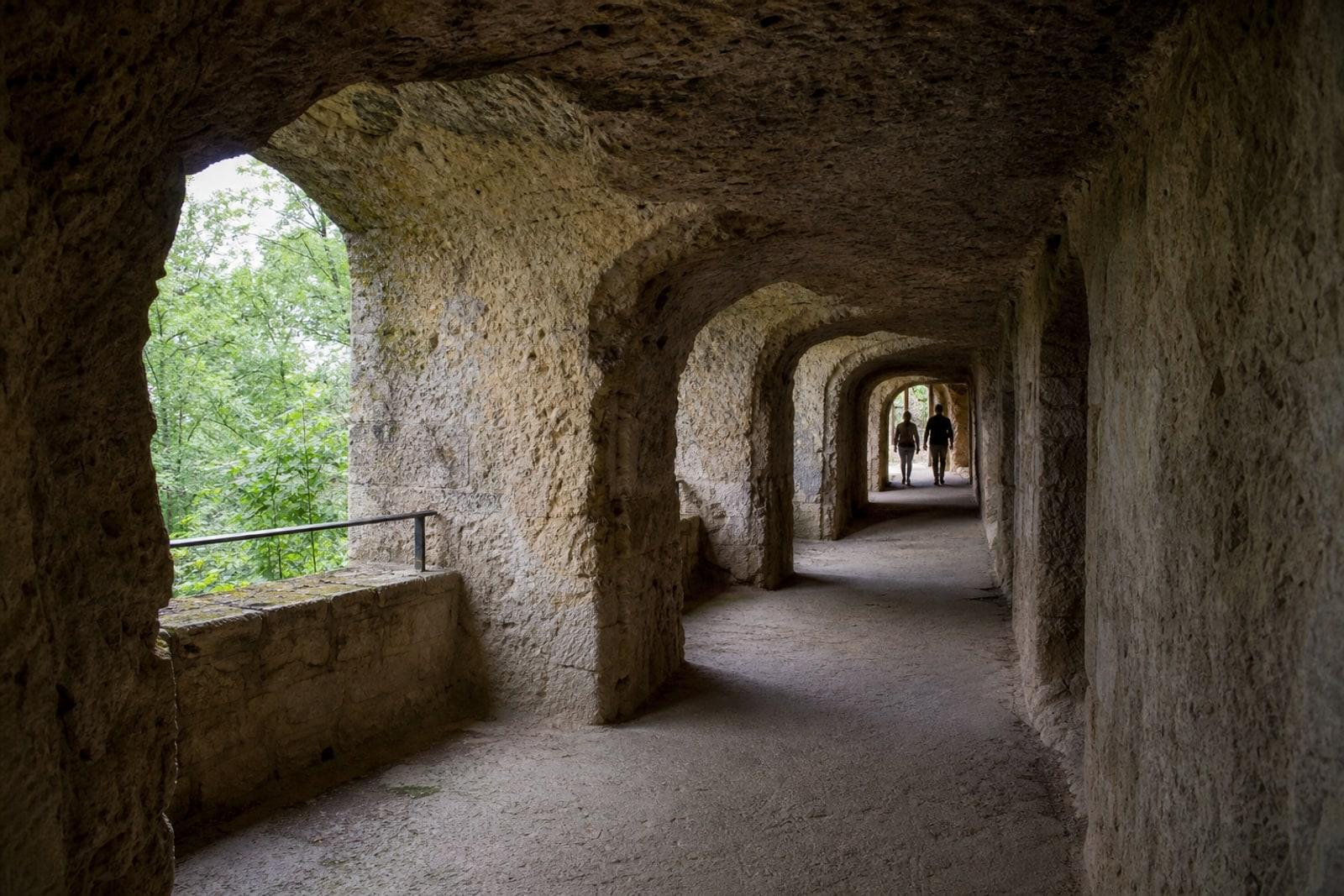
For three centuries, the engineers who fortified Luxembourg dug downward. Where the city's sheer sandstone cliffs left no room for ramparts, they hollowed the rock itself, threading gun chambers, magazines and barracks through the promontories above the Alzette and Pétrusse valleys. The result was a labyrinth that earned the capital its old nickname, the "Gibraltar of the North". This summer, as it does each year, Luxembourg City throws open two stretches of that network — the Bock and Pétrusse casemates — to a season of guided tours and self-paced visits.
The galleries are among the few European monuments where the history of a continent's rivalries can be read in the masonry of a single staircase. They form the centrepiece of a wider site that UNESCO inscribed on its World Heritage List on 17 December 1994, recognising the old quarters and fortifications of Luxembourg as an outstanding example of a fortified European town.
A castle, then a fortress
The story begins on the Bock, the rocky spur where, in 963, Count Siegfried of the House of Ardennes acquired land and built a small castle — the seed from which the city grew. Over the following nine centuries, Luxembourg's strategic position at a crossroads of western Europe made it a prize fought over by one great power after another. The Burgundians took it in 1443; the Spanish Habsburgs held it for generations; the French seized it under Louis XIV, whose celebrated military architect, Sébastien Le Prestre de Vauban, reworked the defences between 1684 and 1688. The Austrians strengthened them again in the eighteenth century, and from 1814 a Prussian garrison manned the walls.
The casemates themselves — the vaulted, bomb-proof chambers cut into the rock — were begun under the Spanish in 1644, extended by Vauban's school, and enlarged by Austrian engineers in the mid-eighteenth century. At their greatest extent the underground passages ran for roughly 23 kilometres, linking tens of thousands of square metres of casemated space. They could house artillery, workshops, slaughterhouses, kitchens and thousands of soldiers, allowing the fortress to withstand a prolonged siege. Luxembourg was never stormed: in 1795 it fell to French revolutionary forces only after a seven-month blockade, most of its walls still unbreached.
The treaty that tore down the walls
What war could not do, diplomacy did. The 1867 Treaty of London settled the so-called Luxembourg Crisis, a dangerous quarrel between France and Prussia over the duchy's future. Under its terms, Luxembourg was declared perpetually neutral, the Prussian garrison withdrew, and the great fortress — by then one of the most heavily defended sites on the continent — was to be dismantled. The demolition stretched from 1867 to 1883 and cost a fortune in gold francs. Bastions, gates and towers came down, opening the way for the modern city to spread beyond its former glacis.
The casemates, however, largely survived. Blowing them up would have endangered the houses and streets above, so the deepest galleries were sealed rather than destroyed. Around 17 kilometres of subterranean passages remain today, the most tangible legacy of the vanished stronghold. In the decades that followed their military retirement they were put to humble new uses — as cellars, workshops and shelters — and during both world wars the Bock and Pétrusse casemates served as air-raid refuges with the capacity to protect tens of thousands of the city's inhabitants.
What visitors see
The two casemate complexes opened to the public in 1933 and have drawn visitors ever since. They offer contrasting experiences:
- The Bock casemates, reached from the Montée de Clausen near the spot where Siegfried's castle once stood, plunge visitors into the rock beneath the city's birthplace. Inside are gun chambers pierced by loopholes, a former castle prison, an archaeological crypt and a deep well, with windows in the cliff face opening onto sweeping views over the Grund and the Alzette.
- The Pétrusse casemates, entered from the Place de la Constitution beside the Gëlle Fra war memorial, descend into the bastion system the Spanish began in 1644. Reached by guided tour, they include the great staircase and gun positions added by Austrian engineers in the eighteenth century.
Both sites are physically demanding — steep, uneven stone steps, low passages and cool, damp air — and sturdy footwear is advised.
The summer 2026 programme
The casemates reopen for the warm-weather season alongside the Luxembourg City Tourist Office's wider "Summer in the City" programme, which this year runs from 12 June to 18 September. The Bock casemates welcome visitors daily, while the Pétrusse galleries are accessible through accompanied tours led by the tourist office's guides, who work in some two dozen languages.
Beyond the underground itself, the season's guided walks place the casemates in their wider setting. The popular City Promenade tour traces the old town, and themed routes follow the line of the former fortifications down through the valleys, where talking stones and waymarked paths such as the Wenzel and Vauban circular walks connect the surviving towers, gates and bastions. For a city that spent two centuries trying to make itself impregnable, the summer offers the gentler pleasure of simply walking through the result. Visitors are encouraged to confirm current opening dates, times and prices with the Luxembourg City Tourist Office before setting out.
Frequently asked
- When are the Luxembourg casemates open in summer 2026?
- The Bock and Pétrusse casemates open for the warm-weather season, which coincides with the Luxembourg City Tourist Office's 'Summer in the City' programme running from 12 June to 18 September 2026. The Bock casemates admit visitors daily, while the Pétrusse galleries are visited on guided tours. Visitors should confirm exact dates, hours and prices with the tourist office.
- Why is the Luxembourg fortress called the 'Gibraltar of the North'?
- The nickname reflects the fortress's reputation for being almost impregnable. Built up over centuries by the Spanish, French, Austrians and Prussians and reinforced with kilometres of underground casemates, it was never taken by direct assault and surrendered only after long blockades, most famously a seven-month siege in 1795.
- What happened to the fortress under the 1867 Treaty of London?
- The 1867 Treaty of London ended the Luxembourg Crisis between France and Prussia. It declared Luxembourg perpetually neutral, required the Prussian garrison to withdraw and ordered the dismantling of the fortress. The demolition was carried out between 1867 and 1883, though most of the deep casemate galleries were sealed rather than destroyed and still survive.
- What can visitors see inside the casemates?
- The Bock casemates, near the site of Count Siegfried's 10th-century castle, contain gun chambers with loopholes, a former prison, an archaeological crypt, a deep well and windows in the cliff offering valley views. The Pétrusse casemates, entered from the Place de la Constitution, include a great staircase and gun positions added by Austrian engineers in the 18th century.
Sources(6)
- 1City of Luxembourg: its Old Quarters and FortificationsUNESCO World Heritage Centre · whc.unesco.org
- 2UNESCO | Ville de LuxembourgVille de Luxembourg · vdl.lu
- 3Bock CasematesLuxembourg City Tourist Office · luxembourg-city.com
- 4The Bock and Pétrusse CasematesLuxembourg City Tourist Office · luxembourg-city.com
- 5Petrusse CasematesLuxembourg for Tourism · visitluxembourg.com
- 6Fortress of LuxembourgWikipedia · en.wikipedia.org
Related by topic