Housing
Luxembourg's affordable-housing fund spent a record €474 million in 2025 — but demand keeps rising
The state's special fund more than doubled its spending last year, adding 1,293 subsidised homes to a 5,348-unit pipeline. Waiting lists have nearly doubled since 2021.
By Sophie Klein · · 4 min read
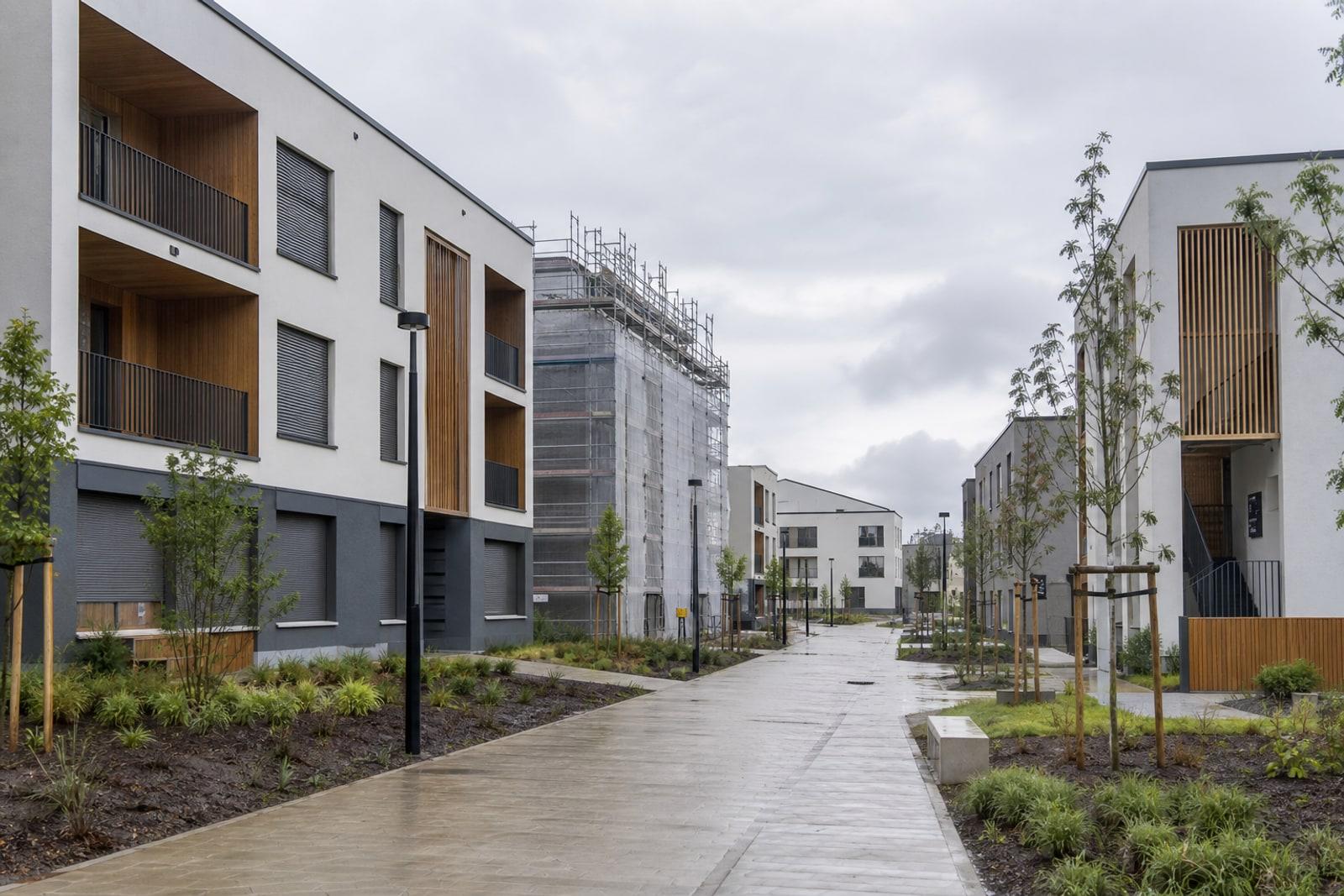
Luxembourg's central vehicle for financing affordable housing spent €474 million in 2025 — more than double the €224 million it disbursed a year earlier and the highest figure in its history, according to the annual report of the Fonds spécial pour le logement abordable presented by Housing Minister Claude Meisch on 2 July.
The ministry described the financial commitment as reaching "a historic level". By 31 December 2025, the fund counted 5,348 so-called conventioned homes — units covered by a state subsidy agreement — spread across some 350 projects nationwide, after 1,293 units were added to the pipeline during the year, reporting by L'essentiel and Paperjam on the document shows.
The record sum lands in the middle of Luxembourg's defining social problem: a housing market in which roughly 6,000 households were waiting for a social rental home in 2025, nearly twice as many as in 2021, according to Housing Europe's State of Housing in the EU report.
What the €474 million actually covers
The special fund is the state's main budget line for building up a public housing stock. Its spending flows to the public and non-profit developers that carry out the projects — the national housing company SNHBM, the Fonds du Logement, communes and accredited private non-profits — alongside direct state purchases.
According to Paperjam's breakdown of the 2025 accounts, the year's outlays included €73 million for land acquisitions and €25.7 million in Pacte logement 2.0 allocations to 98 communes. The state's land reserve stood at 1,656 ares at year-end, enough for an estimated 922 additional homes. Of the conventioned stock, 64 per cent is earmarked for affordable rental and 36 per cent for sale.
A separate instrument runs alongside the fund: the VEFA programme, under which the state buys homes off-plan from private developers. An official interim review published in December 2025 put that envelope at €480 million for roughly 800 homes over 2024–2027, with SNHBM and the Fonds du Logement acting as social landlords. By the end of 2025 the state had acquired 460 VEFA units; by mid-2026 more than 800 had been bought or reserved. The ministry calls the scheme "a major lever" of national housing policy, both adding supply quickly and propping up a construction sector in a prolonged slump.
Spending is set to stay at this altitude. The report projects fund expenditure above €475 million a year through 2029, peaking at €542 million in 2027, with outstanding commitments already exceeding €1 billion.
"Les chiffres de 2025 ne reflètent pas seulement une année exceptionnelle, mais aussi une évolution durable" — the 2025 figures reflect not just an exceptional year but a lasting shift, Meisch said in the statement accompanying the report.
A pipeline, not keys in doors
The headline numbers measure funded commitments, not completed homes. A "conventioned" unit is one for which a subsidy agreement has been signed; many are years from delivery. That gap is the core of the criticism levelled at the policy. As Paperjam put it in its analysis of the report, the state is investing as never before, but time is working against it: the flagship public developments underpinning the pipeline run on decade-plus horizons.
- Neischmelz in Dudelange, on a former steelworks site, is planned for 1,575 homes on a timeline stretching to 2044.
- Wunne mat der Wooltz in Wiltz counts more than 800 homes over roughly 20 years.
- Elmen in Kehlen, SNHBM's model eco-district, is also designed for more than 800 homes in phases.
For comparison, the fund's 2024 report — presented only in September 2025 — showed 4,226 conventioned units across 292 projects in 82 communes, with €153.6 million actually paid out to social developers that year. The 2025 acceleration is real, but it starts from a stock that remains small: the national register of affordable rental housing, RENLA, gives applicants access to only about 3,500 affordable rental units across the country, according to the government's Guichet.lu portal.
Demand is growing faster than delivery
On the other side of the ledger, need keeps climbing. A study by the Improof think tank, reported by Paperjam, found more than 5,500 households — over 15,400 people — on the Fonds du Logement's waiting list as of March 2023, up about 40 per cent on 2021, with an average wait of 2.9 years. Housing Europe's 2025 country profile put the social-housing waiting list at around 6,000 households and described Luxembourg's affordable-housing shortage as severe.
The Fondation IDEA think tank, in a March 2026 analysis titled "The Permanent Housing Crisis or the Unacceptable as the Norm", argued that the country needs roughly 6,000 new homes a year and that high prices, limited construction volumes, land hoarding and lengthy planning procedures have made the crisis structural rather than cyclical — despite state intervention in housing dating back to 1906.
Meisch's own framing acknowledges the long game. "Thanks to the mobilisation of the state, the communes and all of our partners, we are progressively building a larger, more diversified and better distributed stock of affordable housing," he said in the report's presentation. When he presented the previous year's accounts, he called affordable housing "an essential condition of stability and attractiveness for our country".
The 2025 report gives that ambition a hard number: nearly half a billion euros in a single year. Whether the homes arrive fast enough for the households already on the list is the question the next reports will have to answer.
Frequently asked
- What does Luxembourg's €474 million affordable-housing figure cover?
- It is the 2025 expenditure of the Fonds spécial pour le logement abordable, the state's main budget vehicle for affordable housing. It funds subsidies to public and non-profit developers (SNHBM, Fonds du Logement, communes, accredited non-profits), state land purchases (€73 million in 2025), Pacte logement 2.0 payments to communes and off-plan home acquisitions.
- How many affordable homes has the fund actually produced?
- At the end of 2025 the fund counted 5,348 'conventioned' homes across some 350 projects — units with a signed subsidy agreement, many still years from completion. The national affordable rental stock accessible via the RENLA register is only about 3,500 units.
- What is the VEFA programme and how is it different?
- VEFA is a separate €480 million envelope (2024–2027) under which the state buys roughly 800 homes off-plan directly from private developers, adding supply faster while supporting the construction sector. More than 800 homes had been acquired or reserved by mid-2026.
- Is the spending keeping up with Luxembourg's housing crisis?
- Not yet. Around 6,000 households were on the social-housing waiting list in 2025, nearly double 2021, and the Fondation IDEA estimates Luxembourg needs about 6,000 new homes a year. Flagship public projects such as Neischmelz in Dudelange run on timelines to 2044, so record spending converts into keys only gradually.
Sources(9)
- 1Au Luxembourg: L'État a mis 474 millions d'euros pour les logements abordablesL'essentiel · lessentiel.lu
- 2L'État investit comme jamais, mais le temps joue contre luiPaperjam · paperjam.lu
- 3Le gouvernement renforce son engagement pour le logement abordable: 4.226 logements inscrits au Fonds spécial pour le logement abordable en 2024Gouvernement du Grand-Duché de Luxembourg · gouvernement.lu
- 4Bilan intermédiaire du programme VEFAMinistère du Logement et de l'Aménagement du territoire / Gouvernement du Luxembourg · mlogat.gouvernement.lu
- 5Housing Crisis in Luxembourg Becoming Permanent, IDEA Analysis SuggestsChronicle.lu · chronicle.lu
- 6Number of people waiting for social housing up by 40%Paperjam (English) · en.paperjam.lu
- 7The State of Housing in the EU 2025 — Luxembourg country profileHousing Europe · housingeurope.eu
- 8Inscription en tant que candidat-locataire pour un logement abordable au registre national des logements abordables (RENLA)Guichet.lu — Luxembourg government · guichet.public.lu
- 9Logement abordable: l'inscription au RENLA désormais possible en ligne via MyGuichet.luMinistère du Logement / Logement.lu · logement.public.lu
Related by topic