Nuclear diplomacy
IAEA chief says Iran inspections will resume; Tehran says only after a final deal
Rafael Grossi insists monitoring of Iran's nuclear sites will return under the new US-Iran memorandum, but Tehran disputes the scope as Europe presses for full inspector access.
By Camille Reuter · · 5 min read
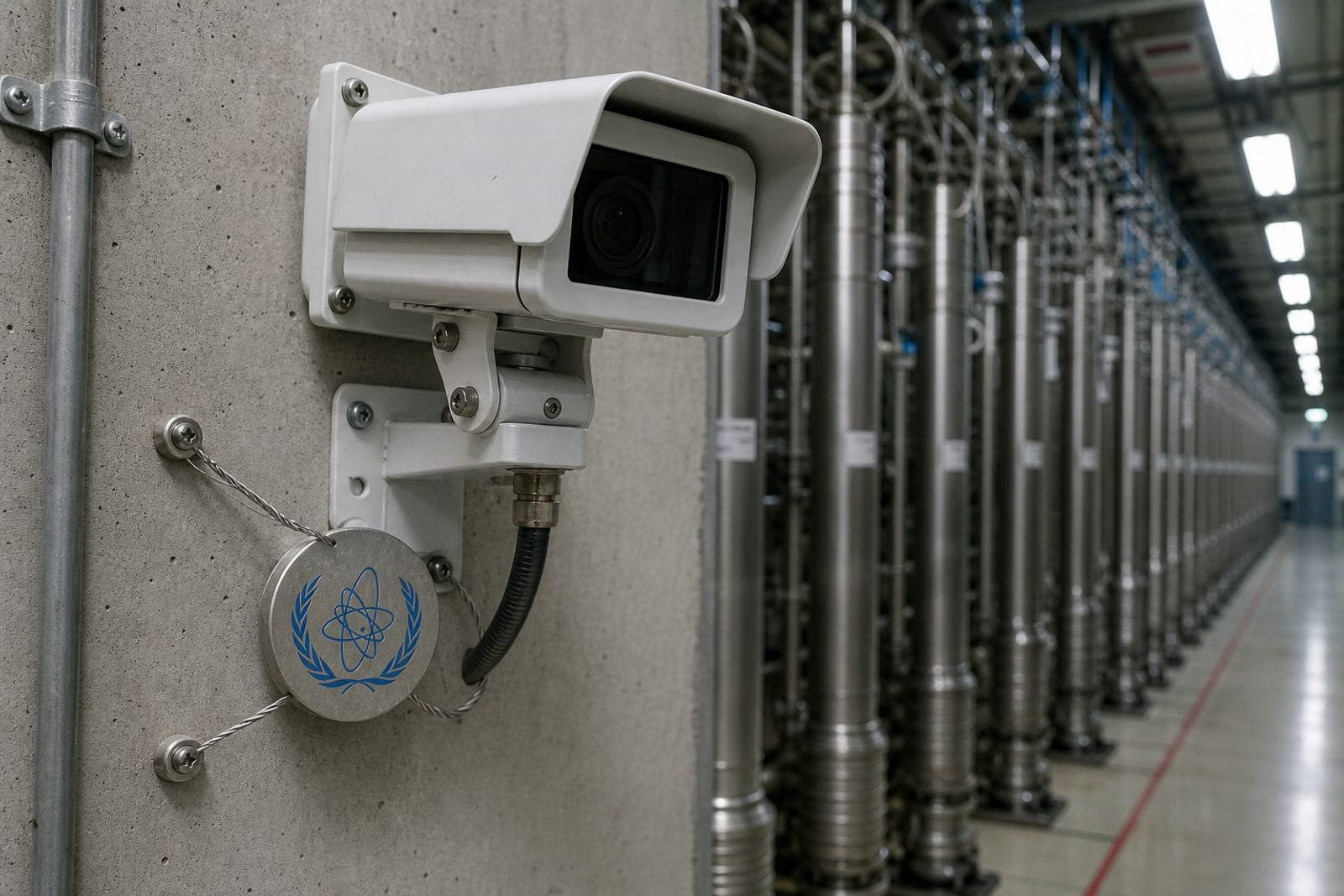
The head of the United Nations nuclear watchdog has given his clearest signal yet that international inspectors will return to Iran's nuclear sites, even as Tehran and Washington trade conflicting accounts of what they actually agreed. The dispute goes to the heart of the most consequential question in nuclear diplomacy this year: whether Iran's programme, battered by two rounds of strikes and shrouded from outside view since 2025, can be brought back under credible international oversight.
Rafael Grossi, director general of the International Atomic Energy Agency (IAEA), said on Wednesday that the framework signed by the US and Iranian presidents leaves no room for ambiguity on monitoring. Speaking to reporters at Japan's Fukushima Daiichi plant, he insisted that verification would resume regardless of the political theatre around it.
Whether this happens the day after tomorrow or in one week or in 10 days, it's important, but not essential. This is going to happen.
For the European Union, the stakes are immediate. Brussels and the so-called E3 — France, Germany and the United Kingdom — spent 2025 watching the 2015 nuclear accord collapse, triggering the reimposition of UN sanctions. Restoring inspector access is now the bloc's front-line test of whether diplomacy can still contain a programme that sits enriched to within reach of weapons grade.
What the memorandum says
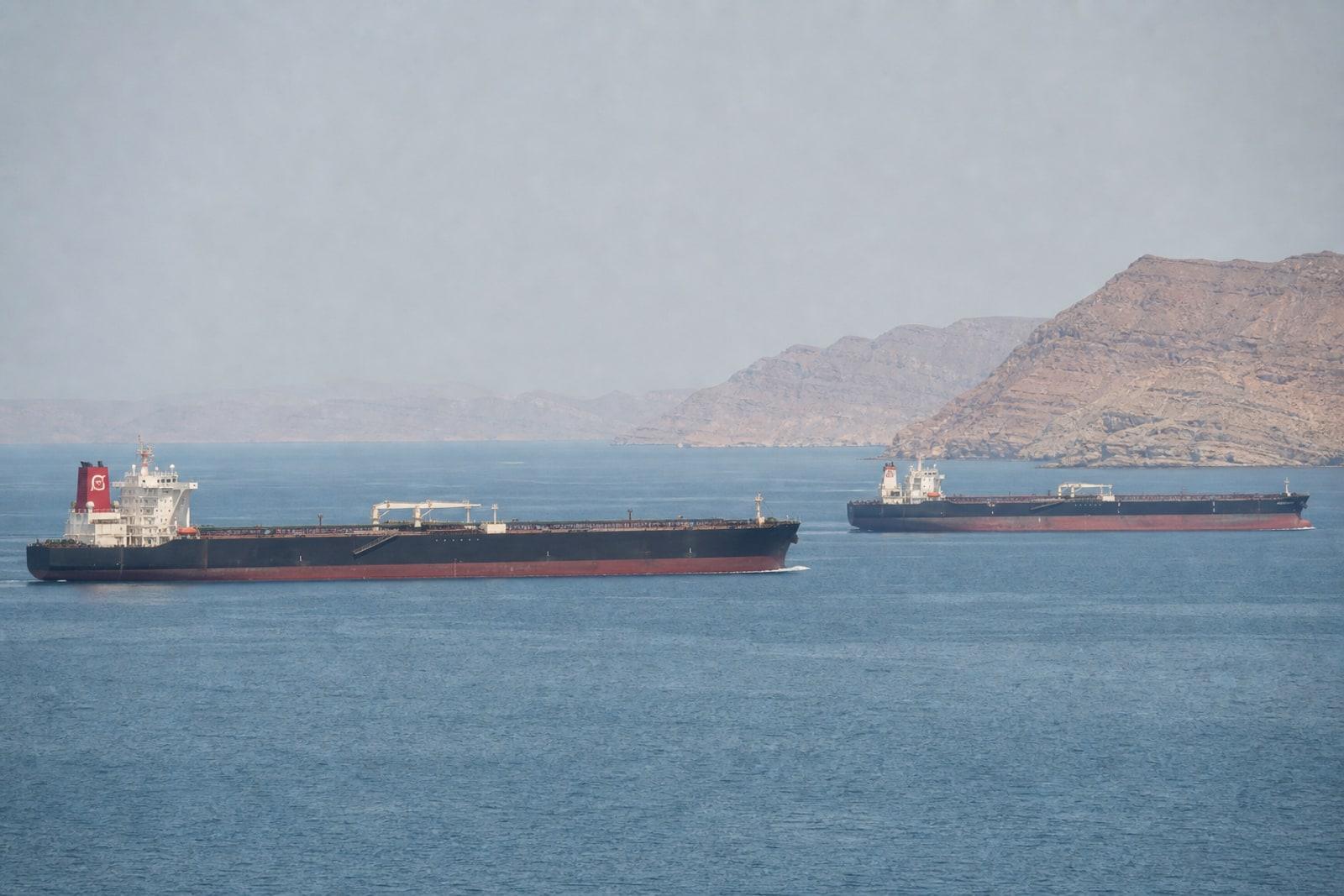
The framework is the Islamabad Memorandum, a 14-point understanding signed separately by US President Donald Trump and Iranian President Masoud Pezeshkian on 17 June 2026 after Pakistani mediation. It ended the latest fighting, reopened the Strait of Hormuz to commercial shipping toll-free for 60 days and lifted a US naval blockade of Iranian ports.
On the nuclear file, Grossi said the text is explicit. It states that nuclear activities and material facilities "will be supervised by the IAEA," and provides for down-blending Iran's enriched uranium on site under the agency's supervision. The harder questions — which sites, what exactly is monitored, and on what timetable — were deferred to a 60-day negotiating window that can be extended by mutual consent. Grossi said dates and locations were being worked out "in collaboration" with Iran, with a decision expected soon.
Where Tehran and Washington diverge
The gap between the two governments is wide. US Vice-President JD Vance said earlier in the week that Iran had agreed to let inspectors back, and Trump claimed Tehran had accepted "highest level nuclear inspections." Iranian officials pushed back hard.
Iran's deputy foreign minister, Kazem Gharibabadi, said access to the sites struck in last year's war and to the country's enriched-material stocks would be settled only "within the framework of a final agreement" and in return for sanctions relief. Foreign ministry spokesman Esmail Baghaei said UN inspectors were not scheduled to examine the bombed facilities at all. Grossi, for his part, urged both capitals to stop litigating the deal in public, noting that political statements were "part of the reality" but that the signed text was what counted.
The agency has not been entirely shut out. After Iran's parliament suspended cooperation in July 2025 and inspectors left, a new framework agreed that September allowed limited visits to resume; IAEA staff inspected the Bushehr power plant in June 2026. But the sites at the centre of the crisis have stayed off-limits.
Europe's stake in verification
The European angle runs through the agency's governance. France, Germany and the UK activated the JCPOA "snapback" in August 2025, and UN sanctions were reimposed in late September, with the EU Council restoring its own measures on 29 September 2025. On 10 June 2026, the IAEA Board of Governors adopted resolution GOV/2026/40 — tabled by the three European powers and the United States — demanding that Iran hand over precise accounts of its nuclear material and grant inspectors full access "without delay."
EU High Representative Kaja Kallas has framed the current opening as fragile and incomplete. During a visit to Pakistan on 1 June, she praised Islamabad's mediation but warned that a ceasefire was not a settlement.
"Any temporary understanding between the US and Iran must be followed by deeper talks about Tehran's nuclear stockpile and other critical issues."
Kallas added that she saw "a concrete role for the EU in helping to make any eventual agreement durable" — a signal that Brussels intends to stay engaged even though the Islamabad text was negotiated largely without it. The EU's earlier statement welcoming the spring ceasefire stressed that "diplomacy is key to resolve all outstanding issues."
What inspectors still cannot see
The verification gap is not abstract. Before the June 2025 strikes, Iran was estimated to hold roughly 440 kilograms of uranium enriched to 60% — close to weapons grade — alongside larger stocks at lower levels. Since the bombing, the IAEA says it "cannot provide any information on the current size, composition or whereabouts" of that high-enriched stockpile. Grossi has indicated that most of it is believed to be buried in tunnels at Isfahan.
- Natanz and Fordow: Iran's principal enrichment plants were heavily damaged or destroyed and are assessed as likely inoperable.
- Isfahan: tunnel entrances remain backfilled and sealed, with operations unknown.
- The stockpile: material enriched to 60% sits well above civilian needs; weapons grade is about 90%. Iran maintains it does not seek nuclear weapons.
That is the prize, and the risk, behind Grossi's insistence. Without inspectors on the ground, neither Europe nor the wider world can confirm where Iran's most sensitive material is, or rule out a covert dash toward a bomb. "In order to have certainty," Grossi said this week, "we need to have a very strong system of verification as soon as practicable." Whether Tehran allows it — and how soon — will determine if the Islamabad Memorandum becomes a genuine off-ramp or, in the agency's own warning, merely the illusion of one.
Frequently asked
- Has Iran agreed to let IAEA inspectors back into its nuclear sites?
- Partly. IAEA chief Rafael Grossi says the US-Iran Islamabad Memorandum commits Iran to IAEA supervision and that inspections 'will happen.' But Iran says access to the sites struck in 2025 and to its enriched-uranium stocks will be resolved only under a final agreement, leaving the scope and timetable disputed.
- What is the Islamabad Memorandum?
- It is a 14-point US-Iran memorandum of understanding signed separately by Presidents Trump and Pezeshkian on 17 June 2026 after Pakistani mediation. It ended the latest fighting, reopened the Strait of Hormuz to shipping for 60 days, and provides for IAEA-supervised down-blending of enriched uranium, with nuclear specifics deferred to a 60-day negotiating window.
- Why does this matter for the European Union?
- France, Germany and the UK triggered the snapback of UN sanctions on Iran in 2025 and co-sponsored a June 2026 IAEA board resolution demanding full inspector access. Restoring verification is the EU's central test of whether Iran's nuclear programme can be brought back under international oversight, a front-line security concern for the bloc.
Sources(12)
- 1IAEA demands verification of Iran nuclear ambitions amid 'statement war'Al Jazeera · aljazeera.com
- 2UN nuclear chief says Iran inspections will happen, Tehran says after dealAl Jazeera · aljazeera.com
- 3IAEA chief says inspections of Iran's nuclear sites 'going to happen'Euronews · euronews.com
- 4U.N. nuclear chief says inspectors will visit Iran, but Iran says only after final dealNPR · npr.org
- 5Analysis of IAEA Iran Verification and Monitoring and NPT Safeguards Reports — June 2026Institute for Science and International Security (ISIS) · isis-online.org
- 6NPT Safeguards Agreement with Iran: Resolution to the IAEA Board of Governors, June 2026GOV.UK (UK Foreign, Commonwealth & Development Office) · gov.uk
- 7Islamabad MemorandumWikipedia · en.wikipedia.org
- 8US-Iran peace deal: Six things we learned from the Islamabad Memorandum of UnderstandingMiddle East Eye · middleeasteye.net
- 9E3 joint statement on Iran: activation of the snapbackGOV.UK · gov.uk
- 10Iran sanctions snapback: Council reimposes restrictive measuresCouncil of the European Union (Consilium) · consilium.europa.eu
- 11Statement by the High Representative on behalf of the EU on the ceasefire agreed by the United States and IranCouncil of the European Union (Consilium) · consilium.europa.eu
- 12PM reaffirms EU ties, thanks Kallas for support for Gulf peace effortsDawn · dawn.com
Related by topic