Property & buying
Buying a House in Luxembourg: Costs, Fees and the Bëllegen Akt
Registration duties of 7%, notary emoluments near 1%, and a €40,000-per-buyer tax credit that can erase most of the bill — the true all-in cost of a home purchase, step by step.
By Sophie Klein · · 4 min read
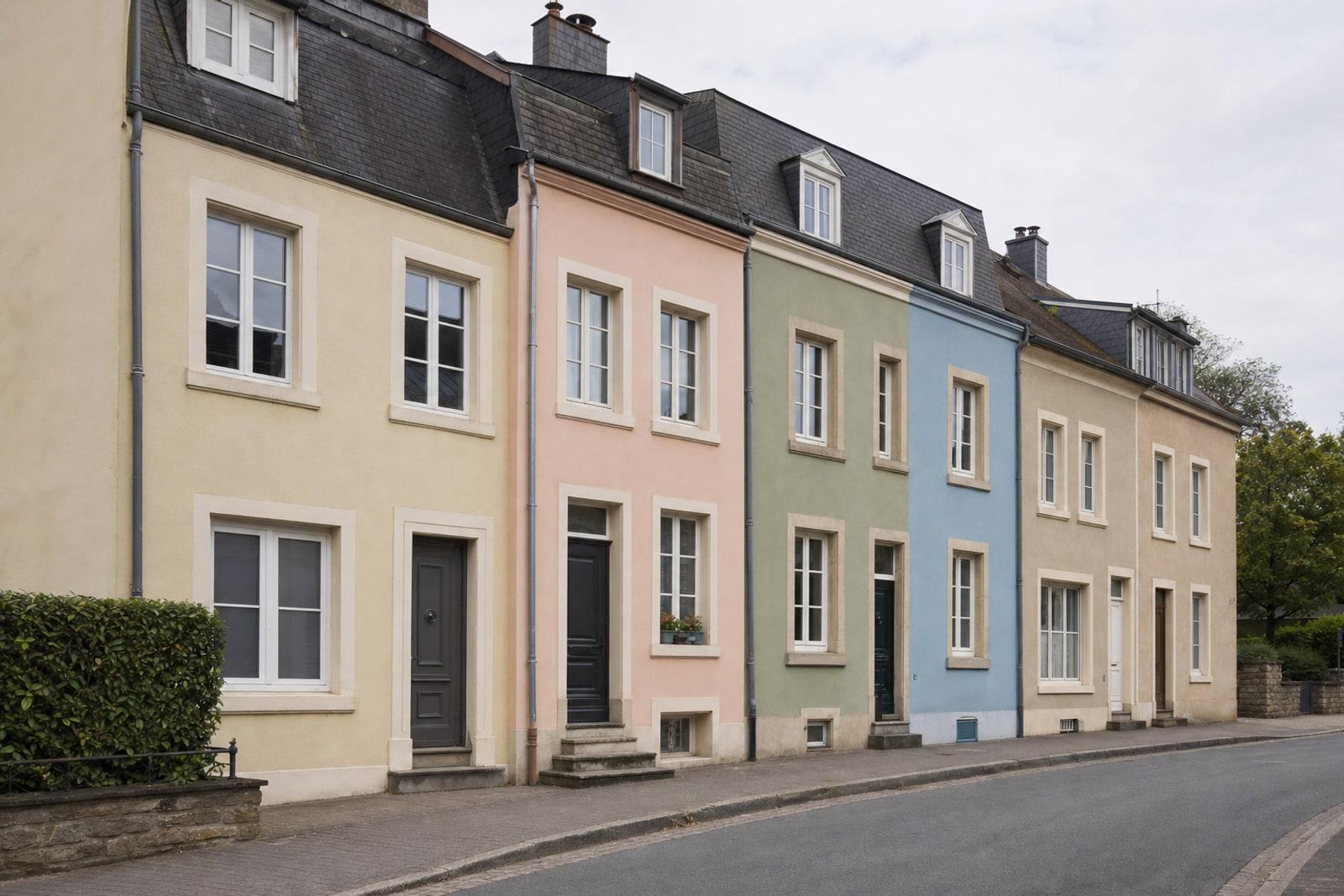
Buying a house in Luxembourg costs more than the asking price. On top of the price you pay 7% in registration and transcription duties (6% registration plus a 1% transcription fee), roughly 1% in notary emoluments, and a few hundred euros of administrative disbursements. The decisive offset is the Bëllegen Akt tax credit — up to €40,000 per buyer (€80,000 for a couple) — which can wipe out most or all of the duties on a main home. This guide breaks down the numbers, the cash you need up front, and the buying process from offer to deed.
How much does buying a house in Luxembourg cost on top of the price?
The transaction costs a buyer pays to the notary at signing break down as follows:
- Registration duty (droit d'enregistrement): 6% of the purchase price.
- Transcription fee (droit de transcription): 1% of the price. Together these are the headline 7% — paid by the buyer only; the seller does not contribute.
- Notary emoluments: about 1% of the price. This is a regulated sliding-scale fee (lower in percentage terms on higher prices), subject to 17% VAT.
- Administrative disbursements: roughly €300–€800 for cadastral extracts and documents.
A temporary reduction that halved registration duty to 3.5% ended on 30 June 2025. From 1 July 2025 the full 7% applies again. On an illustrative €600,000 home, the duties are €42,000 and notary emoluments about €6,000 — before any tax credit. That is why the Bëllegen Akt matters so much.
What is the Bëllegen Akt and how much can it save?
The Bëllegen Akt — the tax credit on notarial instruments — reduces the registration and transcription duties when you buy a home to live in yourself. It is €40,000 per purchaser, so a couple buying together share a combined €80,000. The credit was raised from €30,000 and made permanent for deeds signed from 1 July 2025.
The tax credit is limited to €40,000 per person. To qualify, the buyer must commit to personally occupy the property — within two years, or four years for building land or a property under construction — for an uninterrupted period of at least two years. (Guichet.lu / Administration de l'enregistrement)
Key rules to know:
- It is not limited to first-time buyers — any individual buying a main residence can use it — but each person has a single €40,000 envelope, which can be spread across successive purchases until it is used up.
- You must occupy the home for at least two continuous years. Sell or rent it out sooner and the credit must be repaid in full with legal interest (exemptions exist for force majeure, health, forced sale, death of a spouse or divorce).
- The authority collects a minimum registration fee of €100, so duties never fall to zero.
On the €600,000 example, a single buyer's €40,000 credit cuts the €42,000 of duties to about €2,000; a couple's €80,000 fully covers them, leaving only the €100 minimum. A buyer who does not qualify pays the full ~8% (7% duties plus ~1% notary).
How much cash do you actually need up front?
Since 2021 the financial regulator (CSSF) has set loan-to-value limits: first-time buyers of a main home can borrow up to 100% of the value; people changing residence up to 90%; and buy-to-let investors up to 80% (a 20% deposit). Non-residents are often asked for 20–40% by their bank.
Crucially, even a 100% mortgage covers only the price. The transaction costs must come from your own funds:
- Notary fees and any duties not covered by the Bëllegen Akt — from about 1% of the price for an eligible couple up to roughly 8% for a non-eligible buyer.
- Mortgage registration (inscription hypothécaire): roughly 0.5%–1% of the loan, plus bank arrangement fees of about 0.2%–0.5%.
- The 10% deposit paid at the preliminary agreement (see below) — held in escrow and credited toward the price, but you must be able to fund it when you sign.
A realistic minimum for an eligible first-time buyer is therefore the notary and mortgage costs — often 2–4% of the price in ready cash, more if you are not fully covered by the credit.
What are the steps to buy a house in Luxembourg?
- Get financing lined up. Obtain a mortgage agreement in principle so you know your budget and LTV.
- Make an offer and sign the compromis de vente. This binding preliminary agreement commits both sides; the buyer traditionally pays a 10% deposit held in escrow by the notary. There is no legal cooling-off period once it is signed, so add a suspensive condition for obtaining your loan.
- Finalise the mortgage. The bank confirms the loan and registers the mortgage over the property.
- Sign the notarial deed (acte de vente). Usually 3–6 months after the compromis, you pay the balance, the duties (net of the Bëllegen Akt) and notary fees, and ownership transfers.
- Budget for the annual property tax (impôt foncier). This municipal tax is historically low — often tens to a few hundred euros a year — pending a legislated reform expected to take real effect around 2030.
Verify current rates, the €40,000 ceiling and any active housing-support measures on guichet.lu and with the Administration de l'enregistrement before you commit, as thresholds have changed in recent budgets.
Frequently asked
- How much are notary and registration fees when buying in Luxembourg?
- Expect 7% in registration and transcription duties (6% + 1%) plus about 1% in notary emoluments and €300–€800 of disbursements. The Bëllegen Akt tax credit can offset most or all of the duties on a main residence.
- How much is the Bëllegen Akt tax credit worth?
- Up to €40,000 per buyer, so €80,000 for a couple purchasing together. It reduces the registration and transcription duties on a home you occupy yourself, and requires you to live in the property for at least two continuous years.
- How much deposit do I need to buy a house in Luxembourg?
- First-time buyers of a main home can borrow up to 100% of the value under CSSF rules, but the transaction costs must come from your own funds — realistically 2–4% of the price in cash. Movers can borrow up to 90% and investors up to 80%.
- Is the compromis de vente binding in Luxembourg?
- Yes. Once signed, the compromis de vente commits both buyer and seller, and there is no legal cooling-off period. The buyer typically pays a 10% deposit held in escrow, so include a suspensive condition for obtaining your mortgage.
Sources(8)
- 1Tax credit on notarial instruments ('Bëllegen Akt')Guichet.lu — Luxembourg government · guichet.public.lu
- 2Property tax (impôt foncier)Guichet.lu — Luxembourg government · guichet.public.lu
- 3Content and legal value of the compromis de venteGuichet.lu — Luxembourg government · guichet.public.lu
- 4Luxembourg increases 'Bëllegen Akt' tax credit to €40,000 to boost homeownershipLinari Law Firm · linari-law.lu
- 5Vers une pérennisation du « Bëllegen Akt » à 40.000 eurosChambre des Députés du Grand-Duché de Luxembourg · chd.lu
- 6Technical FAQ on Regulation CSSF No 20-08 (borrower-based measures / LTV)Commission de Surveillance du Secteur Financier (CSSF) · cssf.lu
- 7How much are the registration fees for a mortgage?Banque Internationale à Luxembourg (BIL) · bil.com
- 8Costs to consider when buying propertymyLIFE (BIL) · my-life.lu
Related by topic