Energy
France moves to bury its nuclear waste at Bure. Luxembourg is watching
As Paris clears another hurdle toward a deep geological repository 150 km from the border, the Grand Duchy revives a familiar cross-border unease.
By Camille Reuter · · · 5 min read
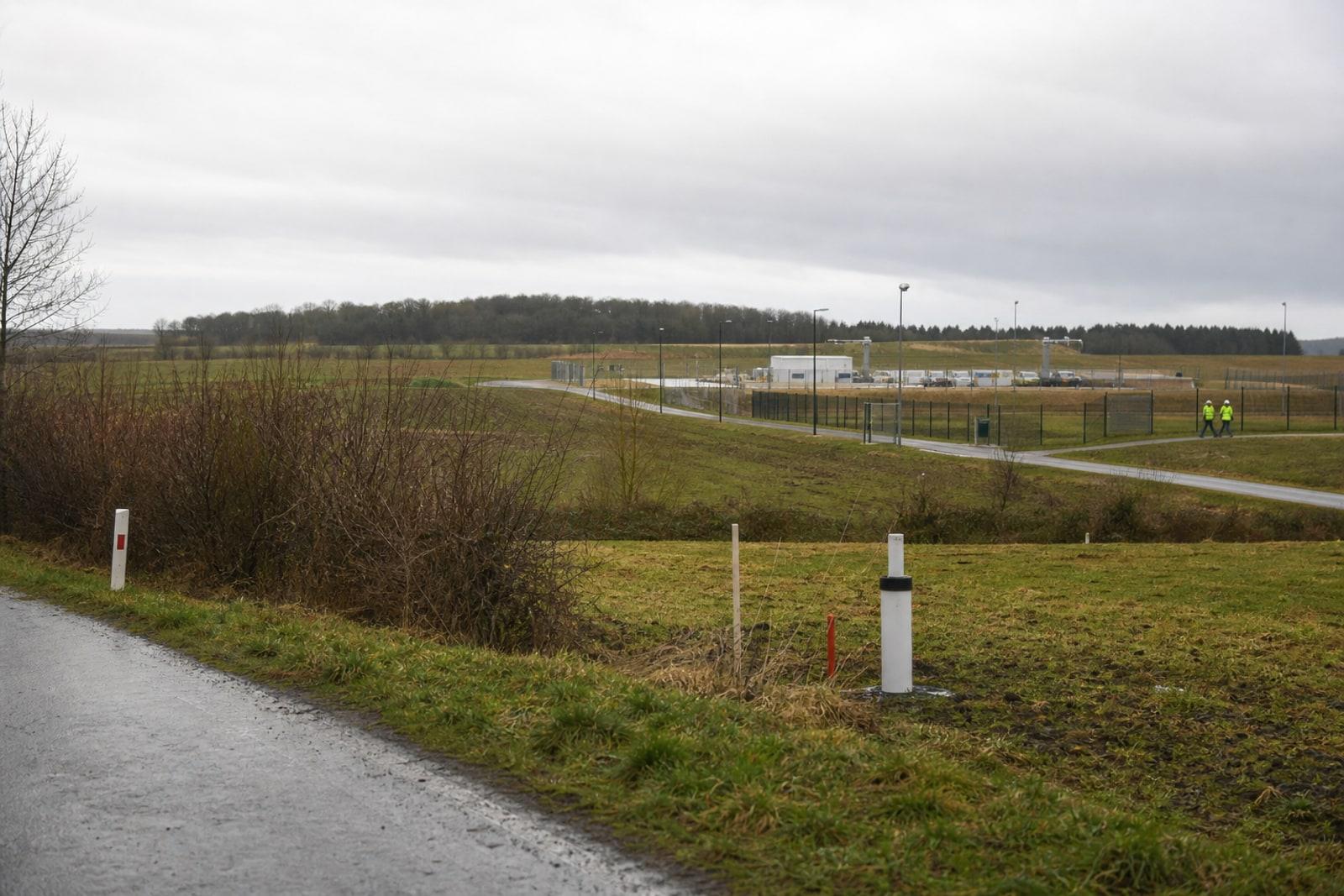
Roughly 150 kilometres south-west of Luxembourg City, in a sparsely populated stretch of farmland straddling the Meuse and Haute-Marne departments, France intends to bury the most hazardous residue of half a century of nuclear power. The project is called Cigéo, and after three decades of research it is edging closer to reality. In December 2025, France's nuclear safety regulator issued a favourable verdict on the plan, setting the stage for a public inquiry in the second half of 2026. For the Grand Duchy, a country with no reactors of its own but a long history of nuclear anxiety, the development revives a familiar question: what happens when a neighbour's most consequential decisions are made just out of reach?
What Cigéo is
Cigéo, the Centre Industriel de Stockage Géologique, is designed to be France's permanent answer to a problem most nuclear nations have deferred: where to put high-level and long-lived intermediate-level radioactive waste that will remain dangerous for hundreds of thousands of years. The repository, managed by the national radioactive-waste agency Andra, would emplace the material some 500 metres underground, in a layer of Callovo-Oxfordian claystone roughly 160 million years old. Andra argues the clay is almost impermeable and has stayed geologically stable for a hundred million years, making it a natural barrier against the migration of radionuclides.
In total the site, near the village of Bure, is engineered to hold about 83,000 cubic metres of waste: some 10,000 cubic metres of vitrified high-level waste and around 73,000 cubic metres of long-lived intermediate-level waste, drawn from France's reactor fleet, its reprocessing operations and eventual decommissioning. The official cost was set by the French government at roughly 25 billion euros. The waste producers, chiefly the utility EDF, are to finance it.
A long road, now accelerating
The Bure site has hosted an underground research laboratory since the early 2000s, and the political groundwork is largely laid: a decree declared the project to be of public utility in July 2022, a status France's Conseil d'État has upheld against legal challenges from environmental groups. In January 2023, Andra formally applied to the safety regulator for a licence to build.
That application has since cleared a significant checkpoint. On 4 December 2025, France's Autorité de Sûreté Nucléaire et de Radioprotection (ASNR) delivered what it called a satisfactory opinion, judging Andra's safety demonstration adequate "at the stage of an application for authorisation to establish" while noting that the case must be completed before any pilot phase begins. The regulator's blessing clears the way for the public inquiry expected in late 2026. If the process concludes favourably, the government could issue a construction licence; Andra has indicated building work could start around 2027, with the first waste packages emplaced in the mid-2030s and full-scale operation, lasting roughly a century, beginning around 2040.
Why Luxembourg is paying attention
Luxembourg's discomfort with French nuclear policy is not new, and it is rarely abstract. The country's loudest grievance has long been the Cattenom power station, which sits barely a dozen kilometres from the border and whose four reactors Luxembourg, together with the German states of Saarland and Rhineland-Palatinate, has repeatedly demanded be shut down. In September 2024, the Luxembourg government adopted a critical opinion on France's plan to extend the operating life of its 1,300-megawatt reactors, reiterating that plants it considers high-risk, "notably the Cattenom, Tihange and Doel sites, must be closed", and insisting that "complete transparency and immediate communication in the event of any incident must be improved".
Bure is a different kind of facility, but it taps the same nerve. Luxembourg has framed its position as one of vigilance rather than veto. Years ago, then environment minister Carole Dieschbourg summed up the stance in two words that still apply: "Nous restons attentifs" — we remain attentive. The Grand Duchy has pressed to be included in the consultation process, she said at the time, "with the objective of best protecting citizens".
The concerns most often voiced by critics on the Luxembourg side cluster around a handful of themes:
- Water and geology. The Bure site lies within the drainage basin of the Seine, close to the Meuse watershed, and opponents question whether burial can guarantee that radionuclides never reach groundwater over the immense timescales involved.
- The weight of permanence. Sceptics point to cautionary precedents abroad, such as Germany's leaking Asse salt mine, as evidence that geological disposal has not always held.
- A seat at the table. As with earlier cross-border nuclear disputes, Luxembourg's recurring complaint is procedural: that transboundary impacts risk being assessed too late, or by authorities over which it has no influence.
The technical merits of deep geological disposal are contested even among scientists, and Andra maintains that decades of study at Bure support the safety case. Luxembourg, for its part, has been careful not to issue a definitive technical verdict, deferring radiation-protection judgements to its own health authorities while keeping a watchful eye on the calendar.
What comes next
The decisive moment will be the public inquiry in the second half of 2026, the formal channel through which objections — including, potentially, those routed from across the border — must be lodged before any construction licence is granted. For a country that has spent decades arguing that nuclear risk does not stop at national frontiers, the Bure timetable offers another test of how much voice a small neighbour can muster in a decision being taken, quite literally, deep underground and abroad.
Frequently asked
- What is the Cigéo project at Bure?
- Cigéo (Centre Industriel de Stockage Géologique) is France's planned deep geological repository for high-level and long-lived intermediate-level radioactive waste, managed by the national agency Andra. It would bury the waste about 500 metres underground in a Callovo-Oxfordian claystone layer near the village of Bure, on the Meuse/Haute-Marne border in eastern France.
- How far is Bure from Luxembourg?
- The Bure site lies roughly 150 kilometres south-west of Luxembourg, in a rural area straddling the Meuse and Haute-Marne departments of eastern France.
- Where does the project stand in 2026?
- France's nuclear safety regulator ASNR issued a favourable opinion on Andra's construction-licence application on 4 December 2025, paving the way for a public inquiry in the second half of 2026. If the process concludes favourably, the government could grant a construction licence; Andra has indicated building could start around 2027 and waste emplacement in the mid-2030s.
- Why is Luxembourg concerned about Bure?
- Luxembourg has no nuclear reactors but a long record of opposing nuclear power near its borders, especially France's Cattenom plant. On Cigéo it has said it 'remains attentive', raising concerns common among critics about long-term groundwater contamination, the permanence of geological disposal, and being included in cross-border consultations rather than having impacts assessed too late.
Sources(6)
- 1France's Cigéo repository receives satisfactory safety reviewAmerican Nuclear Society / Nuclear Newswire · ans.org
- 2CigéoWikipedia · en.wikipedia.org
- 3Application lodged for construction of French repositoryWorld Nuclear News · world-nuclear-news.org
- 4Enfouissement des déchets nucléaires à Bure : le Luxembourg est « attentif »Le Quotidien · lequotidien.lu
- 5Luxembourg Criticises Life Extension of Cattenom Nuclear Power PlantChronicle.lu · chronicle.lu
- 6Border countries call for Cattenom closurePaperjam / Delano · en.paperjam.lu
Related by topic