Inclusive finance
Luxembourg NGO ADA says it reached 430,000 vulnerable people in 2025
The Luxembourg-based charity's 2025 impact report puts numbers on a less-visible side of the Grand Duchy's financial centre: channelling capital to the world's poorest.
By Jonas Thill · · 4 min read
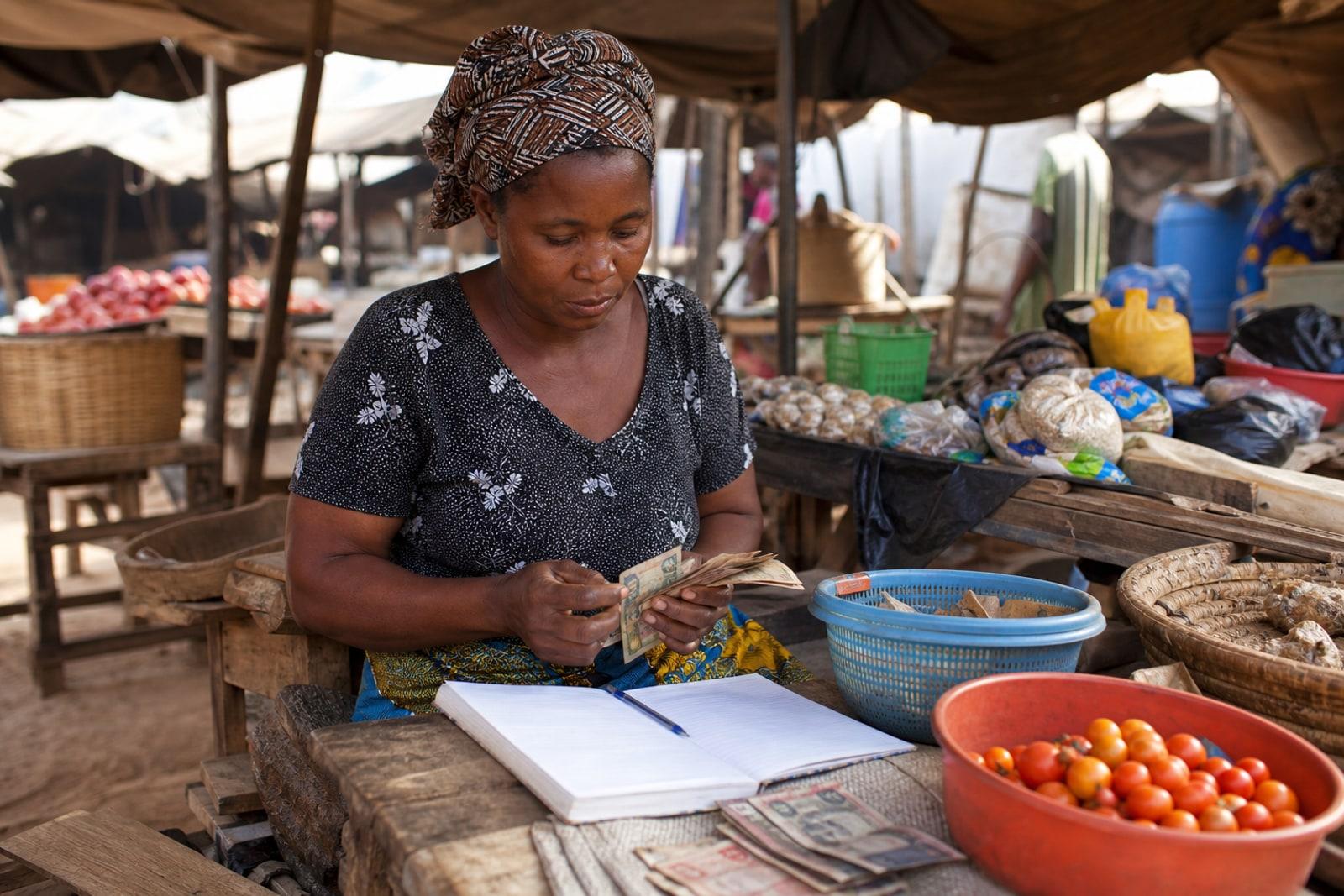
A Luxembourg non-governmental organisation says its partners reached more than 430,000 of the world's poorest people last year, offering a rare quantified glimpse of a financial centre better known for private banking and investment funds than for development work.
In its 2025 impact report, ADA — Appui au Développement Autonome — said it helped 430,511 economically vulnerable people benefit from at least one service for the first time during the year, 55% of them women. The figures, published by the Luxembourg City-based charity and reported by the news site Chronicle.lu, span 47 countries across Africa, Latin America and Asia.
Founded in 1994 by figures from Luxembourg's financial sector, ADA does not lend directly to the poor. Instead it works through local financial institutions, cooperatives and small businesses — 290 partner organisations in all last year — supplying capital, technical training and advisory services so that those partners can extend credit, insurance and other tools to people the formal banking system rarely serves.
What the numbers cover
The headline figure bundles together several distinct strands of work. According to the report, 194,373 people gained access to financial services such as loans and insurance, including 64,813 reached through ADA's investment-advisory work with vehicles like the Luxembourg Microfinance and Development Fund. A further 204,989 received technical or entrepreneurial support, 64,934 benefited from market-access solutions, and 2,569 households obtained access to energy or education.
At ADA, we use impact finance to change lives in a lasting manner in Africa, Latin America and Asia. We help women and men to obtain tailored financial services or to gain access to energy in order to grow their businesses and face life's uncertainties.
That assessment came from Laura Foschi, ADA's executive director, who framed 2025 as a turning point for the organisation. “In 2025, ADA reached a defining milestone, becoming an organisation that not only supports change but actively helps shape it,” she said.
One of ADA's larger initiatives is SSNUP, a programme aimed at smallholder farmers, which the organisation says has reached roughly one million farmers across 35 countries. ADA reports that about €10 million in technical assistance under the scheme has helped attract some €188 million in investment — an illustration of how modest grants are used to draw in far larger sums of private and institutional capital.
Funded in Luxembourg, delivered abroad
ADA's reach rests heavily on public money from its home country. Its principal backer is Luxembourg's Development Cooperation, run by the Directorate for Development Cooperation and Humanitarian Affairs within the Ministry of Foreign and European Affairs.
The current funding mandate, signed in December 2021, runs from 2022 to 2025 and commits €37 million — about 59% of ADA's estimated €62.6 million in funding needs over the period, with the remainder drawn from other public and private sources. It is the fourth such agreement between the ministry and ADA since 2007.
“The renewal of this mandate confirms ADA's central role as an expert in inclusive finance and as a knowledge catalyst within Luxembourg's Development Cooperation framework,” said Franz Fayot, then the minister responsible, when the deal was signed. The portfolio is now held by Xavier Bettel, who attended an African inclusive-finance conference in Nairobi in October 2025.
A finance centre beyond wealth management
ADA's work sits within a broader Luxembourg specialism that is easy to overlook. The Grand Duchy has become the world's leading domicile for the funds that channel money into microfinance, known as microfinance investment vehicles, or MIVs.
The Luxembourg government states that the majority of MIVs are based in the country, representing more than 60% of the sector's assets under management worldwide. Research by CGAP and Symbiotics, cited by the promotional agency Luxembourg for Finance, put Luxembourg's share of MIV assets at 61% as of December 2015, up from 44% in 2006 — over a period in which the global market grew from roughly $2 billion to $11 billion.
A cluster of institutions underpins that position. They include:
- LuxFLAG, the Luxembourg Finance Labelling Agency, created in 2006, whose microfinance label signals to investors that a fund genuinely invests in the sector;
- InFiNe.lu, the Inclusive Finance Network Luxembourg, which brings together public, private and civil-society actors;
- the Luxembourg Microfinance and Development Fund, the European Microfinance Platform, the Microinsurance Network and Microlux, many of them housed together at the Maison de la Microfinance in Luxembourg City.
Luxembourg also funds the annual European Microfinance Award, worth €100,000.
For a country whose financial centre is usually measured in trillions of euros of assets, the numbers ADA reports are small. But they describe a part of that centre rarely put into figures — one that aims to move capital toward the people least likely ever to walk into a private bank.
Frequently asked
- How many people did ADA reach in 2025?
- According to its 2025 impact report, ADA helped 430,511 economically vulnerable people benefit from at least one service for the first time during the year, 55% of them women, across 47 countries in Africa, Latin America and Asia.
- What is ADA and where is it based?
- ADA (Appui au Développement Autonome) is a non-governmental organisation founded in 1994 and based at the Maison de la Microfinance in Luxembourg City. It specialises in inclusive finance, working through local financial institutions and businesses rather than lending directly to individuals.
- How is ADA funded?
- Its main backer is Luxembourg's Development Cooperation. A mandate signed in December 2021 commits €37 million for 2022-2025, about 59% of ADA's estimated €62.6 million in funding needs, with the rest from other public and private sources.
- Why is Luxembourg important for microfinance?
- Luxembourg is the world's leading domicile for microfinance investment vehicles. The government says the majority of such funds are based in the country, representing more than 60% of the sector's assets under management worldwide, supported by bodies such as LuxFLAG and InFiNe.lu.
Sources(7)
- 1ADA Helped More Than 430k Economically Vulnerable People in 2025Chronicle.lu · chronicle.lu
- 2ADA's Impact report (2025 Impact Report)ADA - Appui au développement autonome · adaimpact.lu
- 3Luxembourg's Development Cooperation renews its support of the inclusive finance sector through ADAADA - Appui au développement autonome · adaimpact.lu
- 4Finance inclusive et innovanteDirectorate for Development Cooperation and Humanitarian Affairs, The Luxembourg Government · cooperation.gouvernement.lu
- 5Microfinance facilitating financial inclusionLuxembourg for Finance · luxembourgforfinance.com
- 6Luxembourg Leading Jurisdiction for Microfinance Investment VehiclesInFiNe.lu · infine.lu
- 7ADA (association)Wikipédia · fr.wikipedia.org
Related by topic