EU politics
Romania's parliament rejects a second government, deepening a seven-week deadlock
Lawmakers refused to confirm PM-designate Adrian Veștea, leaving an EU and NATO member on the bloc's eastern flank without a full government as a deficit reckoning looms.
By Camille Reuter · · 4 min read
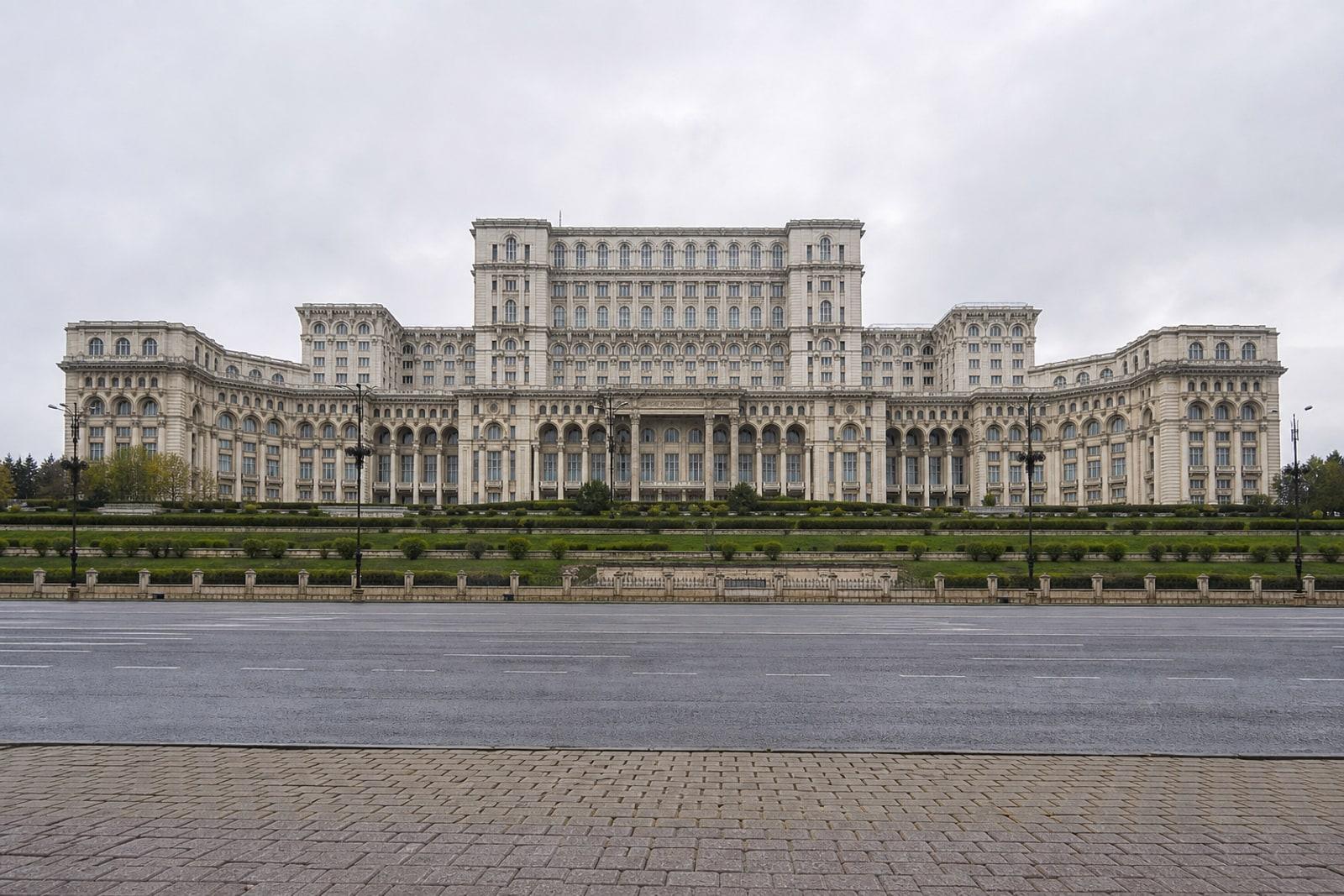
Romania sank deeper into political paralysis on Monday after parliament refused to confirm a second prime ministerial nominee in a month, leaving the European Union and NATO member without a full government as it confronts one of the bloc's largest budget deficits and a looming deadline on billions of euros in EU recovery funds.
The proposed cabinet of Adrian Veștea, a National Liberal Party (PNL) politician who heads the Brașov county council, won just 189 votes on 22 June, well short of the 233 needed for investiture, according to the Associated Press. Twenty-three lawmakers voted against and more than half of those present abstained. It was the first formal rejection of the crisis, and it pushed the deadlock past its seventh week.
President Nicușor Dan, the pro-European former mayor of Bucharest elected in 2025, had designated Veștea on 14 June, citing his administrative experience. But Dan did so without consulting PNL's leadership, and Veștea's own party declined to endorse him. His cabinet was backed only by parliament's largest bloc, the centre-left Social Democratic Party (PSD); the reformist Save Romania Union (USR) also withheld support, and lawmakers from the hard-right Alliance for the Union of Romanians (AUR) walked out before the ballot.
A second nominee falls
Veștea was Dan's second attempt to break the impasse. His first choice, the MEP and presidential adviser Eugen Tomac, was nominated on 4 June but failed to assemble a cabinet within the constitutional 10-day window and never reached a vote. Tomac had pledged to present "a team of specialists, a technical government, not a political one."
The crisis dates to the collapse of the pro-EU coalition that took office in June 2025 under Prime Minister Ilie Bolojan. That alliance — uniting the PSD, PNL, USR and the ethnic-Hungarian UDMR — fractured when the Social Democrats walked out in late April. On 5 May, parliament passed a no-confidence motion against Bolojan by 281 votes to four, in a rare convergence of the PSD and AUR. Bolojan has stayed on as caretaker prime minister with limited powers.
The recriminations have been bitter. As his government faced the axe, Bolojan challenged his opponents to spell out an alternative.
Can anyone say how Romania will function from tomorrow. Do you have a plan?
AUR's leader, George Simion, framed the latest rejection as another episode in a long pattern of broken faith. "For 35 years in Romania, betrayal has been the order of the day and has somehow become commonplace, part of everyday life," he said before his party's lawmakers left the chamber.
The deficit at the root
Underlying the political turmoil is a fiscal reckoning. Romania ran a deficit above 9% of GDP in 2024, the widest in the EU, and the 2026 budget approved in March targets 6.2% of GDP, with around 5.8% projected for 2027, according to Romania Insider and European Commission forecasts.
Bolojan had staked his government on closing that gap, enacting a consolidation package estimated at roughly 5% of GDP. The measures proved politically toxic:
- Tax increases, including a higher rate of value-added tax;
- A nominal freeze on public-sector wages and pensions across 2025 and 2026;
- Spending cuts across ministries.
The PSD, which had governed alongside Bolojan, attacked the reform drive as lacking empathy for ordinary Romanians and used that grievance to justify pulling its support. The leu fell to a record low against the euro around the May vote, and the economy has been weighed down by high inflation and a technical recession.
PSD leader Sorin Grindeanu insisted the coalition could be salvaged even after toppling its own prime minister. "There is life after the no-confidence vote. We want to keep broadly this coalition," he said — a statement that has sat uneasily with the centre-right parties now refusing to serve under terms they reject.
What Brussels is watching
The stakes extend beyond Bucharest. As an EU and NATO member on the alliance's eastern flank, bordering Ukraine and Moldova, Romania's governability is a question of regional stability as much as domestic politics. A caretaker administration with curtailed powers is poorly placed to take binding fiscal decisions or commit to reforms.
The timing is acute. 2026 is the final year to implement most projects under Romania's Recovery and Resilience Plan, with a completion deadline at the end of August; Al Jazeera reported that the country must still access roughly €10 billion in EU recovery funds before then. Capital spending is projected near 8% of GDP, much of it financed by EU money — investment that a paralysed government may struggle to disburse on time.
The road to snap elections
Attention now turns back to President Dan, who must nominate a third candidate. Under the constitution, the president may dissolve parliament and call early elections only if no government wins a confidence vote within 60 days of the first investiture request and parliament has rejected at least two nominees. Veștea's defeat counts as the first such rejection, meaning a further failure could clear the way for a snap poll. Regular general elections are not due until 2028.
Centre-right parties have floated alternatives to end the standoff, including a government led by Grindeanu with their parliamentary backing, or a PNL-USR-UDMR minority cabinet supported by the PSD. For now, the pro-Western camp remains locked in the internal conflict that has frozen Romanian politics since May, with no majority in sight.
Frequently asked
- Why did Romania's parliament reject Adrian Veștea's government?
- Veștea, a PNL politician designated by President Nicușor Dan on 14 June 2026, was backed only by the PSD. His own PNL and the USR withheld support, and AUR opposed him, so he won 189 votes on 22 June — short of the 233 needed for investiture.
- What triggered Romania's government crisis?
- The pro-EU coalition formed in June 2025 fractured when the PSD withdrew in late April 2026. On 5 May, parliament passed a no-confidence motion against PM Ilie Bolojan by 281 votes to four, largely over unpopular austerity measures aimed at cutting the deficit.
- Could Romania hold snap elections?
- Possibly. Under the constitution, the president may dissolve parliament and call early elections only after at least two PM nominees are rejected and 60 days pass without a confirmed government. Veștea's defeat is the first rejection, so a further failure could open that path.
- Why does the crisis matter for the EU?
- Romania is an EU and NATO member on the bloc's eastern flank. A caretaker government with limited powers struggles to take fiscal decisions, just as Romania faces an end-August 2026 deadline to use billions of euros in EU recovery funds.
Sources(10)
- 1Political crisis deepens as Romanian lawmakers reject new governmentThe Washington Times (AP) · washingtontimes.com
- 2Political crisis deepens as Romanian lawmakers reject new governmentABC News (AP) · abcnews.com
- 3Romania's government crisis deepens after Parliament rejects Veștea cabinetRomania Insider · romania-insider.com
- 4Romania PM Ilie Bolojan's government toppled in no-confidence voteAl Jazeera · aljazeera.com
- 5Romania's pro-EU coalition collapses after prime minister fails no-confidence voteEuronews · euronews.com
- 6Romania's president nominates MEP and advisor Eugen Tomac as PM in bid to end deadlockABC News (AP) · abcnews.com
- 7Romanian President Nicusor Dan nominates adviser Eugen Tomac as PMXinhua · english.news.cn
- 8Romanian government approves 2026 budget plan with 6.2% of GDP deficitRomania Insider · romania-insider.com
- 9Economic forecast for RomaniaEuropean Commission · economy-finance.ec.europa.eu
- 10Monitoring Romania: tackling Europe's largest deficitING THINK · think.ing.com
Related by topic