Energy security
Qatar keeps its LNG tankers sailing through Hormuz as the Gulf lane empties
Four Qatari gas carriers entered the contested strait on Monday even as overall traffic collapsed — the thin line between a contained crisis and a fresh European energy shock.
By Jonas Thill · · 5 min read
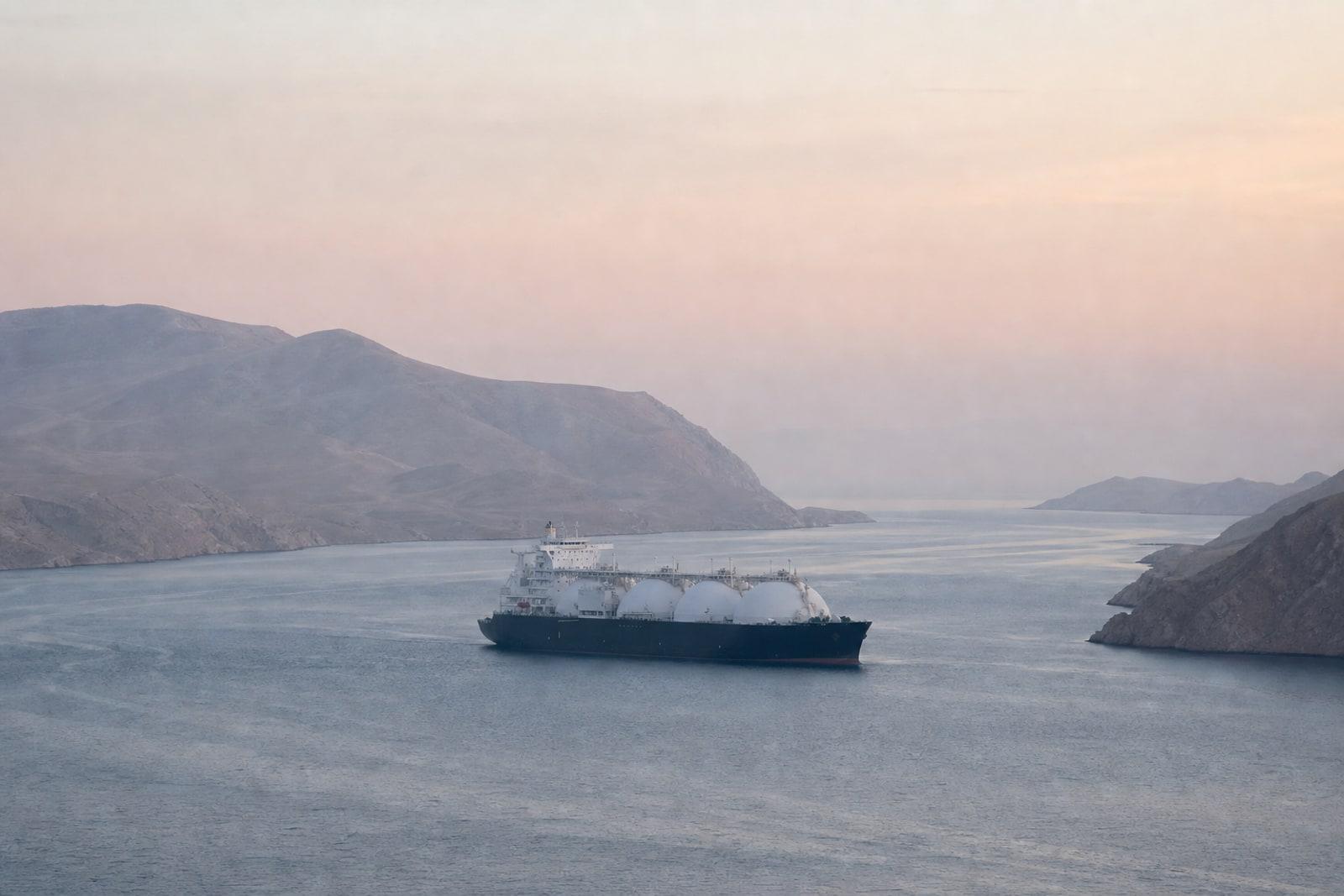
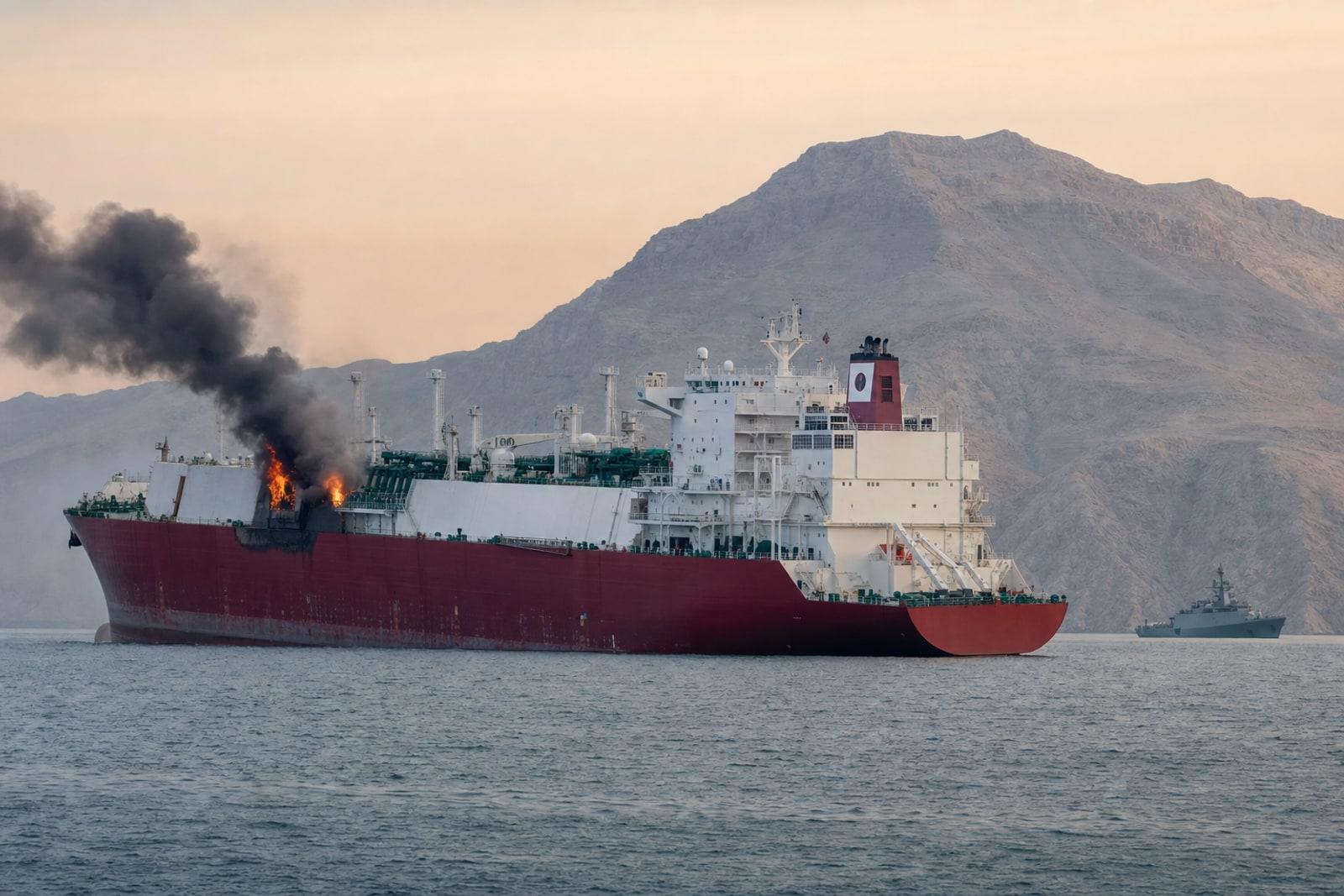
Four liquefied natural gas tankers controlled by Qatar steered into the Strait of Hormuz on Monday, threading the world's most contested shipping lane even as the broader flow of vessels through it has all but stopped. According to ship-tracking data from the analytics firm Kpler cited by Reuters, the carriers — Wadi Al Sail, Mekaines, Al Sadd and Mesaimeer — entered the waterway via the Iranian route, their first such transit since the U.S.-Israeli war with Iran began on 28 February.
The decision to keep sailing matters far beyond Doha. Roughly a fifth of the world's LNG passes through Hormuz, almost all of it Qatari, and there is no pipeline or overland alternative. Qatar's choice to keep at least some cargoes moving is, in effect, the hinge between a contained regional crisis and a fresh energy-price shock for Europe.
The contrast with the surrounding traffic was stark. Kpler counted just five vessels passing through the strait on Sunday, down from 26 the day before, after Iran's Islamic Revolutionary Guard Corps again declared the waterway shut over the weekend in response to Israeli strikes in Lebanon. QatarEnergy, whose exports have been heavily curbed since the war began, did not respond to requests for comment, Reuters reported.
A fifth of the world's gas, one channel
Hormuz is the single most important chokepoint in the global energy system. Analysts at Goldman Sachs estimate that about 80 million tonnes of LNG a year — some 19% of global supply, the bulk of it from Qatar — move through the strait, alongside roughly a fifth of the world's seaborne oil. QatarEnergy alone accounts for close to 20% of global LNG exports.
That concentration has already bitten. After Iranian drone strikes on Qatar's Ras Laffan complex earlier in the war, the company lost about 17% of its LNG export capacity, according to Al Jazeera and reporting in the Financial Times — knocking out an estimated 12.8 million tonnes of annual output and around $20 billion in yearly revenue. On 24 March QatarEnergy declared force majeure on long-term contracts with buyers in Italy, Belgium, South Korea and China.
The cost of sailing
For the few owners still willing to cross, the economics have been transformed. War-risk insurance premiums, normally about 0.25% of a ship's value, surged to between 3% and 8% at the height of the crisis — $3 million to $8 million for a single large tanker per transit — and some underwriters withdrew cover for the Gulf entirely, the Khaleej Times reported. Freight rates followed: daily LNG charter rates jumped more than 40%, while the benchmark rate for a very large crude carrier hauling oil from the Gulf to China hit an all-time high of about $423,736 a day, a rise of more than 90% in a single session.
The fallout reshaped the map of who sails. Container lines including Maersk, CMA CGM and Hapag-Lloyd suspended Gulf calls; more than 150 ships anchored outside the strait; and some operators, including the UAE's ADNOC, were tracked making "dark" voyages with their transponders switched off. Asked about its vessels' movements, an ADNOC spokesperson said: "We do not comment on the position, movements, and routing of our vessels, or third-party reports, as a matter of policy."
"This will bring down the economies of the world."
That was the warning of Saad al-Kaabi, Qatar's energy minister and QatarEnergy's chief executive, who told the Financial Times early in the conflict that if the fighting continued every Gulf exporter would be forced into force majeure. "Everybody that has not called for force majeure we expect will do so in the next few days," he said, forecasting that crude could reach $150 a barrel and that Europe would feel "significant pain" as Asian buyers outbid it for scarce cargoes.
Europe's exposed flank
The read-through to European gas has been immediate. The Dutch Title Transfer Facility, the continent's benchmark, leapt about 46% to roughly €46.55 per megawatt-hour on the first full trading day of the crisis and briefly topped €60, up from around €32 in late February. Goldman Sachs warned that a full one-month closure of Hormuz could push the TTF to about €74/MWh — some 130% above pre-crisis levels — and that a disruption lasting beyond two months could carry prices above €100. Energy Aspects analysts told Euronews a three-month halt in Qatari flows could lift the benchmark toward €155.
For now, an interim U.S.–Iran agreement has taken the edge off. European gas had eased back to about €40.6/MWh by late June, its lowest since 20 April, even as the IRGC's weekend declaration showed how quickly sentiment can turn. The risk is structural as well as immediate: insurers and shipowners caution that premiums and freight will not snap back to pre-war levels even once the guns fall silent.
"A mine-clearance effort will most likely be needed to fully reopen the Strait," said Jakob Larsen, head of maritime security at the shipping association BIMCO. Oscar Seikaly, chief executive of NSI Insurance Group, put the underwriters' dilemma more bluntly: "The market can insure volatility, but it struggles to insure uncertainty."
Qatar's quiet persistence — four hulls slipping through a near-empty strait — is the thin line keeping that uncertainty from tipping into another European price spiral. With the bloc's storage sites still below their five-year averages heading into the refill season, the margin for error is slim. As long as the carriers keep moving, the crisis stays contained; the weekend's events were a reminder of how little that can depend on.
Frequently asked
- How much of the world's LNG passes through the Strait of Hormuz?
- Roughly a fifth — Goldman Sachs cites about 80 million tonnes a year, around 19% of global supply, almost all of it Qatari. There is no pipeline or overland alternative, so a closure would cut a major slice of the world's gas at once.
- Why does Qatar keeping its tankers sailing matter for Europe?
- Because a halt to Qatari flows would remove a large share of global LNG. Europe's benchmark TTF gas price already spiked above €60/MWh during the crisis, and analysts warned a sustained Hormuz closure could push it well over €100 — even €155 — per megawatt-hour.
- What happened to shipping costs during the crisis?
- War-risk insurance premiums rose from about 0.25% of a ship's value to 3–8% ($3m–$8m per transit), LNG charter rates jumped more than 40%, and a benchmark very-large-crude-carrier rate hit a record near $423,736 a day. Some insurers withdrew Gulf cover entirely.
Sources(11)
- 1Qatar brings LNG tankers into Hormuz despite shipping slowdownReuters (via Zawya) · zawya.com
- 2Shipping slows after Iran says it has again shut the Strait of HormuzReuters (via Investing.com) · investing.com
- 3Qatari LNG Carriers Re-Enter Hormuz as Traffic Through Strait SlumpsMarineLink · marinelink.com
- 4QatarEnergy declares force majeure on some LNG contracts due to Iran warAl Jazeera · aljazeera.com
- 5Qatar Warns War Will Force Gulf to Stop Energy Exports 'Within Days'EnergyNow (republishing Financial Times) · energynow.ca
- 6Strait of Hormuz reopening won't mean cheaper shipping as insurance premiums surgeKhaleej Times · khaleejtimes.com
- 7European gas prices could jump 130% on Hormuz disruption, Goldman estimatesInvesting.com · investing.com
- 8Europe's gas prices on the brink as Qatari LNG flows stallEuronews · euronews.com
- 9Oil supertanker rates hit all-time high as insurers drop war risk protection in the Middle EastCNBC · cnbc.com
- 102026 Strait of Hormuz crisisWikipedia · en.wikipedia.org
- 11Gas prices soar as QatarEnergy halts LNG production after Iran attacksAl Jazeera · aljazeera.com
Related by topic