Consumer & Sustainability
Luxembourg moves to make repair cheaper than replacement under EU right-to-repair rules
Draft law 8762 would force manufacturers to keep mending phones and appliances, extend guarantees by a year and ban repair blocks — but Luxembourg looks set to miss the EU deadline.
By Léa Hoffmann · · 4 min read
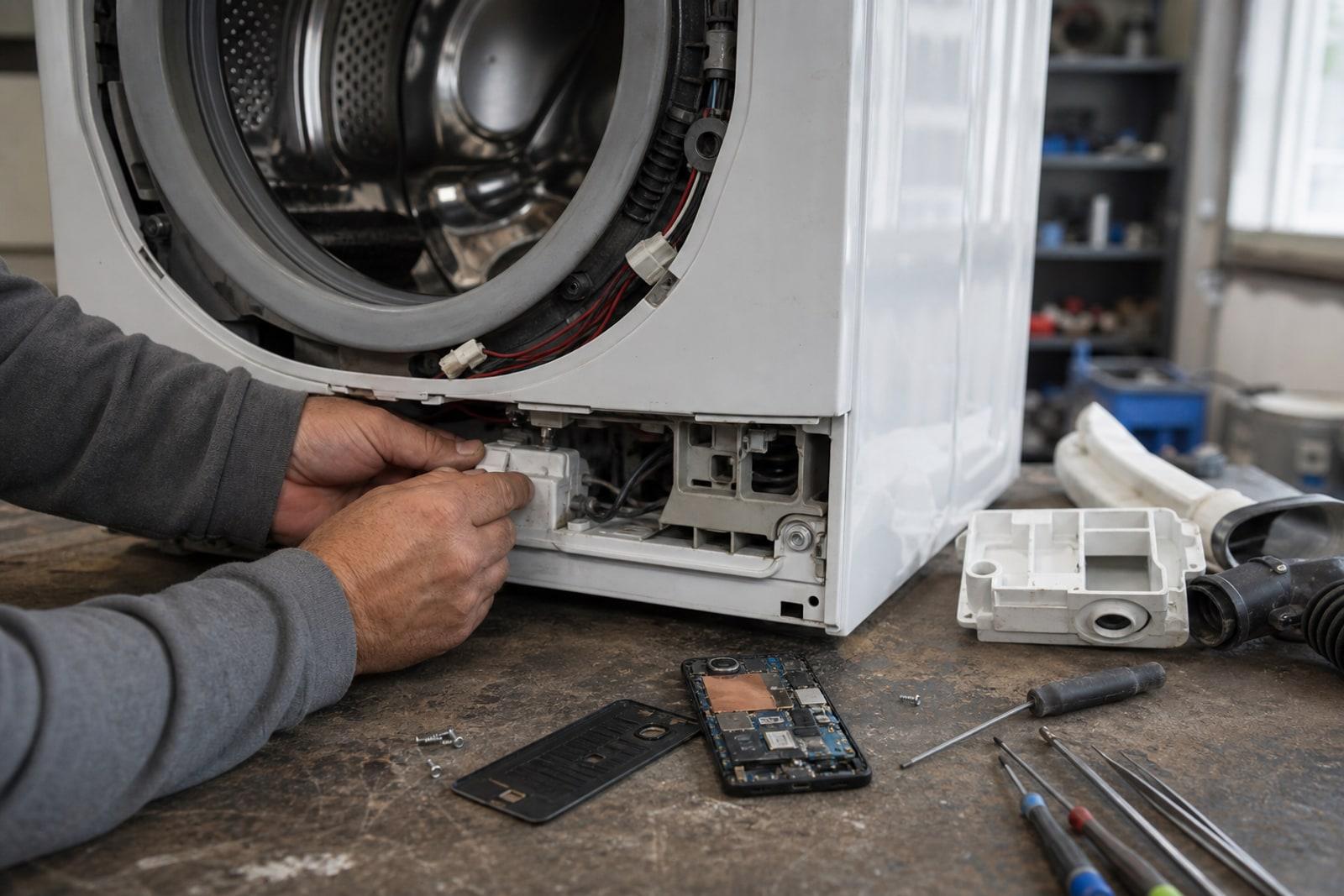
Luxembourg households will soon find it easier — and in many cases cheaper — to mend a broken washing machine or a cracked smartphone than to throw it out, as the government moves to write the European Union's “right to repair” into national law.
On 11 June 2026, ministerial officials presented draft law 8762 to the Chamber of Deputies' Committee on Agriculture, Food and Viticulture, in the presence of Consumer Protection Minister Martine Hansen. The bill, with MP Stéphanie Weydert as rapporteur, transposes Directive (EU) 2024/1799 and forms part of the bloc's European Green Deal. Its stated aim is to make repairing a device often more advantageous than replacing it.
What would change for shoppers and manufacturers
The bill targets everyday goods that already fall under EU repairability requirements — washing machines, dishwashers, vacuum cleaners and refrigerators, along with mobile phones and tablets. For these products, according to the parliamentary briefing, manufacturers will have to continue offering repairs even after the legal guarantee has ended.
Several concrete obligations would follow:
- Manufacturers must publish indicative prices for typical repairs on a freely accessible website, for at least the duration of the repair obligation.
- It will be illegal to obstruct repairs through contractual clauses, hardware or software locks, or by blocking the use of compatible spare parts.
- A repair carried out under the legal guarantee will entitle the owner to one additional year of protection.
- The period during which a defect is presumed to have existed at delivery — which shifts the burden of proof onto the seller — would be extended from one year to two.
Consumers, the Chamber said, will benefit from more information on the costs and timeframes of repair, making it easier to weigh a quote against the price of a replacement.
A European law, finally arriving in Luxembourg
The national bill follows a directive that the European Parliament adopted on 23 April 2024 by 584 votes to three, with 14 abstentions. The text entered into force on 30 July 2024, and member states must apply their transposing measures from 31 July 2026.
At EU level, the rules require manufacturers of listed products to repair them within a reasonable time and for a reasonable price, to supply spare parts and tools at reasonable prices, and to drop techniques that obstruct independent repair. Crucially, the directive amended the bloc's sale-of-goods rules so that choosing repair rather than replacement under the legal guarantee buys an extra year of cover.
Consumers' right to repair products will now become a reality. It will be easier and cheaper to repair instead of purchase new, expensive items.
That was how the directive's rapporteur, German MEP René Repasi, framed the law when Parliament backed it. The European Parliament said goods repaired under warranty will “benefit from an additional one-year extension of the legal guarantee, further incentivising consumers to choose repair instead of replacement.”
The push is as much environmental as economic. EU institutions have presented the rules as a way to cut the waste generated when serviceable goods are discarded, while supporting local repair businesses and saving households money over a product's lifetime.
Two EU-wide tools will sit alongside the national rules. A European online repair platform, hosted through the “Your Europe” portal and populated by repairers registered in each member state, is expected to go live in 2027. Repairers will also be able to issue a European Repair Information Form, a standardised quote whose terms must stay valid for 30 days, so customers can compare offers like for like.
Late, but with practical stakes for residents
Luxembourg is unlikely to meet the 31 July 2026 deadline. As L'essentiel reported, the bill still needs the opinion of the Council of State before it can complete its passage, and the Consumer Protection Directorate has acknowledged that a small team is juggling several European files at once. The directive's obligations bind the country once the period expires, but the detailed national rules consumers can invoke depend on the law being finished.
The Grand Duchy is not starting from scratch. It already applies a reduced 8% VAT rate to small repairs — of bicycles, shoes, leather goods, clothing and household linen — one example of the “at least one measure” each member state must take to promote repair. The directive leaves room for more, such as repair vouchers or funds of the kind already running in France, Austria and parts of Germany; as drafted, the Luxembourg bill does not create a nationwide repair bonus.
For households, the practical advice is straightforward. Once the law is in force, opting to repair an eligible product under guarantee — rather than swapping it — will extend that guarantee by a year. Manufacturers' published repair prices should make it easier to judge whether a fix is worthwhile, and the EU platform, when live, will help locate a registered repairer. Until then, the existing conformity guarantee and the reduced VAT on small repairs remain the main levers.
Frequently asked
- When do Luxembourg's right-to-repair rules take effect?
- EU members must apply the rules from 31 July 2026, but Luxembourg's bill 8762 still needs the Council of State's opinion and is expected to be finalised after that deadline.
- What do I have to do to benefit?
- Once the law is in force, choose to repair an eligible product under the legal guarantee instead of replacing it; this extends the guarantee by one extra year. Manufacturers must also publish indicative repair prices.
- Which products are covered?
- Everyday goods subject to EU repairability rules, including washing machines, dishwashers, vacuum cleaners and refrigerators, plus mobile phones and tablets.
- Is there a repair bonus?
- As drafted, the bill does not create a nationwide repair bonus. Luxembourg's main existing incentive is a reduced 8% VAT rate on small repairs such as bicycles, shoes and clothing.
Sources(7)
- 1Réparer plutôt que remplacer : de nouvelles règles pour les biens de consommationChamber of Deputies of Luxembourg (chd.lu) · chd.lu
- 2Directive on repair of goodsEuropean Commission · commission.europa.eu
- 3Right to repair: Making repair easier and more appealing to consumersEuropean Parliament · europarl.europa.eu
- 4Le bouton de rétractation et le droit à la réparation en retardL'essentiel · lessentiel.lu
- 5Réparer plutôt que remplacer : nouvelles règles pour les biens de consommationInfogreen · infogreen.lu
- 6Common rules promoting the repair of goods and amending related EU legislationEUR-Lex (European Union) · eur-lex.europa.eu
- 7Repairing — Directorate for Consumer ProtectionThe Luxembourg Government · mpc.gouvernement.lu
Related by topic