EU agriculture
On a Bettembourg quinoa farm, a Luxembourger steers Europe's bid to break its soy habit
EU farm chief Christophe Hansen used a fourth-generation dairy farm near the French border to make the case for the bloc's coming Protein Plan, aimed at cutting reliance on imported feed.
By Camille Reuter · · 5 min read
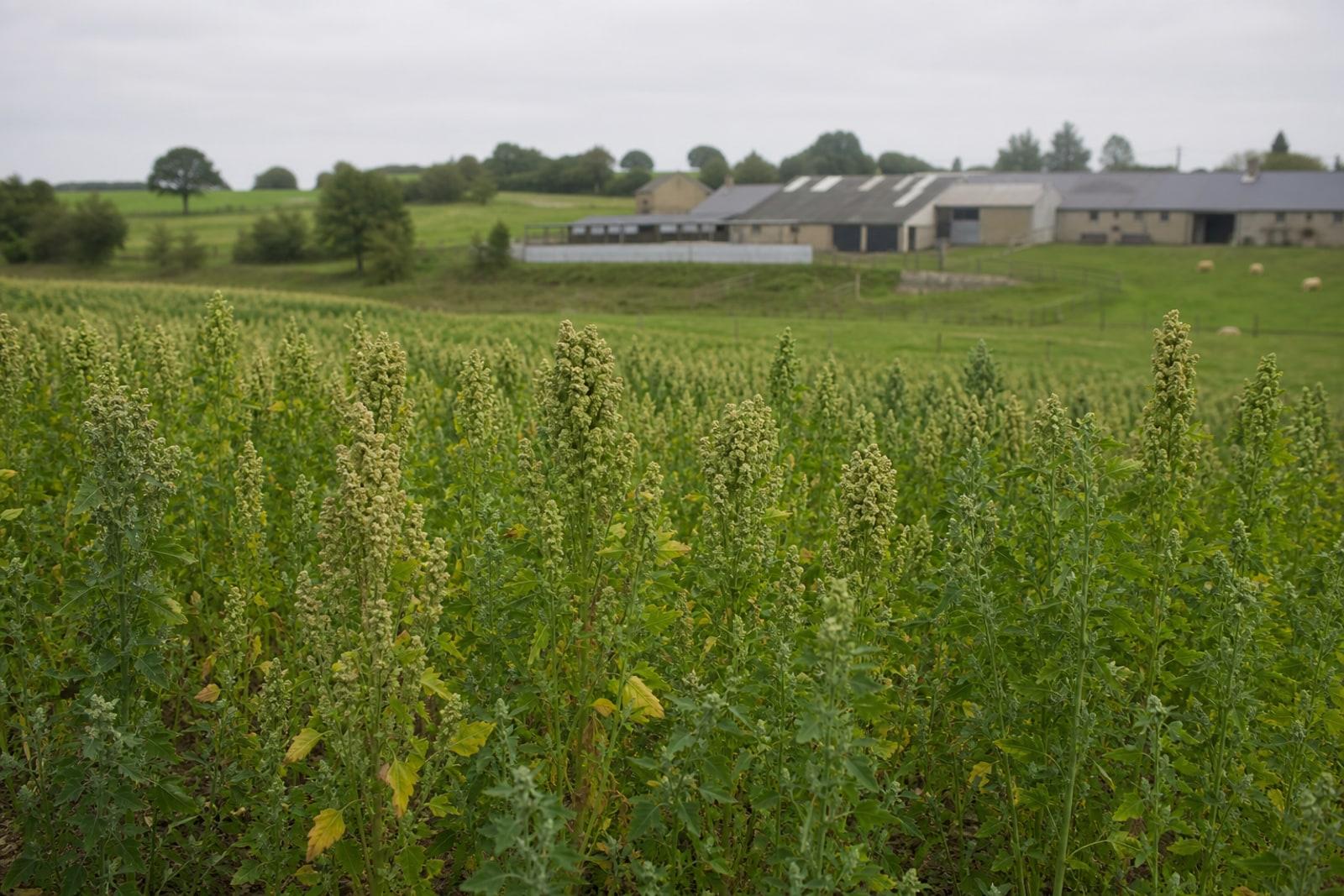
On a fourth-generation dairy farm at the edge of Bettembourg, where rows of feathery quinoa and chia now ripen alongside grazing land, the European Union's agriculture chief made the case this month for one of Brussels' most closely watched farm-policy bets: weaning the bloc off imported protein.
The choice of venue was pointed. Christophe Hansen, the European Commissioner for Agriculture and Food, is himself a Luxembourger, raised on a farm near Wiltz, and his visit to the Gehaanshaff farm put a Grand Duchy producer at the centre of a debate that stretches from South American soy fields to the bloc's livestock barns. According to Le Quotidien, which reported the visit on 12 June, Hansen toured the holding run by Gilles Biver, who took over the family business in 2017 and has spent recent years turning it into an unlikely laboratory for protein crops.
Gehaanshaff, founded in 1925, still milks its herd with a robot, but Biver has also pioneered quinoa in Luxembourg, expanding from a single hectare in 2021 to around 17 hectares today, alongside roughly seven hectares of chia, according to Le Quotidien and the regional producers' network regionalsaisonal.lu. Both crops are rich in protein and still rare in the Grand Duchy.
"Dans une ferme, on voit beaucoup de détails qu'on ne voit pas si l'on ne va pas directement auprès des producteurs" — "On a farm, you see a lot of details that you don't see unless you go directly to the producers" — Hansen told Le Quotidien during the visit.
A Luxembourger at the centre of EU farm policy
Hansen, who took office as Commissioner in December 2024, has made reducing Europe's protein dependence a signature theme. Speaking at an event titled "The Revival of Legumes in Europe" at the European Parliament in April, he confirmed that the Commission would present an EU Protein Plan, to be delivered alongside a new Livestock Strategy, the Italian news agency ANSA reported. The package, which the Commission's work programme schedules for the first half of 2026 and which industry bodies expect around the turn of June and July, aims to cut reliance on imported plant proteins, diversify supply and strengthen production inside the bloc.
The Commissioner framed the effort as a matter of strategic security rather than environmental policy alone.
"Protein diversification is crucial for the EU's resilience and strategic autonomy," Hansen said, according to ANSA, warning that "these dependencies create a clear vulnerability in the context of the geopolitical uncertainties we are experiencing."
Why Europe wants to break its protein dependence
The numbers explain the urgency. The European Commission estimates the EU is roughly 75% self-sufficient across all sources of feed protein, but that headline figure masks a sharp gap at the high-protein end of the market. Oilseed meals — the concentrated feed that fattens pigs, poultry and dairy cattle — are only about 27% home-produced, the Commission said in a May 2024 overview of feed protein. To plug the shortfall, the bloc imports around 19 million tonnes of crude protein a year.
The bulk of that arrives as soybeans and soybean meal, shipped largely from Brazil, Argentina and the United States. ANSA reported that the EU brings in roughly 33 million tonnes of soy annually. That reliance leaves European livestock farmers exposed to price spikes, currency swings and trade disputes far beyond their control, and ties the bloc's meat and dairy output to land-use practices abroad that Brussels has struggled to police. In April, the Commission classified soybean oil as a high indirect-land-use-change risk, a move that will strip it from EU renewable-fuel targets from 2030.
The plan is expected to lean on a familiar toolkit: support for legumes, better crop rotations, pasture management and innovation, both within the Common Agricultural Policy and beyond it. What it will not do, Hansen has signalled, is tell Europeans to eat less meat — a balancing act intended to keep both farm lobbies and environmental campaigners at the table.
What it means for Luxembourg's farmers
For producers like Biver, the gap between Brussels' ambitions and on-the-ground reality is precisely the point. He judged the Commissioner's visit useful, Le Quotidien reported, but remained cautious that EU and national support schemes are not yet tailored to niche protein crops such as quinoa and chia, which fall outside the categories that decades of farm policy were built around.
That tension runs through the wider package. The Commission has already doubled its agricultural crisis reserve, from €450 million to €900 million, to cushion farmers against shocks. Yet smaller producers experimenting with new crops often find that subsidies, advisory services and processing infrastructure lag behind, leaving early movers to shoulder the risk.
- The stake for Luxembourg: a Grand Duchy figure is steering an EU-wide policy with direct consequences for the country's own farmers and food security.
- The stake for Europe: reducing a long-standing dependence on imported soy amid mounting trade and geopolitical pressure.
- The open question: whether the plan's incentives will be concrete enough to shift what Europe actually grows.
The detail will matter. Pulses such as dry beans and peas still account for barely a sliver of Europe's protein supply — around 1.1 million tonnes of crude protein a year, against the 64 million tonnes the bloc's arable sector produced in 2023/24. Closing a gap that wide will take more than a single strategy document. But by choosing a small Luxembourg farm to make his case, Hansen signalled where he believes the change has to start.
Frequently asked
- What is the EU Protein Plan?
- It is a European Commission initiative, expected in 2026 alongside a new Livestock Strategy, designed to reduce the bloc's dependence on imported plant proteins, diversify supply sources and strengthen home-grown protein production for food and feed.
- Why did Commissioner Hansen visit a farm in Bettembourg?
- Christophe Hansen, a Luxembourger, toured the Gehaanshaff farm run by Gilles Biver, which pioneered quinoa and chia in Luxembourg, to spotlight protein-crop production days before the EU's protein package was due.
- How dependent is the EU on imported protein?
- The Commission estimates the EU is about 75% self-sufficient in feed protein overall, but only around 27% for high-protein oilseed meals. It imports roughly 19 million tonnes of crude protein a year, mainly as soy from Brazil, Argentina and the United States.
- What does the plan mean for Luxembourg farmers?
- It could open more support for alternative protein crops, but producers like Gilles Biver caution that current EU and national subsidies are not yet adapted to niche crops such as quinoa and chia.
Sources(10)
- 1Agriculture : Observer les difficultés «auprès des producteurs»Le Quotidien · lequotidien.lu
- 2EU protein plan due in June, Hansen says it will reduce dependenciesANSA (English Service) · ansa.it
- 3Gehaanshaffregionalsaisonal.lu · regionalsaisonal.lu
- 4La ferme – GehaanshaffGehaanshaff · gehaanshaff.lu
- 5Feed protein: overview of EU production and options to diversify sourcesEuropean Commission – Agriculture and Rural Development · agriculture.ec.europa.eu
- 6Reducing the plant protein deficit of the EUEuropean Commission – Agriculture and Rural Development · agriculture.ec.europa.eu
- 7FEFAC releases recommendations for EU Livestock Strategy and Protein PlanFeed & Additive Magazine · feedandadditive.com
- 8Livestock strategy including elements of animal welfareEuropean Parliament – Legislative Train Schedule · europarl.europa.eu
- 9Christophe HansenEuropean Commission · commission.europa.eu
- 10Christophe Hansen souligne la nécessité de nouveaux marchés pour les producteurs européensL'essentiel · lessentiel.lu
Related by topic