Global health
WHO says Ebola is spreading faster in DR Congo than in any previous outbreak
An outbreak of the Bundibugyo strain, for which there is no licensed vaccine, has passed 1,000 confirmed cases in Ituri and crossed into Uganda. The EU rates the risk to residents as very low.
By Léa Hoffmann · · 4 min read
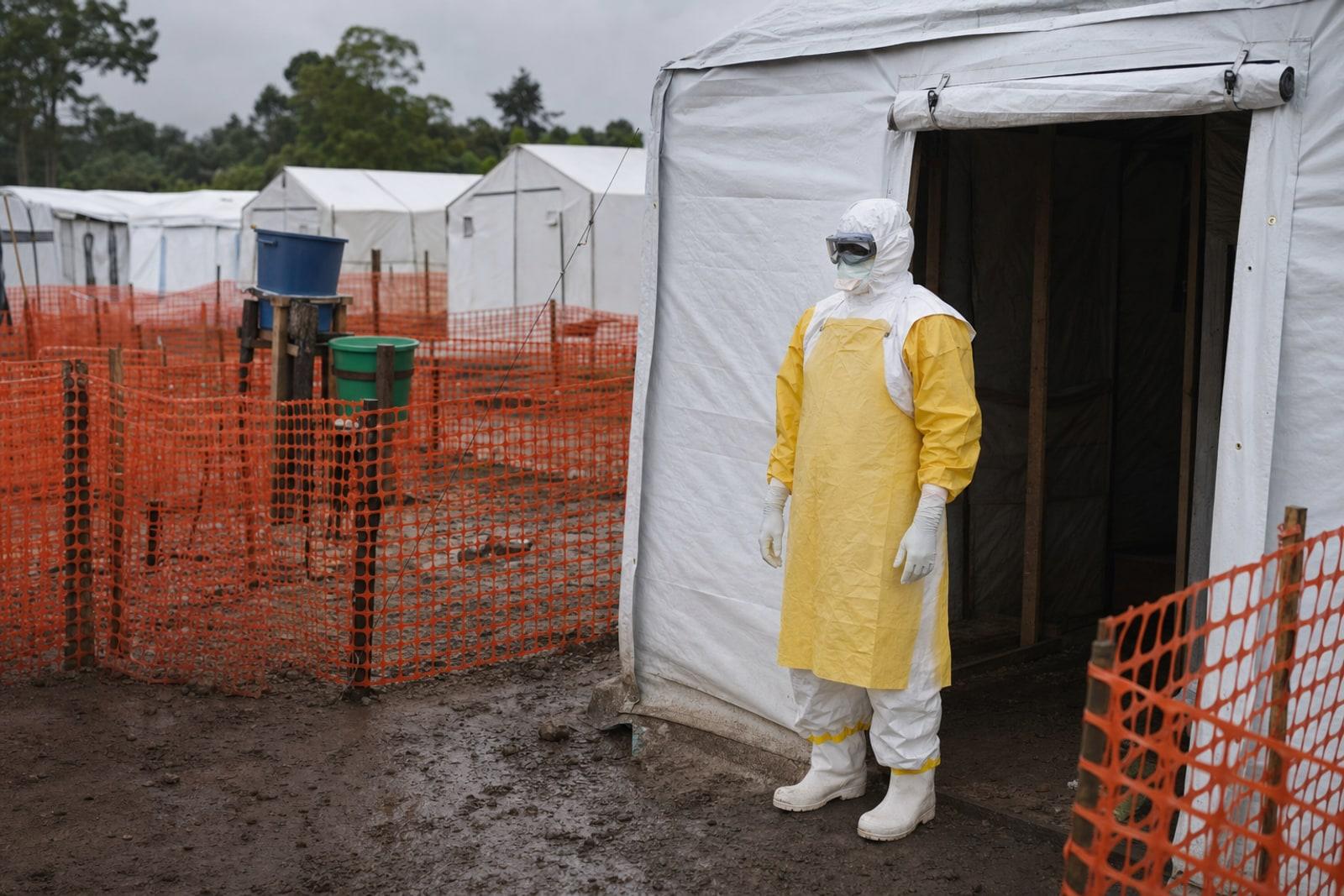
An Ebola outbreak in the northeast of the Democratic Republic of the Congo is now spreading faster than any in the disease's recorded history, the World Health Organization says, with more than 1,000 confirmed cases, at least 254 deaths and a chain of transmission that has already reached neighbouring Uganda.
The epidemic, confirmed by Congolese health authorities in Ituri province on 15 May, is the country's 17th Ebola outbreak. On 17 May the WHO Director-General declared it a Public Health Emergency of International Concern — the agency's highest level of alarm — citing a rare viral strain, a fragile humanitarian setting and a pace of spread that has outstripped every prior outbreak.
What makes this one especially dangerous is the virus itself. Unlike the Zaire species behind most large Ebola epidemics, this outbreak is caused by Bundibugyo virus, for which there is no licensed vaccine and no specific approved treatment.
The numbers, and how fast they are climbing
Figures reported through the WHO and the European Centre for Disease Prevention and Control put the toll in DR Congo at more than 1,000 confirmed cases by the third week of June. The outbreak is now the second largest on record, behind only the West African epidemic of 2014–2016.
As of WHO reporting around 20–22 June, the situation in DR Congo stood at:
- 1,003 confirmed cases and 254 confirmed deaths;
- 365 people hospitalised in isolation;
- Ituri the worst-hit province, with 916 confirmed cases across 22 health zones;
- North Kivu with 84 cases across 11 health zones, and South Kivu with three cases in one health zone.
Across the border, Uganda had recorded 20 confirmed cases and two deaths by 22 June, most of them in and around the capital, Kampala. Health officials there have linked the majority of cases to travel from DR Congo, with a smaller number attributed to local transmission — a pattern that underscores how readily the virus moves along busy regional trade and travel routes.
A strain with no vaccine
The Bundibugyo species is one of the reasons containment is proving so difficult. The two Ebola vaccines that exist — Ervebo (rVSV-ZEBOV) and a two-dose regimen — and the two monoclonal-antibody therapies approved after trials in DR Congo are all licensed against the Zaire species. They are not approved for, or proven against, Bundibugyo.
That leaves responders relying heavily on the classic, labour-intensive tools of outbreak control: finding cases, isolating the sick, tracing every contact and winning the trust of communities. Ervebo can still be deployed through a so-called ring vaccination strategy, and the WHO issued guidance in late May on using a licensed Ebola vaccine during Bundibugyo outbreaks, but the core medical countermeasures that helped tame recent Zaire-strain epidemics are missing here.
Médecins Sans Frontières, which is treating patients in Ituri, has warned that "major gaps in surveillance, diagnosis, contact tracing, and community engagement are undermining efforts to bring the outbreak under control."
An outbreak inside a war
The epidemic is unfolding in one of the world's most difficult operating environments. Eastern DR Congo is gripped by armed conflict involving multiple militias, acute hunger affecting millions of people, and health facilities that are damaged, overstretched or shut. Poor roads slow the delivery of supplies and the movement of response teams.
The WHO Director-General, Tedros Adhanom Ghebreyesus, has framed the crisis as one that cannot be solved by medicine alone.
We cannot build community trust or isolate the sick while bombs are falling. Stopping this Ebola transmission depends entirely on humanitarian access.
He has also pointed to the way conflict and hunger compound the danger. "Hunger and disease are old companions," he said. "People weakened by hunger are far more vulnerable to infections."
The international risk
For all the alarm in the region, the assessed risk to people far from the outbreak remains low. The ECDC says it "assess[es] the likelihood of infection for people living in the European Union/European Economic Area (EU/EEA) as very low," while pledging to keep monitoring the situation.
That assessment reflects how Ebola spreads — through direct contact with the bodily fluids of an infected person, not through casual contact or airborne transmission — and the distance between the affected provinces and most international travel hubs. Even so, the PHEIC declaration is designed to mobilise resources, coordinate cross-border surveillance and prevent complacency: the same insecurity that hampers the response inside DR Congo also makes early detection harder, and an outbreak rising this quickly leaves little margin for error.
The WHO says it is scaling up support to both governments, strengthening surveillance, contact tracing, clinical care, supply delivery, community engagement and cross-border preparedness. Whether that is enough to slow a virus moving faster than any Ebola outbreak before it — in a region already stretched by war and hunger — is the question now hanging over the response.
Frequently asked
- How many people have been infected?
- As of WHO reporting around 20–22 June 2026, DR Congo had 1,003 confirmed cases, 254 confirmed deaths and 365 people hospitalised in isolation, with Ituri province the worst affected. Uganda had recorded 20 confirmed cases and two deaths.
- Why is there no vaccine for this outbreak?
- The outbreak is caused by the Bundibugyo species of Ebola. The two licensed Ebola vaccines and the two approved antibody treatments target the Zaire species and are not approved for, or proven against, Bundibugyo, leaving responders reliant on surveillance, isolation and contact tracing.
- Is there a risk to people in Europe?
- The European Centre for Disease Prevention and Control assesses the likelihood of infection for people living in the EU/EEA as very low. Ebola spreads through direct contact with the bodily fluids of an infected person, not through the air.
- Why is the outbreak so hard to contain?
- It is unfolding in eastern DR Congo amid armed conflict, acute hunger and damaged health facilities. WHO and MSF say insecurity, poor roads and gaps in surveillance and contact tracing are undermining the response, and there is no vaccine for this strain.
Sources(7)
- 1Epidemic of Ebola Disease caused by Bundibugyo virus in DRC and Uganda determined a public health emergency of international concernWorld Health Organization · who.int
- 2Ebola outbreak - DRC 2026 (situation page)World Health Organization · who.int
- 3Ebola disease outbreak in the Democratic Republic of the Congo and UgandaEuropean Centre for Disease Prevention and Control · ecdc.europa.eu
- 4Ebola outbreak in DR Congo collides with conflict and hunger, WHO warnsUN News · news.un.org
- 5Ebola disease outbreak 2026: How MSF is respondingMédecins Sans Frontières (Doctors Without Borders) · doctorswithoutborders.org
- 6Bundibugyo, the rare virus causing a deadly new Ebola outbreak, has no vaccine yetGavi, the Vaccine Alliance · gavi.org
- 7Ebola Outbreak: Current SituationUS Centers for Disease Control and Prevention · cdc.gov
Related by topic