Animal welfare
A Luxembourg freighter's most unusual cargo: two bears bound for freedom
Cargolux flew brothers Benji and Balu free of charge from a cage in Azerbaijan to a new home on the Isle of Wight — a Luxembourg name behind a growing global bear-rescue network.
By Tom Schmit · · 4 min read
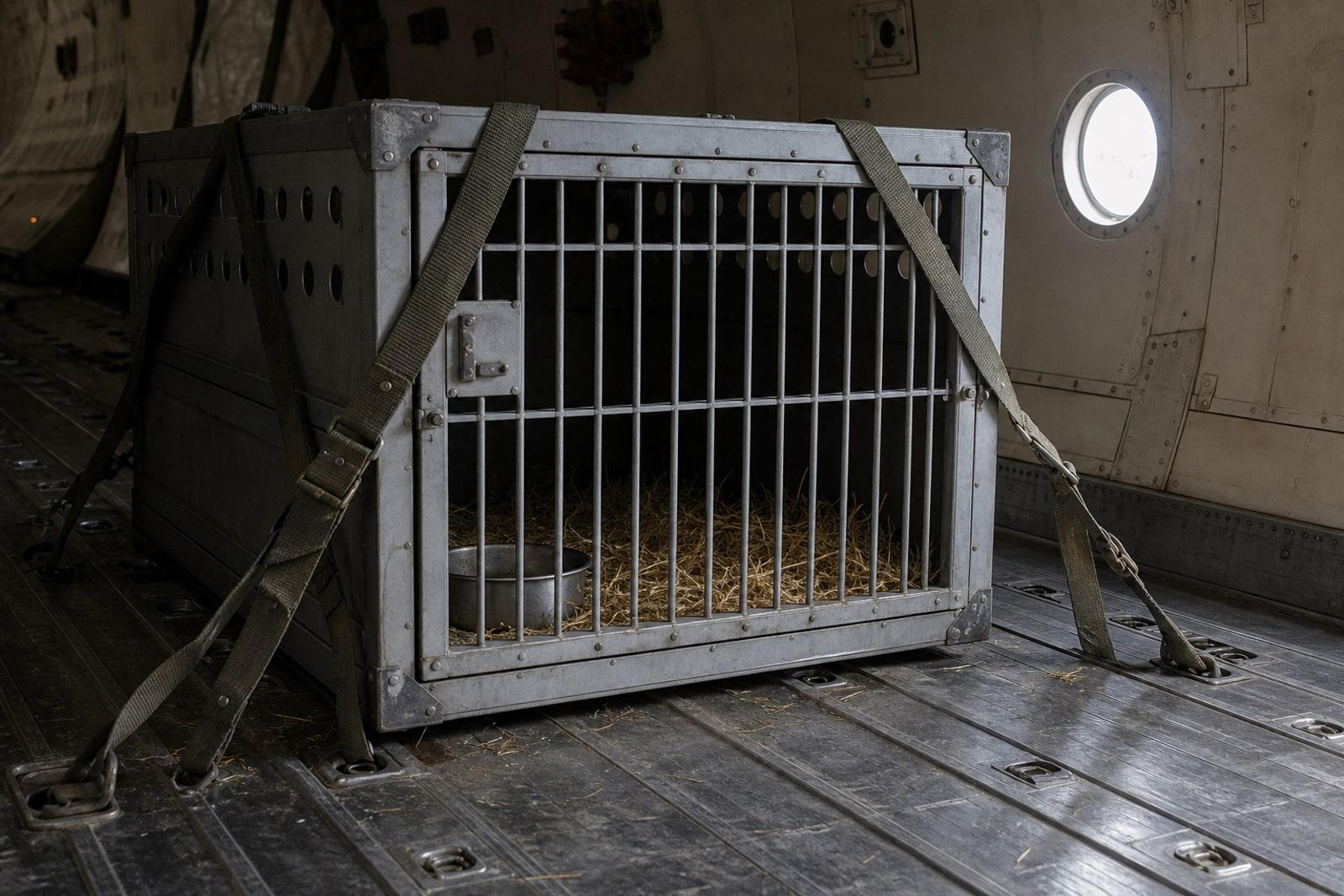
The cargo that Cargolux loaded at Baku airport one morning last June was not the usual machinery or e-commerce freight that fills the holds of Luxembourg's flagship airline. It was two brown bears.
Benji and Balu, brothers believed to be around 13 years old, had spent the first part of their lives confined to a tiny cage in Azerbaijan, kept as so-called "restaurant bears". By the time rescuers reached them they were malnourished and underweight, their teeth damaged by years of stress-induced biting on the bars. The hardest part of freeing them was not the paperwork or the veterinary care, but a far more mundane obstacle: getting two large bears safely across a continent.
That is where a Luxembourg company entered an international animal-welfare operation. Cargolux, a major Boeing 747 freighter operator, agreed to fly the pair free of charge from Baku to the United Kingdom — and, ahead of the flight, to carry the purpose-built transport crates out to Azerbaijan so the bears could be moved in the first place. The carrier described it as the first mission of its kind out of the country.
An unusual cargo, free of charge
The sanctuary that took the bears in had spent roughly two years trying to bring them to Britain. Moving them by road, rail or sea posed too many risks and would only have prolonged their suffering, while chartering a dedicated flight for two bears was proving prohibitively expensive. Cargolux's offer removed the final, decisive hurdle.
There is no doubt that without Cargolux, this project may never have come to fruition. This was one of the biggest single expenses in the whole operation and we cannot express our gratitude enough to Cargolux for stepping in and helping us to overcome this final hurdle.
So said Lawrence Bates, chief executive of the Wildheart Animal Sanctuary in Sandown, on the Isle of Wight, the bears' final destination. For Cargolux, whose handlers are trained in live-animal transport and who routinely move horses, livestock and zoo animals, the appeal was reputational as much as logistical.
"At Cargolux, we are committed to playing our part in raising awareness and promoting animal welfare and conservation," said Richard Forson, the airline's president and chief executive.
From a cage in Baku to a wood on the Isle of Wight
The journey itself was quick by the standards of the bears' two-year wait. The direct flight covered roughly 3,000 miles in about six hours, landing at Glasgow. From there the bears travelled by road to Portsmouth and crossed by ferry to the Isle of Wight, arriving at the sanctuary at around 10am in early June 2025. They were, the sanctuary said, the first bears on the island in some three decades.
Their new enclosure is a world away from the cage in Baku: a woodland habitat of roughly 3,500 square metres with grass, trees, ponds to wallow in and space to hibernate. Building it and funding the bears' ongoing care was itself a feat — the sanctuary raised about £264,578 against a £255,000 target.
- The bears: Benji and Balu, brothers, around 13 years old, rescued from a life as "restaurant bears" in Azerbaijan.
- The flight: roughly 3,000 miles from Baku to Glasgow in about six hours, free of charge, with Cargolux also flying the crates out beforehand.
- The home: a 3,500-square-metre woodland enclosure at the Wildheart Animal Sanctuary on the Isle of Wight.
Lucie Francis, the sanctuary's head of bear section, framed the task ahead in simple terms. "They've not had the best experience but we're hoping we can turn that around for them and allow them to be real bears," she said.
A wider movement against the bear trade
Benji and Balu's airlift is one small node in a sprawling global network of NGOs, sanctuaries, governments and airlines that move captive bears out of cruelty and into care. The logistics are formidable, and a willing freight carrier is often the missing link — which is what makes a name like Cargolux, better known for industrial supply chains, an unlikely protagonist.
The cause has rarely had more momentum. South Korea, long associated with the farming of bears for their bile — a fluid drained from the animals' gall bladders and sold in traditional medicine — formally ended the practice from 1 January 2026 under legislation passed earlier. Campaigners at Humane World for Animals hailed the move as the close of a grim chapter, even as they warned that the harder work was only beginning: roughly 200 bears remained on South Korean farms as the ban took effect, all of them needing permanent sanctuary places.
Those bears are a different species in a different country from the two that flew to the Isle of Wight, and Cargolux played no role in the South Korean ban. But the connective tissue is the same. Ending the trade in law is one thing; physically relocating animals that have spent their lives in cages is another, and it depends on exactly the kind of crate-and-cargo expertise that carriers such as Cargolux can supply. For a country whose economy leans heavily on logistics and aviation, it is a reminder that the same infrastructure that moves freight can, occasionally, move something rather more alive.
For now, two brothers from Baku are learning to be bears again on an English island — and a Luxembourg freighter is part of the reason why.
Frequently asked
- What role did Cargolux play in the bear rescue?
- Cargolux, Luxembourg's all-cargo airline, flew the two bears free of charge on a direct flight from Baku to Glasgow and also carried the purpose-built transport crates out to Azerbaijan beforehand, which the sanctuary said was the operation's biggest single cost.
- Where did the bears come from and where do they live now?
- Benji and Balu were rescued from a cage in Azerbaijan, where they had been kept as 'restaurant bears'. They now live in a roughly 3,500-square-metre woodland enclosure at the Wildheart Animal Sanctuary in Sandown, on the Isle of Wight.
- Were these bears from South Korea's bile farms?
- No. Benji and Balu are European brown bears rescued from Azerbaijan. South Korea's separate bear bile farming ban, effective 1 January 2026, is cited only as context for the wider global movement to rehome captive bears.
Sources(12)
- 1Cargolux sponsors life-saving flight for rescued bearsAir Cargo Week · aircargoweek.com
- 2Cargolux to fly rescue bears to new UK homeAir Cargo News · aircargonews.net
- 3Cargolux sponsors rescue flight for two European brown bearsCAAS International · caasint.com
- 4Wildheart Animal Sanctuary announces sponsorship for transportation of bears Benji and BaluOnTheWight · onthewight.com
- 5From Azerbaijan to island paradise — bears settling into new Wildheart homeIsle of Wight Radio · iwradio.co.uk
- 6Isle of Wight attraction Wildheart Animal Sanctuary welcomes 2 bearsIsle of Wight County Press · countypress.co.uk
- 7Project BearsWildheart Animal Sanctuary · wildheartanimalsanctuary.org
- 8Benji and Balu bound for Sanctuary with Cargolux!Wildheart Animal Sanctuary · wildheartanimalsanctuary.org
- 9Benji and Balu settle in to new forever home following Azerbaijani rescueIsland Echo · islandecho.co.uk
- 10From Azerbaijan to island paradise, first bears in 30 years arrive on Isle of WightNationalWorld / The News, Portsmouth · nationalworld.com
- 11In massive win for animals, South Korea ends cruel bear bile industryHumane World for Animals · humaneworld.org
- 12South Korea to stop breeding bears to extract their bile - but hundreds are still trapped in pensEuronews · euronews.com
Related by topic
Cargolux’s wildfire fleet is commercial — its EU emergency role remains unproven