Energy
Qatar gas complex blast kills 13 as Doha says LNG exports unaffected
An explosion during a restart at the Barzan plant in Ras Laffan killed 13 workers and injured 66. QatarEnergy blamed a technical fault and said LNG exports — a fifth of world supply — were unaffected.
By Jonas Thill · · 4 min read
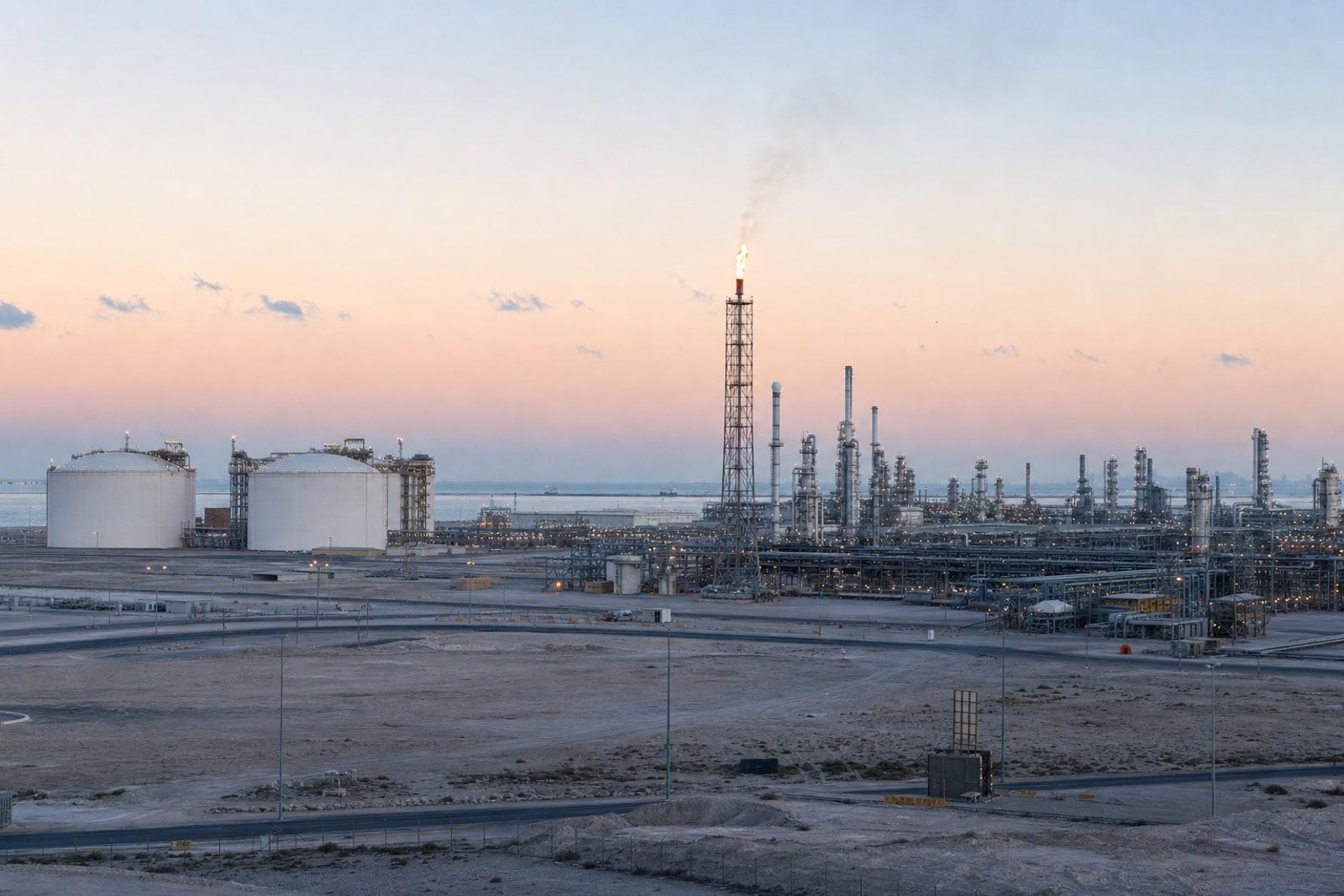
An explosion at one of the world's most important gas hubs killed at least 13 workers and injured dozens in northern Qatar, but the Gulf state moved quickly to reassure energy markets that its liquefied natural gas (LNG) exports — a critical artery for European supply — would not be disrupted.
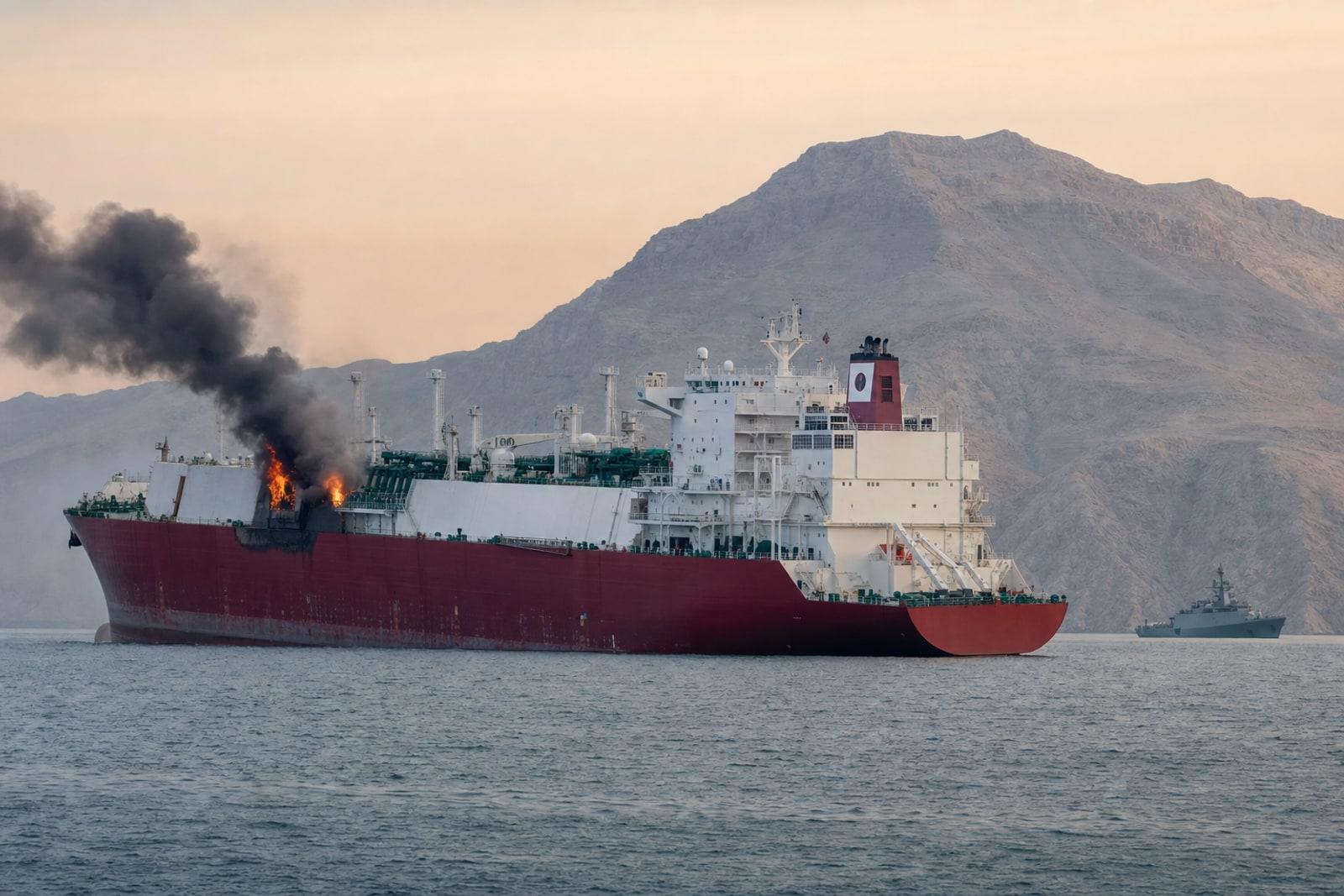
The blast tore through the Barzan gas supply facility, part of the sprawling Ras Laffan industrial complex about 80 kilometres north of Doha, late on Sunday, according to QatarEnergy and Qatari officials. The state-owned producer said the explosion and ensuing fire broke out as workers were restarting the plant after a months-long shutdown.
Speaking at a news conference in Doha on Monday, Saad Sherida al-Kaabi, Qatar's Minister of State for Energy Affairs and the head of QatarEnergy, said 13 people had been killed and 66 injured. The figures revised earlier reports, carried by outlets including CNBC and The Associated Press, that had described 54 people injured and 18 unaccounted for. Al-Kaabi said the dead were all Indian and Pakistani nationals; India's embassy confirmed that 12 of its citizens were among them. The injured, he said, spanned several nationalities and were "receiving medical treatment, with none of them in life-threatening condition".
'An accident, not sabotage'
Al-Kaabi attributed the disaster to a technical malfunction and pointedly ruled out any attack — an important distinction in a region rattled by months of conflict and brinkmanship around the Strait of Hormuz.
"I would like to emphasise that this was an accident and not the result of sabotage or any hostile act," al-Kaabi said, adding that authorities had launched a full investigation to determine the cause of "this unfortunate incident".
The minister said the Barzan plant had been "intentionally and completely" halted since December 2025 — for what he described as urgent maintenance — and had been brought back online only two days before the explosion. The Associated Press, citing facility data, reported that Barzan can supply close to 1.4 billion standard cubic feet of sales gas a day, primarily for domestic electricity generation and water desalination. QatarEnergy owns nearly all of the plant, with ExxonMobil holding a minority stake.
Why exports were spared
The crucial point for global markets is what Barzan does — and does not — do. Unlike Qatar's giant LNG "trains" that chill gas for export by tanker, Barzan feeds the domestic grid. That distinction is why officials could insist the country's export machine kept running even as emergency crews fought the fire.
- Al-Kaabi said QatarEnergy's LNG facilities, Ras Laffan Port and other logistics operations were "unaffected" by the explosion and fire.
- "This will not affect in any way our exports to the world," he told reporters.
- Ras Laffan as a whole produces roughly a fifth of the world's LNG, so any threat to its export capacity reverberates far beyond the Gulf.
A nervous moment for Europe
For European buyers, the news landed at a delicate time. Qatar was the European Union's third-largest LNG supplier in 2025, accounting for about 8.9 per cent of the bloc's LNG imports, behind the United States (56 per cent) and Russia (13.9 per cent), according to EU trade data. With the continent racing to refill storage sites left well below their five-year average after a hard winter, traders had been counting on rising Qatari output to ease the squeeze.
The accident nonetheless nudged prices higher. European TTF gas futures, the regional benchmark, rose about 1.75 per cent to roughly $49 per megawatt-hour on Monday, with analysts pointing to a combination of the Qatari blast, a European heatwave lifting power demand, and renewed tension over the Strait of Hormuz, according to energy-market trade press. The relatively muted reaction reflected Doha's swift assurances that exports were intact — a far cry from earlier in 2026, when disruptions to Qatari supply had sent the same benchmark surging.
The shadow of the Hormuz squeeze
The explosion underscores how exposed European energy security has become to events thousands of kilometres away. Most Gulf LNG cargoes must pass through the Strait of Hormuz, the narrow chokepoint between Iran and the Arabian Peninsula, and months of regional confrontation have kept shippers and insurers on edge. The National reported that earlier Iranian missile strikes on Ras Laffan had knocked out a significant share of Qatar's LNG capacity, and that the restart now under way reflected easing tensions.
For Luxembourg and its neighbours, which import virtually all their gas and sit at the end of pipelines fed in part by seaborne LNG, the episode is a reminder that prices set on the TTF can swing on a single accident in the desert. Wholesale moves of this kind feed through, with a lag, to the tariffs households and businesses pay across the Greater Region.
For now, the immediate human toll is the gravest dimension. Thirteen workers — overwhelmingly migrant labourers who keep the Gulf's energy economy running — were killed in a plant that had been dark for half a year and was only just coming back to life. Investigators must now establish how a routine restart turned deadly, even as the export tankers that bind Qatar to Europe continued to sail.
Frequently asked
- What caused the explosion at Qatar's Ras Laffan gas complex?
- Qatar's energy minister, Saad al-Kaabi, attributed the blast to a technical malfunction during the restart of the Barzan gas plant and explicitly ruled out sabotage or any hostile act. He said a full investigation had been launched to determine the precise cause.
- Will the explosion affect Qatar's LNG exports to Europe?
- Officials say no. The Barzan facility feeds Qatar's domestic grid rather than its LNG export trains. Al-Kaabi said QatarEnergy's LNG facilities, Ras Laffan Port and logistics were unaffected and that exports would not be impacted.
- Why does an accident in Qatar matter for Luxembourg and Europe?
- Qatar supplied about 8.9% of EU LNG imports in 2025, the third-largest share, and Ras Laffan produces roughly a fifth of global LNG. Any threat to that supply moves the European TTF benchmark, which ultimately feeds through to gas and electricity bills across the Greater Region.
- How many people were killed and injured?
- Qatar's energy minister said 13 people were killed and 66 injured. The dead were all Indian and Pakistani nationals, with India confirming 12 of its citizens among them. Earlier reports had cited 54 injured and 18 unaccounted for before the figures were updated.
Sources(10)
- 1Explosion at Qatar's Ras Laffan LNG facility kills at least 13Al Jazeera · aljazeera.com
- 2At least 13 killed and 66 injured in explosion at Qatar's Ras Laffan gas hubThe National · thenationalnews.com
- 313 killed, dozens injured in Qatar's Ras Laffan energy site explosionEuronews · euronews.com
- 4Qatar says gas export terminal blast killed 13, injured dozens moreABC News / Associated Press · abcnews.com
- 513 killed, 66 injured in Ras Laffan factory explosion; LNG exports remain unaffected: Al KaabiQatar Tribune · qatar-tribune.com
- 6Pakistani, Indian nationals among 13 dead after 'technical malfunction' at Qatar LNG plantDawn · dawn.com
- 754 injured and 18 missing after explosion at Qatar LNG siteCNBC · cnbc.com
- 8Heatwave, Hormuz Threats and Qatar Blast Push European Gas Prices HigherOilPrice.com · oilprice.com
- 9EU imports of energy products - latest developmentsEurostat · ec.europa.eu
- 10Indians and Pakistanis among 13 killed in explosion at Qatar's LNG factoryGulf News · gulfnews.com
Related by topic