Labour market
Luxembourg's jobless rate edges down to 6.2% as vacancies climb
ADEM data show the seasonally adjusted rate easing from 6.3% in March, with employers posting more openings — but the number of registered jobseekers is still up 6.5% on the year.
By Jonas Thill · · 4 min read
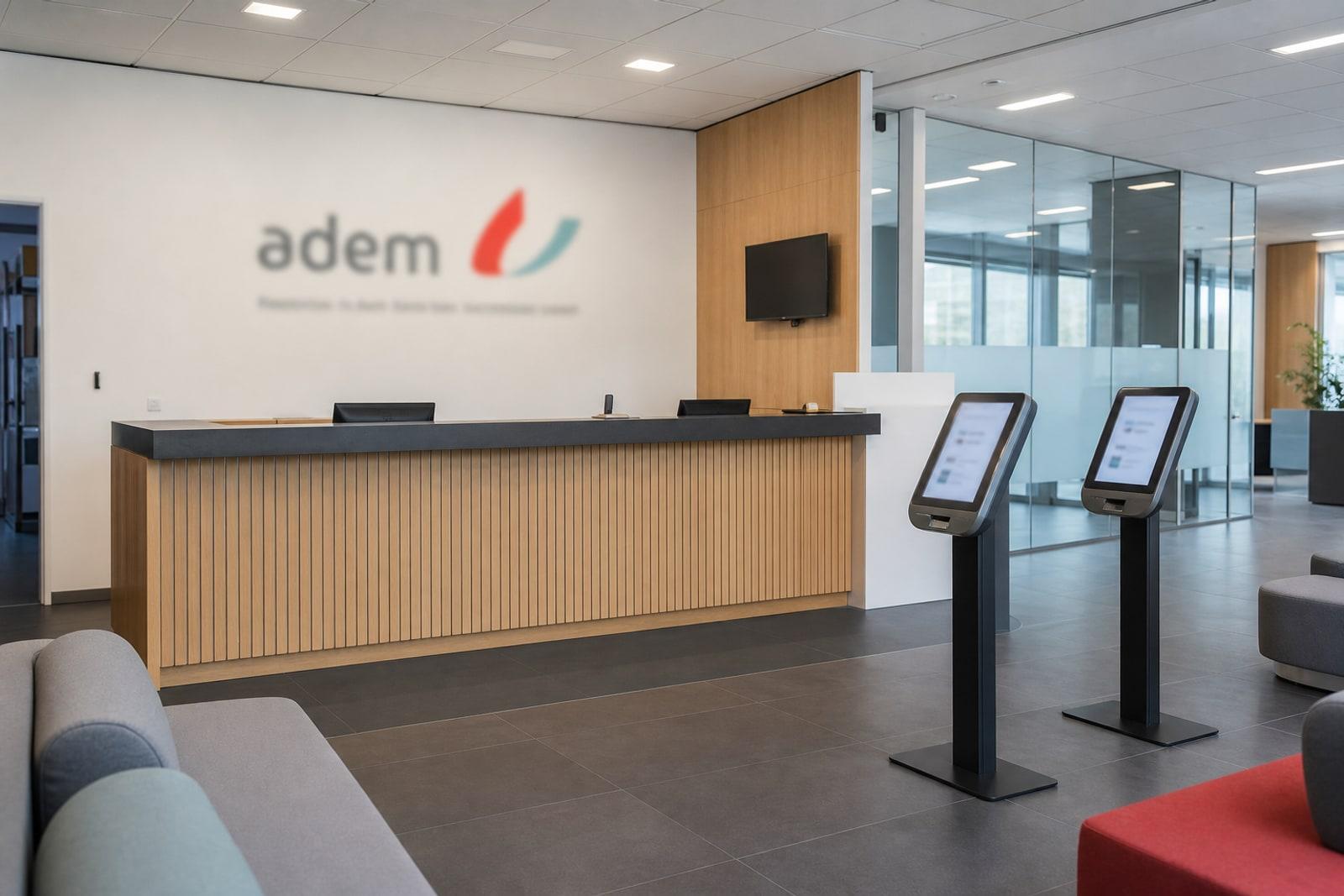
Luxembourg's unemployment rate eased to 6.2% at the end of May 2026, slipping back from 6.3% in March as employers stepped up hiring, according to figures from the national employment agency ADEM and the statistics institute STATEC. The seasonally adjusted reading returns the Grand Duchy to where it stood at the close of 2025, and offers a cautiously encouraging signal for an economy whose fortunes are closely tied to a hesitant eurozone.
Yet the headline rate masks a more complicated reality beneath it. The number of resident jobseekers registered with ADEM still rose over the year, and the increase was sharpest among the most highly qualified — a sign that the strains in Luxembourg's labour market are as much structural as cyclical.
The numbers behind the rate
At 31 May 2026, ADEM counted 19,674 available resident jobseekers, an increase of 1,205 people, or 6.5%, compared with the same month a year earlier. The rise was concentrated among the most qualified candidates, whose ranks grew 15.1% year-on-year, while the number of young jobseekers was up a more modest 2.9%.
The demand side, however, brightened. Employers declared 3,049 new vacancies to ADEM during May, 7.6% more than in May 2025. The stock of available positions at the end of the month stood at 6,928 — still 3.8% lower than a year earlier, but a level that points to continued, if uneven, appetite to hire.
There were other constructive signals. The number of resident jobseekers receiving full unemployment benefits fell to 9,842, down 6.8% on the year. ADEM said demand grew most strongly across a broad spread of occupations:
- secretarial and administrative support;
- information technology;
- banking professions;
- industrial cleaning and maintenance;
- design and engineering;
- warehousing and logistics;
- paramedical care.
That breadth — from back-office and finance roles to logistics and care work — suggests the recovery in vacancies is not confined to a single corner of the economy.
A resilient model under pressure
Officials have framed the data as evidence that Luxembourg's economy is holding up despite external headwinds, while acknowledging that the agency is handling record caseloads. At the end of 2025 more than 21,000 resident jobseekers were registered with ADEM, the highest level on record.
Presenting ADEM's annual report on 13 May, Labour Minister Marc Spautz pointed to continued job creation as proof of underlying strength.
"Domestic employment continued to grow last year, with the creation of 6,000 new jobs, testifying to the resilience of our model," Spautz said, speaking in French.
He cautioned, though, that the shifts in the labour market reflected deeper challenges. "Faced with developments in the job market that reflect challenges of a structural nature, calling for responses that are at once ambitious, coordinated and sustainable, ADEM's role is more central than ever," the minister said.
ADEM's director, Isabelle Schlesser, said the agency was leaning on digital tools to cope with rising volumes. "We are engaged in a profound transformation and, for the great majority of jobseekers, this digitalisation has been very well received, since 85% of unemployment claims are made online, autonomously," she said.
A flat eurozone and a borrowed workforce
The Luxembourg figures land against a euro-area backdrop that is neither deteriorating nor improving. Eurostat reported the euro area's seasonally adjusted unemployment rate at 6.3% in April 2026, unchanged from March and from a year earlier; the rate for the wider European Union was 6.0%. With around 11.1 million people out of work in the single-currency bloc, the labour market has so far proved sticky in the face of sluggish growth.
Comparisons across borders come with a caveat. Eurostat's harmonised survey-based measure put Luxembourg's rate at 7.0% in April, higher than the 6.2% national reading, because the two are calculated differently: STATEC's figure is built on jobseekers registered with ADEM, while Eurostat applies a standardised labour-force survey methodology used across all member states.
The other crucial piece of context is who does the Grand Duchy's work. Luxembourg depends on cross-border commuters — known as frontaliers — to an extent unmatched in Europe. Roughly 231,000 of them travel in each day from France, Germany and Belgium, filling close to half of all salaried jobs, with the largest share, about 126,000, coming from France. Those workers do not appear in ADEM's resident-jobseeker counts: when they lose a job, they claim unemployment benefits in their country of residence, not in Luxembourg.
That makes the national jobless rate a partial gauge of the labour market's true health. A 6.2% rate among residents sits alongside a workforce nearly half of which lives beyond the country's borders — and whose own job security is bound up with the same eurozone slowdown now testing Luxembourg's resilience.
Frequently asked
- What is Luxembourg's unemployment rate in 2026?
- Luxembourg's seasonally adjusted unemployment rate, calculated by STATEC from ADEM registrations, was 6.2% at the end of May 2026, down from 6.3% at the end of March and matching the level seen at the close of 2025.
- How many people are registered as jobseekers in Luxembourg?
- ADEM counted 19,674 available resident jobseekers at 31 May 2026, an increase of 1,205 people (+6.5%) compared with May 2025. The rise was largest among highly qualified candidates, up 15.1% year-on-year.
- Are there more jobs available in Luxembourg?
- Yes. Employers declared 3,049 new vacancies to ADEM in May 2026, up 7.6% on the year, though the total stock of open positions at month-end (6,928) was still 3.8% lower than a year earlier. Demand was strongest in administrative support, IT, banking, cleaning and maintenance, engineering, logistics and paramedical care.
- Why is Luxembourg's rate different in Eurostat data?
- Eurostat's harmonised labour-force-survey measure put Luxembourg at 7.0% in April 2026, higher than the 6.2% national figure, because STATEC's rate is based on jobseekers registered with ADEM while Eurostat uses a standardised survey method applied across all EU states.
Sources(7)
- 1Jobseekers, Vacancies Rise in Luxembourg; Unemployment Rate Falls to 6.2%Chronicle.lu · chronicle.lu
- 2Face à la montée des défis liés à l'emploi, l'ADEM renforce ses actions (ADEM annual report presentation)Le gouvernement luxembourgeois · gouvernement.lu
- 3Chômage au Luxembourg: le nombre de demandeurs d'emploi bondit de 6,5% sur un anL'essentiel · lessentiel.lu
- 4Le taux de chômage recule légèrementLe Quotidien · lequotidien.lu
- 5Le chômage en mai : les personnes hautement qualifiées sont concernéesLes Frontaliers · lesfrontaliers.lu
- 6Euro area unemployment at 6.3% (April 2026)Eurostat · ec.europa.eu
- 7Cross border workers in Luxembourg: who are they and why are they important?Luxtoday.lu · luxtoday.lu
Related by topic