Peacebuilding
Luxembourg Peace Prize honours five global peacebuilders as conflicts multiply
The Schengen Peace Foundation's 14th edition in Kirchberg recognised peacemakers from India to the Netherlands, opening with a warning that 65 conflicts are now under way worldwide.
By Tom Schmit · · 5 min read
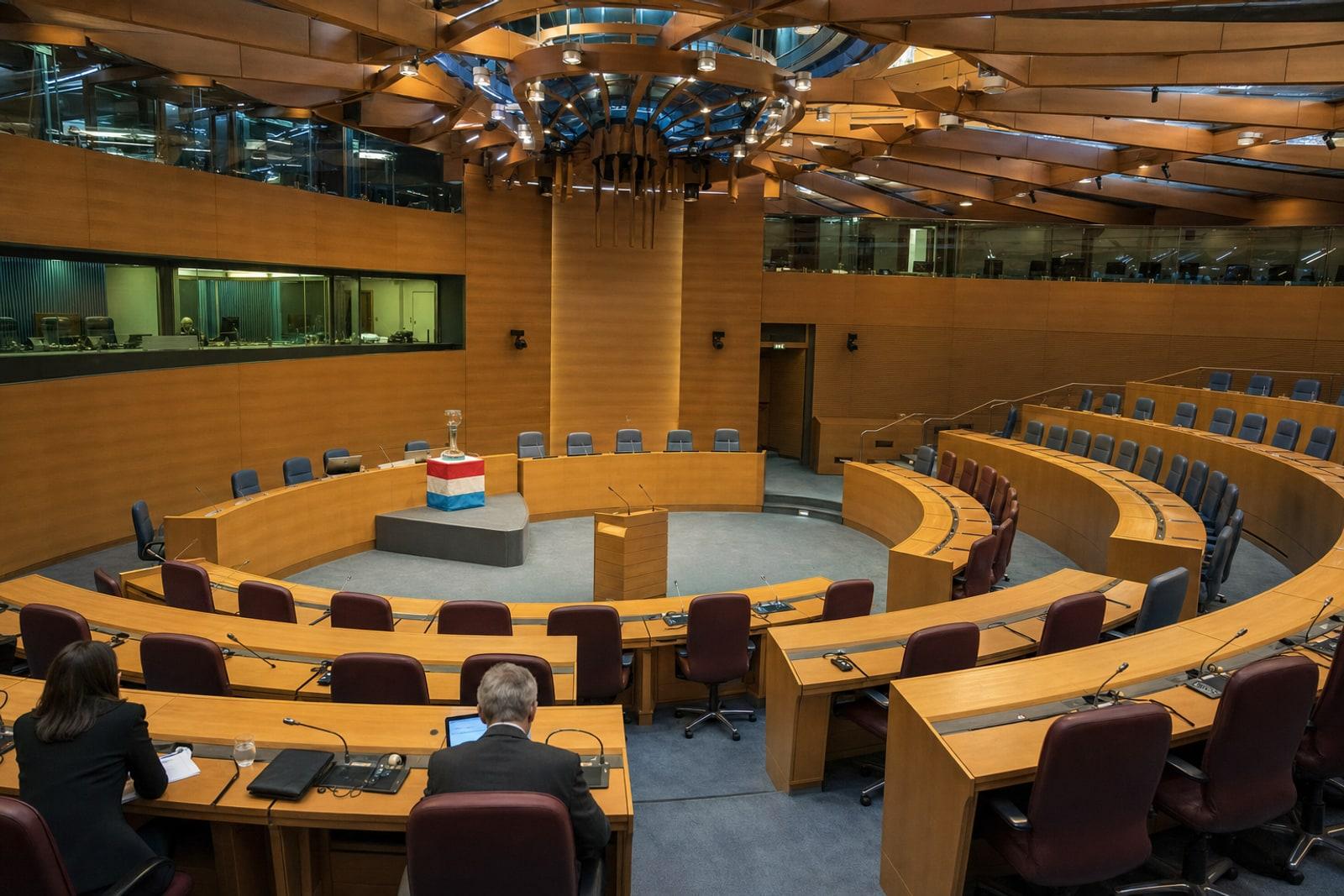
A small Grand Duchy once again served as the stage for some of the world's most prominent peacemakers. On Friday 19 June, the Schengen Peace Foundation held the 14th edition of the Luxembourg Peace Prize in the Hémicycle of the European Convention Centre Luxembourg in Kirchberg, drawing more than 100 activists and guests to honour five laureates whose work spans education, art, youth organising and spiritual practice.
Organised together with the World Peace Forum, the ceremony opened not with celebration but with a sobering audit of the world it was trying to mend. The Institute for Economics and Peace presented its 2026 Global Peace Index, and its founder set the tone with a stark figure.
There are currently 65 active conflicts worldwide - the highest number since the end of the Second World War.
That assessment, from Institute founder and executive chairman Steve Killelea, framed the evening. The index found that global peacefulness had deteriorated for a twelfth consecutive year, with 99 of the 163 countries assessed recording a decline. Killelea pointed to the spreading use of drones and artificial intelligence on the battlefield, and put the economic cost of violence at 21.8 trillion US dollars in 2025 — equivalent to 11.3 percent of global GDP.
A Luxembourg platform for global figures
The prize, awarded in Luxembourg since 2012, has become a way for one of the European Union's smallest member states to convene people whose influence reaches far beyond its borders. President of the Schengen Peace Foundation Vicki Hansen welcomed the laureates and guests to a hybrid event streamed online, underscoring the organisers' ambition to make the Grand Duchy a recurring fixture on the international peace calendar.
Since 2015 the award has run as a single-day event spread across thirteen categories. This year's five winners were chosen, the organisers said, to reflect peacebuilding as a craft practised at every level — from classrooms and camera lenses to grassroots networks and the inner life of the individual.
Five laureates, five forms of peace work
The 2026 honourees were drawn from four countries and several continents of activity:
- Outstanding Peace Education — Dr Tom Woodhouse (United Kingdom). An Emeritus Professor of Peace Studies at the University of Bradford, Woodhouse founded the Centre for Conflict Resolution in 1990 and wrote textbooks still used to train mediators; his recent work applies sport diplomacy through the Football Peace Academy.
- Outstanding Art for Peace — Jan Banning (Netherlands). The documentary photographer was recognised for Blood Bonds: Reconciliation in Post-Genocide Rwanda, which sets portraits of survivors alongside those of perpetrators, accompanied by personal testimony.
- Outstanding Peace Organisation — UNOY Peacebuilders. The United Network of Young Peacebuilders connects scores of youth-led groups across dozens of countries, pressing for young people to be treated as present-day decision-makers rather than leaders-in-waiting.
- Outstanding Peace Organisation — Initiatives of Change. Active in more than 60 countries, the trust-building movement runs long-running dialogue programmes including Hope in the Cities and Creators of Peace.
- Outstanding Inner Peace — Gurudev Sri Sri Ravi Shankar (India). The founder of the Art of Living Foundation was honoured for some four and a half decades of conflict-resolution and trauma-relief work reaching more than 180 countries.
In remarks marking his award, Woodhouse argued that teaching is itself a peace instrument: "Peace education provides the foundational knowledge to enable us to imagine a more peaceful world and to teach the craft and skills for making peace."
Banning described his Rwanda project as a study in moral complexity rather than catharsis, calling it "not a book about easy answers" but a work that asks "how justice, responsibility and forgiveness can exist at the same time." UNOY's representatives, in turn, insisted that "youth are not just future leaders but essential change-makers in the present."
Inner peace as a starting point
The most globally recognised laureate, Sri Sri Ravi Shankar, used his recognition to argue that diplomacy alone cannot deliver durable calm. Peace, he said, has to be cultivated within individuals before it can hold between communities or nations.
"Peace is not just the absence of conflict and bloodshed," he said. "It is a positive state of one's existence that we all need to nurture within us. It is inner peace that can bring peace to the family, to the society and ultimately to the world."
That emphasis on the personal sat deliberately against the macro picture sketched by the Global Peace Index. Where the data charted a world arming faster and trusting less, the laureates were chosen to show the opposite current — educators, photographers, young organisers and spiritual teachers working, often quietly, to widen the space for reconciliation.
A small country's recurring wager
For Luxembourg, the prize is part of a longer effort to translate its diplomatic convening power into a soft-power dividend. The choice of venue is itself symbolic: the European Convention Centre sits on the Kirchberg plateau among the EU institutions that give the Grand Duchy its outsized international footprint, and the foundation borrows the name of Schengen, the riverside village where Europe's border-free travel zone was signed in 1985.
The organisers framed this year's slate as an answer to a darkening moment. With conflicts at a post-1945 peak, they argued, recognising people who build trust across divides is not a ceremonial gesture but a practical statement of where attention and resources ought to flow. As Killelea noted, the world spends lavishly on security; the laureates honoured in Kirchberg represent the comparatively under-funded work of cultivating peace itself.
Frequently asked
- Who won the 2026 Luxembourg Peace Prize?
- Five laureates were honoured: Tom Woodhouse for Outstanding Peace Education, Jan Banning for Outstanding Art for Peace, UNOY Peacebuilders and Initiatives of Change as Outstanding Peace Organisations, and Sri Sri Ravi Shankar for Outstanding Inner Peace.
- Who organises the Luxembourg Peace Prize and where is it held?
- It is organised by the Schengen Peace Foundation together with the World Peace Forum. The 14th edition took place on 19 June 2026 in the Hémicycle of the European Convention Centre Luxembourg in Kirchberg.
- What did the 2026 Global Peace Index say at the ceremony?
- Institute for Economics and Peace founder Steve Killelea said there are 65 active conflicts worldwide, the most since 1945, that global peacefulness fell for a 12th year, and that violence cost 21.8 trillion dollars in 2025.
Sources(5)
- 1Luxembourg Peace Prize Honours Global Peacebuilders at 14th CeremonyChronicle.lu · chronicle.lu
- 2Organisers Announce Details of 14th Luxembourg Peace PrizeChronicle.lu · chronicle.lu
- 32026 Program — Luxembourg Peace PrizeSchengen Peace Foundation / Luxembourg Peace Prize · luxembourgpeaceprize.org
- 4Sri Sri Ravi Shankar Conferred Luxembourg Peace Prize for Global Peace EffortsThe Pioneer · dailypioneer.com
- 5Institute for Economics and PeaceWikipedia · en.wikipedia.org
Related by topic