Nuclear standoff
Iran bars inspectors from bombed nuclear sites as US talks advance
Tehran says it will not open the strike-damaged Fordow, Natanz and Isfahan plants to UN inspectors, even as Washington and Iran agree a 60-day roadmap toward a final deal.
By Camille Reuter · · 5 min read
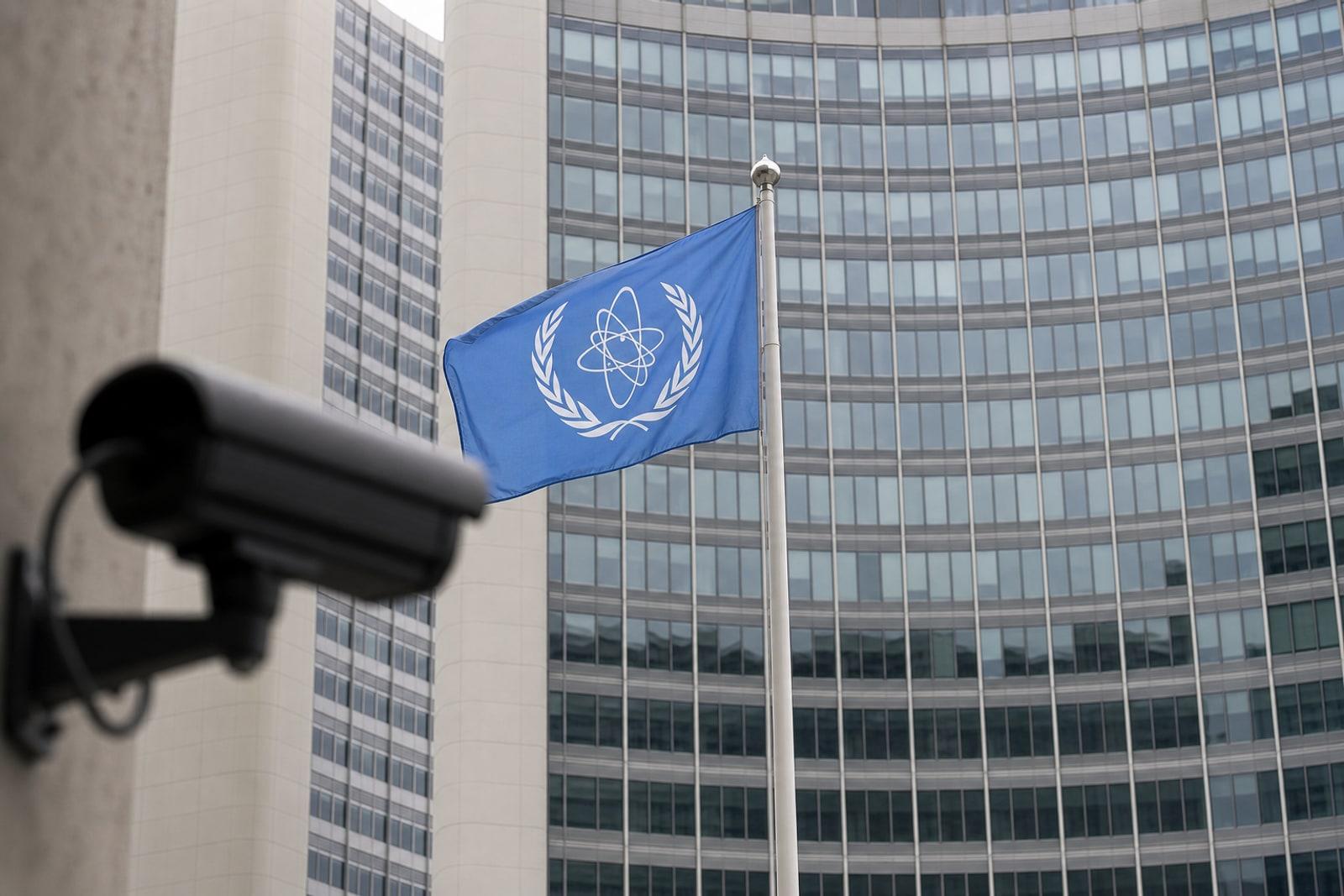
Iran has told the United Nations' nuclear watchdog it will not allow inspectors back into the three facilities bombed a year ago, hardening a standoff over verification at the very moment Tehran and Washington are advancing a 60-day roadmap toward a final nuclear agreement.
Iran's foreign ministry said on 23 June that no inspection of the damaged sites was planned and that no meeting between Iranian officials and International Atomic Energy Agency (IAEA) Director General Rafael Grossi had taken place on the sidelines of talks in Switzerland, insisting there was “no protocol” for inspecting facilities hit by military strikes. Tehran said it would continue to meet its existing obligations under the Nuclear Non-Proliferation Treaty (NPT) and its safeguards agreement — but those commitments, it made clear, no longer reach the bombed plants at Fordow, Natanz and Isfahan.
The position is not new, yet its timing sharpens a contradiction at the heart of the diplomacy: negotiators are trying to settle the fate of Iran's most sensitive nuclear material even as the agency charged with verifying it is shut out of the sites where that material is thought to sit.
A year without eyes on the stockpile
The standoff dates to June 2025, when, during a 12-day war with Israel, the United States struck Fordow, Natanz and Isfahan with bunker-buster munitions on 22 June. Within days, Iran's parliament voted 221-0 to suspend cooperation with the IAEA, and President Masoud Pezeshkian signed the measure into law on 2 July 2025. Under it, inspectors may not visit nuclear sites without approval from Iran's Supreme National Security Council.
Inspectors have since returned to facilities that were not hit, with the Bushehr power plant the main exception, but the damaged sites remain off-limits. Grossi has described the partial resumption as important but insufficient.
We are only allowed to access sites that were not hit.
Speaking to Russia's RIA Novosti in December, Grossi noted that Fordow, Natanz and Isfahan — precisely the sites inspectors cannot enter — “still contain substantial amounts of nuclear material and equipment.” The blind spot is consequential. Iran had accumulated roughly 440 kilograms of uranium enriched to 60% U-235 by mid-June 2025, of which inspectors had verified about 432 kilograms before access was constrained, according to analysts at the Institute for Science and International Security. Under Iran's safeguards agreement, that high-enriched stock should be checked roughly every 30 days; it has now gone largely unverified for a year. Iran remains the only non-nuclear-weapon state ever to have produced and stockpiled uranium enriched to 60%, a short technical step from weapons grade.
Diplomacy advances as verification stalls
The verification freeze runs directly counter to the trajectory of the talks. A memorandum of understanding reached in late May extended a fragile ceasefire for 60 days. After a first round of high-level negotiations in Switzerland concluded on 21 June, mediators said the two sides had agreed to a “road map” toward a final deal within 60 days and to a communication line intended to “avoid incidents” in the Strait of Hormuz.
The US delegation has been led by Vice-President JD Vance, with envoy Steve Witkoff, while Iran's side is headed by Foreign Minister Abbas Araghchi; Pakistan and Qatar have mediated. Negotiators have established working groups on oversight, sanctions and nuclear issues. The first nuclear question on the table, officials say, is Iran's enrichment programme and how to dispose of its high-enriched stockpile.
That is the crux of the problem. The roadmap envisions removing or diluting material that the IAEA cannot currently locate, count or confirm is even where Iran last declared it. Without inspectors at the damaged sites, any agreement to dispose of the stockpile would rest on Tehran's word rather than independent verification — the standard the entire non-proliferation system is built to avoid.
Europe presses, but its leverage is thin
For the European signatories of the 2015 nuclear deal — France, Germany and the United Kingdom, the so-called E3 — the blackout is an acute concern. On 10 June the IAEA Board of Governors adopted a resolution, drafted by the United States and tabled by the E3, urging Iran to resume cooperation without delay. It passed by 19 votes to three, with 11 abstentions; Russia, China and Burkina Faso voted against.
In a joint statement to the Board, the four governments said Iran had denied access to its most proliferation-sensitive facilities “for a year” and that the agency “cannot draw a safeguards conclusion for 2025” on Iran's previously declared material.
“We urge Iran to immediately return to full compliance with its legally binding obligations arising from its NPT Safeguards Agreement and relevant UN Security Council resolutions.”
Tehran has been unmoved. The head of the Atomic Energy Organization of Iran, Mohammad Eslami, has argued that the IAEA must first define the rules for inspecting bombed facilities — effectively asking the watchdog to codify a procedure for sites attacked while under safeguards. “If there are established procedures for the post-war situation, the agency should announce them,” he said in December, adding that Iran would not bow to “political and psychological pressure.”
The stakes extend well beyond the Gulf. Europe, which sits within range of any wider regional escalation, has tied its own security to the principle that Iran's programme can be independently monitored. The E3 retain the option of triggering “snapback” sanctions, but using it could collapse the very talks they are trying to protect — the bind that has left their leverage thin.
For now, the diplomacy and the verification are moving in opposite directions. Negotiators in Switzerland are sketching a path to disarmament of a stockpile the world's nuclear inspectors can no longer see. Whether the watchdog regains access to Fordow, Natanz and Isfahan may prove the hinge on which the entire de-escalation turns.
Frequently asked
- Which Iranian nuclear sites are inspectors blocked from?
- Fordow, Natanz and Isfahan — the three facilities struck by US bunker-buster bombs on 22 June 2025. Inspectors have returned only to undamaged sites, with the Bushehr power plant the main exception.
- Why does Iran refuse access to the bombed sites?
- Tehran says the IAEA has no agreed 'protocol' for inspecting facilities hit by military strikes and must first define 'post-war conditions.' A July 2025 law also requires Supreme National Security Council approval for any inspection.
- What is the 60-day roadmap?
- After talks in Switzerland concluding on 21 June 2026, the US and Iran agreed a roadmap to reach a final nuclear deal within 60 days, with working groups on oversight, sanctions and nuclear issues, and a communication line for the Strait of Hormuz.
- Why does the blocked access matter?
- The IAEA cannot verify some 440 kg of 60%-enriched uranium it last accounted for before the June 2025 strikes. Without inspections, any deal to dispose of that material would rest on Iran's word rather than independent checks, raising proliferation risk.
Sources(14)
- 1Iran says IAEA inspections of damaged nuclear sites are not planned (liveblog, 23 June 2026)The Times of Israel · timesofisrael.com
- 2Iran rejects inspections of bombed nuclear sites without IAEA frameworkAl Jazeera · aljazeera.com
- 3Iran refuses inspection of nuclear sites until IAEA provides new guidelines after bombingCNN · cnn.com
- 4Nuclear watchdog yet to regain access to key Iranian sites, Grossi saysIran International · iranintl.com
- 5Iran president signs law suspending cooperation with IAEAAl Jazeera · aljazeera.com
- 6Iran's president approves law suspending cooperation with UN nuclear watchdogCNN · cnn.com
- 7NPT Safeguards Agreement with Iran: Quad statement to the IAEA Board of Governors, June 2026GOV.UK (FCDO) · gov.uk
- 8NPT Safeguards Agreement with Iran: Resolution to the IAEA Board of Governors, June 2026GOV.UK (FCDO) · gov.uk
- 9UN nuclear watchdog board demands urgent Iran cooperation and access to nuclear sitesThe Washington Post · washingtonpost.com
- 10The U.S. and Iran agree to a 'road map' for a final deal, mediators sayNPR · npr.org
- 11U.S., Iran agree on roadmap for final deal and plan to end military operations in LebanonCNBC · cnbc.com
- 12US-Iran 60-day proposal: What we knowAl Jazeera · aljazeera.com
- 13Analysis of IAEA Iran Verification and Monitoring and NPT Safeguards Reports — June 2026Institute for Science and International Security (ISIS) · isis-online.org
- 142025–2026 Iran–United States negotiationsWikipedia · en.wikipedia.org
Related by topic