Trade
China hits 56 US firms with export curbs and procurement bans
Beijing's calibrated retaliation for a Pentagon blacklist targets defence suppliers and two rare-earth miners, testing a fragile trade truce and Europe's exposed supply chains.
By Marc Weber · · 4 min read
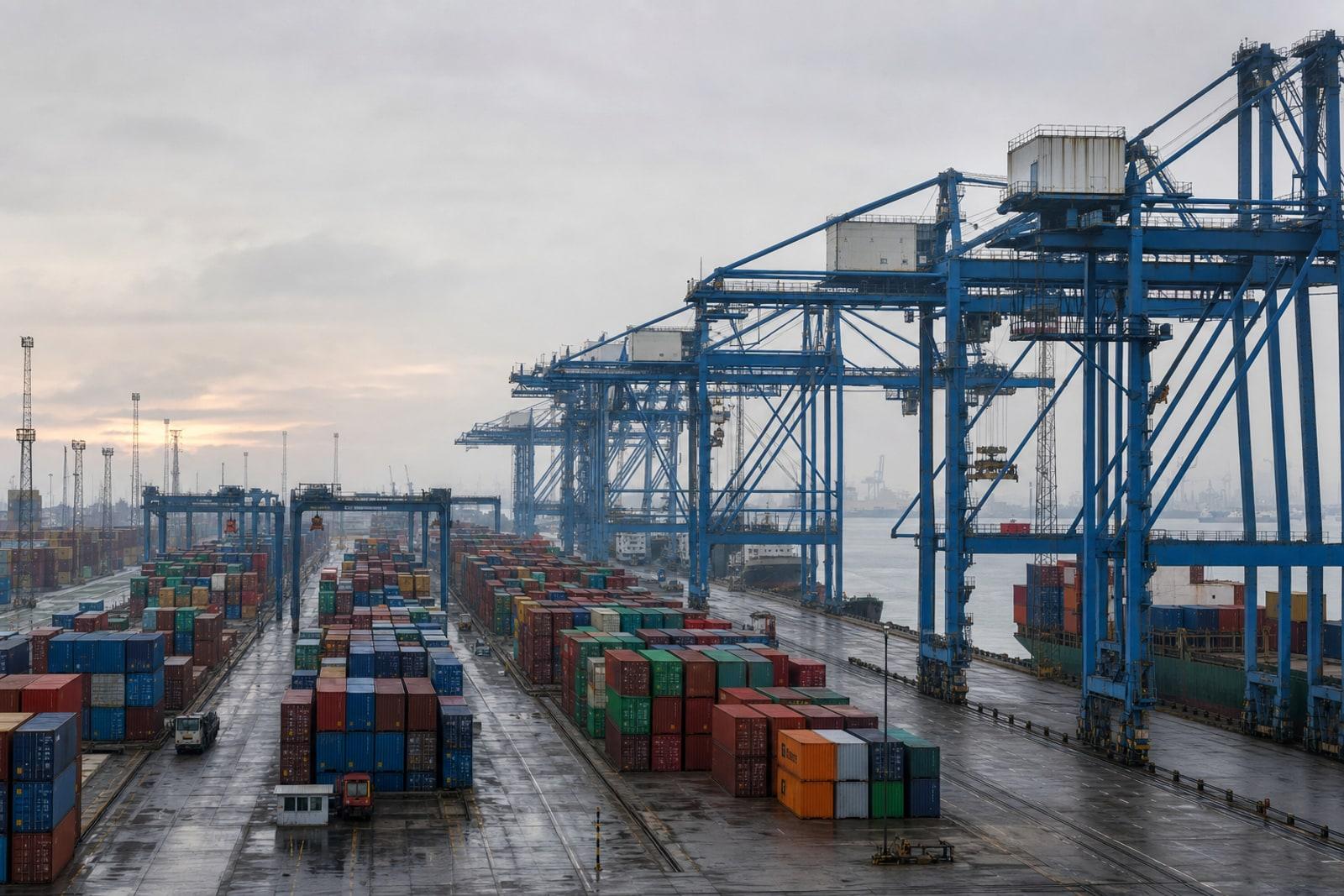
China escalated its trade confrontation with the United States on Monday, hitting 56 American companies with export restrictions and procurement bans in retaliation for the Pentagon's expanded blacklist of Chinese firms it accuses of serving Beijing's military. The measures, announced on 22 June 2026, are calibrated to signal displeasure without shattering a fragile truce between the world's two largest economies — but they land on sectors, from defence drones to rare earths, where the fallout reaches deep into global supply chains and Europe's open, export-reliant economies.
The action came through two separate ministries. China's Ministry of Commerce added 10 US firms to its export-control list, barring Chinese companies from selling them "dual-use" items with both civilian and military applications. Separately, the Ministry of Finance excluded 46 American companies from Chinese government procurement, naming units of major defence contractors.
Who is targeted, and how
The 10 firms placed under export controls are concentrated in military hardware and critical materials. They include drone makers Red Cat Holdings, Teal Drones and Jaia Robotics; radar and sensor specialist IMSAR; motor maker Aveox; Ball Aerospace & Technologies; Oshkosh Defense; and L3Harris Maritime Services. Notably, the list also names two rare-earth producers — MP Materials and USA Rare Earth — companies Washington has been backing to break China's grip on strategic minerals.
The 46 firms barred from government procurement are predominantly defence suppliers, including units of Lockheed Martin, Raytheon and General Dynamics. American-funded enterprises registered in China are exempt from the procurement ban, a carve-out that limits the immediate commercial damage and underscores the measures' signalling intent.
The Commerce Ministry said it had acted "in accordance with the relevant laws and provisions," framing the export curbs as defensive. In its statement, the ministry said the ban was issued to "safeguard national security and interests and fulfil international obligations such as non-proliferation."
Beijing described the US move as an "egregious act of adding to its so-called 'Chinese military enterprise list'."
The Pentagon trigger
The retaliation answers a US escalation earlier in June. On 8 June, the Pentagon expanded its Section 1260H list of "Chinese military companies operating in the United States," adding roughly 65 entities and bringing the roster to about 188. The additions swept in some of China's best-known corporate names — e-commerce group Alibaba, search giant Baidu, electric-vehicle and battery maker BYD, carmaker Nio and robotics firm Unitree among them.
The list, named for a provision of the 2021 US defence-authorisation act, requires the Pentagon to publish an annual roster of firms it deems linked to the People's Liberation Army or to China's military-civil fusion strategy. Under a later law, the Defense Department is barred from signing or renewing direct contracts with listed companies from 30 June 2026, with indirect contracting restrictions following a year on. The designation is reputational rather than an outright sales ban, but it carries weight with investors and partners.
The targeted Chinese firms rejected the label. Alibaba said there was no basis for its inclusion.
Alibaba is not a Chinese military company nor part of any military-civil fusion strategy. We will take all available legal action against attempts to misrepresent our company.
A truce under strain
The tit-for-tat unfolds inside a trade detente that both governments have an interest in preserving. President Donald Trump and President Xi Jinping met in Busan, South Korea, in late October 2025, agreeing to a truce that saw Washington suspend additional and heightened reciprocal tariffs until 10 November 2026 and trim some fentanyl-related duties. In return, Beijing suspended the sweeping global rare-earth export controls it had unveiled on 9 October 2025 and agreed to issue general licences for rare earths, gallium, germanium, antimony and graphite. The two leaders met again in Beijing in May 2026.
Analysts read Monday's measures as a controlled response — a way for Beijing to register its objection to the Pentagon list while leaving the broader bargain intact. The exemptions, the modest commercial reach of the targeted firms and the absence of fresh tariffs all point to managed escalation rather than rupture.
Why Europe and Luxembourg should watch
The inclusion of rare-earth miners is the detail with the longest reach. China processes an estimated 90% of the world's rare earths and dominates the supply of related strategic materials — the inputs behind electric vehicles, wind turbines, electronics and precision-guided weapons. When Beijing tightens these taps, the shock travels well beyond Washington.
European industry is acutely exposed. Research by the European Central Bank found that more than 80% of large European firms sit no more than three intermediaries away from a Chinese rare-earth producer, and that most had not built up stockpiles. The International Energy Agency reported that some rare-earth prices in the EU ran up to six times higher after the 2025 restrictions. The European Parliament has flagged the bloc's dependence as a strategic vulnerability for its digital, green and defence industries; the EU's Critical Raw Materials Act is the bloc's attempt to diversify, but alternatives take years to build.
For a small, hyper-open economy such as Luxembourg — embedded in EU industrial and financial value chains — the transmission is indirect but real. A trade war that rattles supply chains, lifts input costs and unsettles markets does not stop at the borders of the principals. Each new round of retaliation, however symbolic, narrows the room for the truce that has so far kept the worst-case scenarios at bay.
Frequently asked
- How many US companies did China target and through what mechanisms?
- China targeted 56 US firms on 22 June 2026: the Commerce Ministry added 10 to its export-control list, barring Chinese 'dual-use' exports to them, while the Finance Ministry barred 46 from Chinese government procurement. US-funded firms registered in China are exempt from the procurement ban.
- Why did China take these measures?
- Beijing called it retaliation for the Pentagon's early-June 2026 expansion of its Section 1260H list of 'Chinese military companies' to about 188 entities, which added firms such as Alibaba, Baidu and BYD. China said it acted to 'safeguard national security' and meet non-proliferation obligations.
- Why does this matter for Europe and Luxembourg?
- Two rare-earth miners are on the list, and China processes roughly 90% of the world's rare earths. ECB research found over 80% of large European firms are within three intermediaries of a Chinese rare-earth supplier, so supply-chain and market shocks transmit to open EU economies such as Luxembourg's.
- Does this end the US-China trade truce?
- Analysts view the measures as calibrated rather than a rupture. The truce agreed at the October 2025 Trump-Xi summit suspended additional US tariffs until 10 November 2026 and saw China ease rare-earth controls; the carve-outs and absence of new tariffs suggest both sides aim to preserve it.
Sources(10)
- 1China adds 10 US firms, including rare-earth miner, to export control listAl Jazeera · aljazeera.com
- 2China adds 10 US firms to export control list, restricts 46 from government procurementSouth China Morning Post · scmp.com
- 3China announces sanctions on 10 US companies as trade tensions flareEuronews · euronews.com
- 4China imposes trade curbs on dozens of U.S. firms in retaliation for Pentagon blacklistCNBC · cnbc.com
- 5Alibaba, Baidu, BYD named on Pentagon's China military listCNBC · cnbc.com
- 6Pentagon Adds 65 New Entities to the 1260H List of Chinese Military CompaniesWilmerHale · wilmerhale.com
- 7Fact Sheet: President Donald J. Trump Strikes Deal on Economic and Trade Relations with ChinaThe White House · whitehouse.gov
- 8China's rare-earth export restrictionsEuropean Parliamentary Research Service (European Parliament) · europarl.europa.eu
- 9Global implications of export controls on rare earths (Occasional Paper Series No. 384)European Central Bank · ecb.europa.eu
- 10With new export controls on critical minerals, supply concentration risks become realityInternational Energy Agency · iea.org
Related by topic