Obituary
Alan Greenspan, Fed chair who shaped the modern financial era, dies at 100
The longest-serving modern chairman of the US Federal Reserve, hailed as 'the maestro' and later blamed for the build-up to the 2008 crisis, died at his Washington home of Parkinson's complications.
By Jonas Thill · · 5 min read
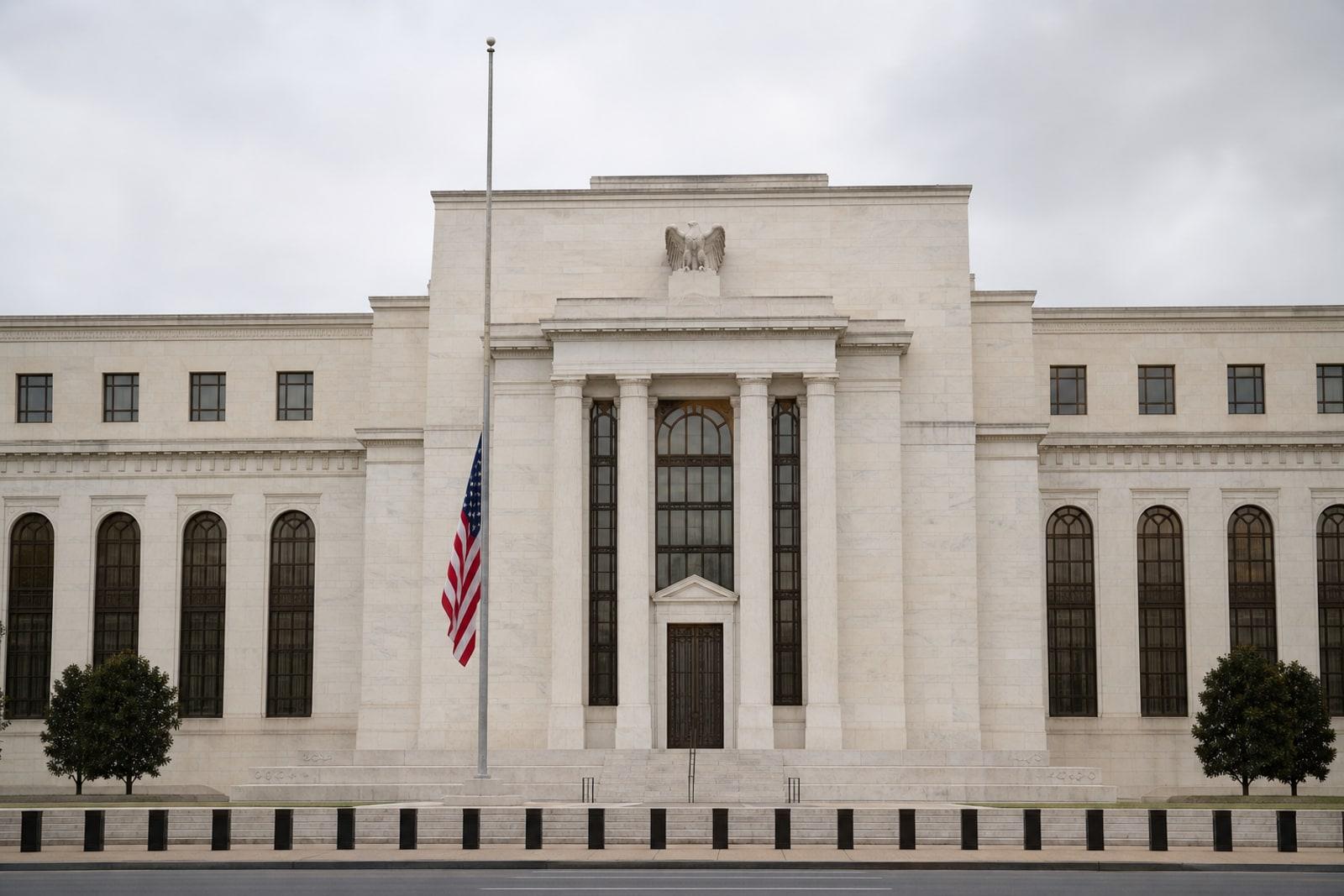
Alan Greenspan, the American economist who ran the US Federal Reserve for more than 18 years and became the most influential central banker of the globalisation era, died on Monday at his home in Washington. He was 100.
His wife of 29 years, the NBC News correspondent Andrea Mitchell, said he died of complications from Parkinson's disease, describing him as "a giant of a man who helped shape the U.S. economy for decades under presidents of both parties." His death was reported by NPR, CNBC, NBC News, CNN and Al Jazeera, among others.
Few unelected officials have shaped the financial world that Luxembourg's banks and funds inhabit as decisively as Greenspan. From 1987 to 2006 he set the price of money for the world's largest economy, and in doing so helped entrench a model of central banking — independent, inflation-conscious and trusted to steady markets — that still frames how the European Central Bank and its peers operate today.
The maestro years
Appointed by Ronald Reagan in August 1987 and reappointed under George H.W. Bush, Bill Clinton and George W. Bush, Greenspan was the 13th chairman of the Federal Reserve and served five terms. His tenure began in crisis: within weeks, the stock market crashed on Black Monday, 19 October 1987, when the Dow Jones index fell about 22 percent in a single day. The Fed's swift pledge of liquidity is widely credited with preventing a wider collapse and set the template for his reputation as a calming hand.
Over the following two decades he steered policy through the long expansion of the 1990s, the 1997-98 Asian and Russian crises, the 2000 dot-com bust and the aftermath of the 11 September 2001 attacks. His often impenetrable testimony spawned the term "Fedspeak," and the journalist Bob Woodward titled a 2000 book on him simply Maestro. Markets came to believe the Fed would always cut rates to cushion falling asset prices — a perception nicknamed the "Greenspan put."
Born in New York City on 6 March 1926, Greenspan studied clarinet and saxophone at the Juilliard School and briefly toured in a swing band before turning to economics. In the 1950s he fell into the orbit of the novelist Ayn Rand and her free-market philosophy, a worldview that shaped his lifelong scepticism of regulation. He chaired the Council of Economic Advisers under President Gerald Ford in the mid-1970s before taking the Fed job that would define him.
'Irrational exuberance'
His most quoted line came not as a directive but as a question. In the Francis Boyer Lecture at the American Enterprise Institute in Washington on 5 December 1996, he wondered aloud whether soaring markets had run ahead of reality.
But how do we know when irrational exuberance has unduly escalated asset values, which then become subject to unexpected and prolonged contractions as they have in Japan over the past decade?
The two words "irrational exuberance" jolted global markets overnight and entered the financial lexicon. Yet Greenspan largely declined to lean against the very bubbles he had named, arguing it was easier and safer to clean up after a crash than to identify and deflate a boom in advance — a doctrine that would later be sharply contested.
A contested legacy
Greenspan stepped down in January 2006, handing over to Ben Bernanke. Within two years the deregulated, credit-fuelled system over which he had presided buckled into the worst financial crisis since the Great Depression. In 2011 the bipartisan Financial Crisis Inquiry Commission concluded that the meltdown was triggered in part by his failure to rein in trading in subprime-mortgage securities and by his promotion of financial deregulation.
Greenspan himself offered a rare admission. Testifying before the House Committee on Oversight and Government Reform on 23 October 2008, under questioning from chairman Henry Waxman, he conceded that his faith in the self-correcting power of markets had been misplaced. "Yes, I found a flaw," he said. "I don't know how significant or permanent it is, but I've been very distressed by that fact." He told the committee he had been in a state of "shocked disbelief" that banks had not better protected their own shareholders.
For admirers, the crisis did not erase the achievement of two decades of low inflation and steady growth. "He was a great central banker who helped lead his country through almost two decades of prosperity," Bernanke said in tribute. "We are still learning from him, even if he is no longer with us." The Federal Reserve said his "contributions to monetary policy and economic thought left a lasting mark on this institution."
The framework that outlived him
Greenspan's deeper legacy is the framework rather than any single decision: the now near-universal belief that an independent central bank, focused on price stability and ready to act in a panic, is the keystone of a modern economy. That consensus matured alongside the creation of the euro and the European Central Bank, and it underpins the rules-bound, globally interconnected finance on which Luxembourg's outsized financial centre depends.
The Grand Duchy is now Europe's largest investment-fund domicile and the second-largest in the world after the United States, with net assets under management of roughly €8.3 trillion in 2025 and funds distributed in more than 70 countries, according to the Association of the Luxembourg Fund Industry. That cross-border architecture — capital moving freely under the watch of trusted central banks — is in large part the world Greenspan helped build.
He was awarded the Presidential Medal of Freedom by George W. Bush in 2005 and an honorary British knighthood in 2002. Greenspan is survived by his wife, Andrea Mitchell.
Frequently asked
- When and how did Alan Greenspan die?
- He died on Monday 22 June 2026 at his home in Washington, aged 100, from complications of Parkinson's disease, according to his wife, NBC News correspondent Andrea Mitchell.
- How long did Greenspan lead the Federal Reserve?
- He was the Fed's 13th chairman, serving roughly 18½ years from August 1987 to January 2006 across five terms, appointed by Reagan and reappointed under George H.W. Bush, Clinton and George W. Bush.
- Why is his legacy contested?
- He oversaw two decades of growth and low inflation, but his low rates and support for deregulation were later blamed for helping set up the 2008 financial crisis; the 2011 Financial Crisis Inquiry Commission cited his failure to curb subprime-securities trading.
- What does Greenspan have to do with Luxembourg?
- There is no direct personal link, but Greenspan entrenched the independent, inflation-focused central-banking model that frames the ECB and the open global finance underpinning Luxembourg's fund industry, Europe's largest with about €8.3 trillion under management in 2025.
Sources(10)
- 1Alan Greenspan, the legendary former Federal Reserve chair, diesNPR · npr.org
- 2Alan Greenspan, former chairman of the Fed, dies at age 100CNBC · cnbc.com
- 3Former US Federal Reserve Chairman Alan Greenspan dies at age 100Al Jazeera · aljazeera.com
- 4Alan Greenspan, economist and longtime head of the Federal Reserve, dies at 100NBC News · nbcnews.com
- 5Alan Greenspan, former head of Federal Reserve, dies at 100CNN Business · cnn.com
- 6Speech: The Challenge of Central Banking in a Democratic Society (Francis Boyer Lecture)Federal Reserve Board (primary source) · federalreserve.gov
- 7The Financial Crisis and the Role of Federal Regulators (hearing transcript, 23 Oct 2008)U.S. Government Publishing Office (primary source) · govinfo.gov
- 8Greenspan admits 'flaw' in ideologyAl Jazeera · aljazeera.com
- 9'We are still learning from him': Tributes to Alan Greenspan recall former Fed chairman's impactYahoo Finance · finance.yahoo.com
- 10Luxembourg: The global fund centre / Year in figuresAssociation of the Luxembourg Fund Industry (ALFI) · alfi.lu
Related by topic