Cultural diplomacy
Luxembourg locks in three more years on Eurovision's stage
The government has approved publicly funded entries for 2027, 2028 and 2029, extending a costly comeback into a multi-year bet on Europe's biggest cultural platform.
By Tom Schmit · · 4 min read
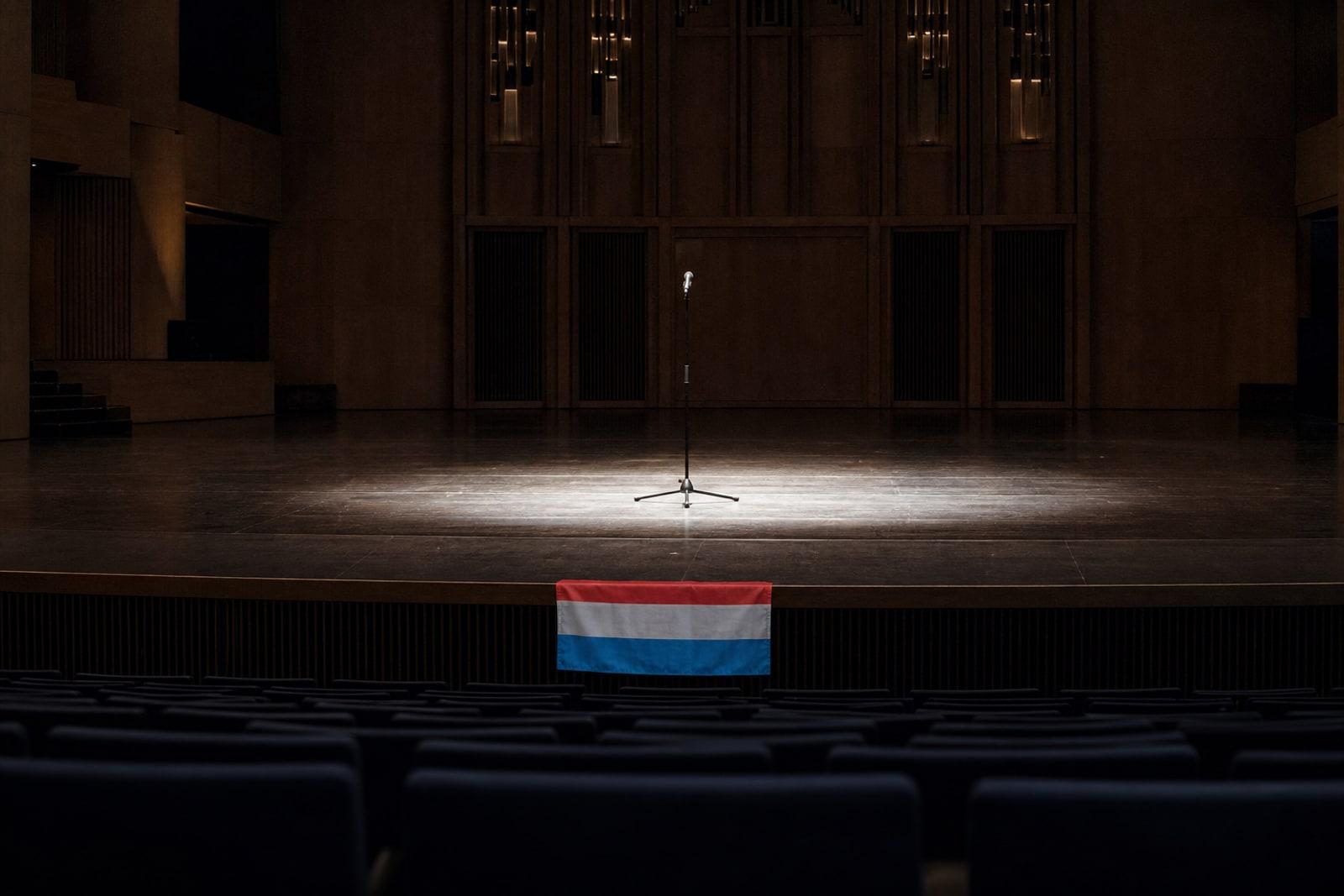
Luxembourg has committed to compete in the next three Eurovision Song Contests, turning a one-off comeback into a multi-year, publicly funded fixture on Europe's most-watched cultural stage. The government approved participation in the 2027, 2028 and 2029 editions on 16 June, with state money attached to the pledge through the end of the decade, according to RTL Luxembourg and contest trade outlets.
The decision settles months of uncertainty over whether the Grand Duchy would stay in the contest after a disappointing 2026, and locks in a national project that only resumed two years ago following a 31-year absence. RTL Luxembourg, the commercial broadcaster that organises the country's entry, welcomed the move.
RTL Luxembourg welcomes the decision of the Government to approve Luxembourg's participation in the Eurovision Song Contest for the next three editions.
The broadcaster framed the funding as a matter of continuity rather than a victory lap. "This decision provides the visibility and stability needed to continue developing the Eurovision project in Luxembourg and to strengthen the country's presence on the European music scene," RTL said in its statement.
A taxpayer-backed return
Luxembourg is one of Eurovision's founding nations and a five-time winner, with titles in 1961, 1965, 1972, 1973 and 1983. But it withdrew after 1993 and stayed away for a generation, citing cost. Its 2024 return — the first entry in 31 years — was an expensive undertaking: the inaugural national selection and campaign were reported at a budget of more than 1.1 million euros, covering production, promotion and travel to the host city, Malmo. RTL said it made no profit, with an estimated 125,000 euros reinvested into the following year's contest.
That comeback was underwritten by a government funding agreement covering 2023 to 2026. The new commitment effectively renews and extends that arrangement for a further three years. Officials have not published a figure for the latest tranche of support, and the exact public cost of the 2027-2029 pledge has not been disclosed.
The political groundwork was laid weeks earlier. Speaking before the Chamber of Deputies in May, Prime Minister Luc Frieden signalled that the government would again back participation, praising what he called the "excellent collaboration between RTL and Rockhal" in running the selection and stressing that the aim was to give Luxembourgish artists a genuine lift.
Luxembourg remains committed to participating in the Eurovision Song Contest in the future.
Members of the Luxembourg delegation have been careful to separate the funding question from results, indicating that the government's support does not hinge on how the country places — a notable stance given the 2026 outcome.
How the act is chosen
Luxembourg selects its representative through a televised national final, the Luxembourg Song Contest, organised by RTL. The fourth edition, which will choose the act for Eurovision 2027, is scheduled for Saturday 30 January 2027 at the Rockhal in Esch-Belval, the country's main concert venue. RTL said details of the format and the call for applications would be announced in July.
The 2027 contest — the 71st edition — is due to be staged in Bulgaria. Luxembourg's recent record has been mixed:
- 2024: Tali, with "Fighter," reached the grand final and finished 13th with 103 points.
- 2025: Laura Thorn, with "La poupee monte le son," qualified from the semi-final and placed 22nd with 47 points.
- 2026: Eva Marija, with "Mother Nature," failed to qualify, the country's first non-qualification since its return.
Why a small country pays to play
For a nation of about 670,000 people, the appeal is reach. Eurovision is among the largest live entertainment events in the world, and the platform is vast relative to Luxembourg's size. The European Broadcasting Union, which runs the contest, said the 2025 edition in Basel reached 166 million people across 37 public-service markets, three million more than the previous year. The grand final drew a 47.7 percent average audience share — the highest since 2004 — rising to 60.4 percent among viewers aged 15 to 24.
That audience is the soft-power case. Three minutes on the Eurovision stage puts a country's name, language and music industry in front of an audience no advertising budget of comparable scale could buy, and supporters argue it nurtures a domestic music scene that had little international shop window before 2024. Critics counter that the returns are hard to measure and that the bill ultimately falls on the public purse.
By committing to 2029, Luxembourg has chosen to treat Eurovision less as an annual gamble and more as standing cultural infrastructure — a recurring line in the cultural budget rather than a question reopened each spring. The next test of that bet comes in Esch-Belval in January, when the search for the 2027 entry begins in earnest.
Frequently asked
- Which Eurovision editions has Luxembourg committed to?
- The government approved participation in the 2027, 2028 and 2029 contests, confirmed on 16 June 2026, with state funding to support the commitment through 2029.
- Who pays for Luxembourg's Eurovision campaign?
- It is publicly funded. The state approved the money and RTL Luxembourg organises the entry. The 2024 return was reported at more than 1.1 million euros; the amount for 2027-2029 has not been made public.
- How does Luxembourg choose its act?
- Through a televised national final, the Luxembourg Song Contest, organised by RTL. The next edition is set for 30 January 2027 at the Rockhal in Esch-Belval.
- How has Luxembourg performed since returning in 2024?
- Tali finished 13th in 2024 and Laura Thorn 22nd in 2025, both reaching the final; in 2026 Eva Marija failed to qualify, the country's first non-qualification since its comeback.
Sources(10)
- 1Luxembourg: Eurovision Participation Confirmed for Next Three EditionsEurovoix · eurovoix.com
- 2Luxembourg government secures Eurovision participation for next three editionsESCToday · esctoday.com
- 3RTL Luxembourg confirms participation at Eurovision 2027ESCToday · esctoday.com
- 4Luxembourg Song Contest 2027 Set for January at RockhalChronicle.lu · chronicle.lu
- 5Luxembourg intends to participate at Eurovision 2027ESCToday · esctoday.com
- 6Luxembourg: Continued Eurovision Participation Dependent on Government Funding DecisionEurovoix · eurovoix.com
- 7Luxembourg: With a budget of more than a million euros to Eurovision 2024!Eurovision Fun · eurovisionfun.com
- 8Luxembourg in the Eurovision Song ContestWikipedia · en.wikipedia.org
- 9Eurovision Song Contest 2025: Record-breaking reach as world's largest music event unites global audiencesEuropean Broadcasting Union · ebu.ch
- 10Luxembourg at the Eurovision Song ContestGovernment of Luxembourg (public.lu) · luxembourg.public.lu
Related by topic