Migration & the EU
EU Hosts Taliban in Brussels for First Talks on Returning Rejected Afghans
A five-member Taliban delegation met EU officials behind closed doors to negotiate the readmission of Afghans the bloc wants to deport — the first such engagement since the group seized power in 2021.
By Camille Reuter · · 4 min read
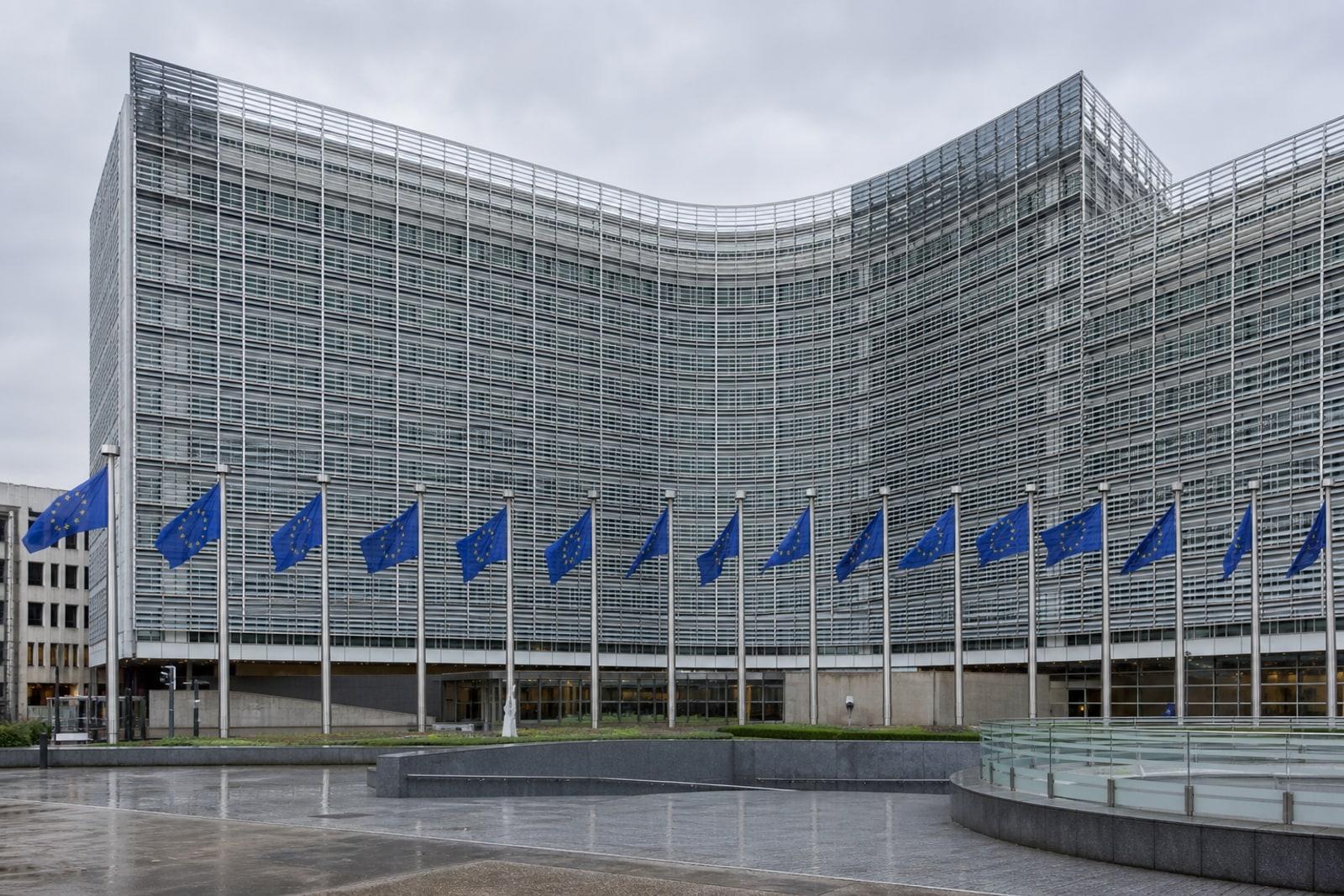
For the first time since the Taliban swept back to power in Kabul nearly five years ago, the movement's envoys sat down with European Union officials in Brussels on Tuesday — not to discuss recognition, but to negotiate the return of Afghans the bloc no longer wants. The closed-door meeting, the first the EU has hosted with the group since 2021, marked an engagement with a government no European state recognises that would have been unthinkable a year ago.
A five-member Taliban delegation led by Abdul Qahar Balkhi, a spokesman for the Foreign Ministry in Kabul, travelled to the Belgian capital via Turkey after Belgium's foreign ministry issued one-day visas on Monday afternoon, valid for Belgian territory only and not across the Schengen area, according to Al Jazeera and Agence France-Presse. Because neither the EU nor Belgium recognises the Taliban administration, the talks were not held on official premises.
What is — and isn't — on the table
The European Commission, which convened the meeting under migration commissioner Magnus Brunner, framed the discussions narrowly: the "return and readmission" of Afghan nationals who have no legal right to remain in the EU, with an initial focus on people convicted of serious crimes or deemed security threats. Commission spokesman Markus Lammert said "the focus for member states is very much on persons who have committed serious crimes or who pose a security threat."
The Taliban side described a wider agenda. In its own statement, relayed by NPR, the delegation spoke of restarting "broad-range consular services for Afghans in the EU zone," of "trust-building measures" and of a "dignified return process" — language that hints at the diplomatic normalisation the movement craves and the EU says it will not grant.
It's no option not to talk to these people in order to improve the situation.
That was how Brunner defended the outreach, telling reporters earlier this month that engagement was "not tantamount to recognising the Taliban regime." Belgium drew the same line. Foreign Minister Maxime Prévot said that hosting the meeting "does not amount to recognition, does not amount to legitimacy, and does not constitute an invitation by the Belgian government."
The states driving the push
The Brussels talks follow a letter last year in which around 20 of the EU's 27 member states signalled interest in deporting Afghans without a right to stay. Between 2013 and 2024, Afghans filed roughly one million asylum applications in the EU, of which about half were granted, according to figures cited by Euronews and Al Jazeera.
- Germany has already resumed removals, deporting more than 100 Afghans with criminal convictions since 2024.
- The Netherlands sent its own official to the Brussels meeting, signalling its appetite for a coordinated EU channel rather than bilateral deals.
The diplomacy runs alongside a broader hardening of EU law. On 1 June, the Council and the European Parliament struck a political deal on a new Common European System for Returns, creating a "European Return Order," wider grounds for detention and the possibility of "return hubs" outside the bloc. Crucially, the text permits readmission arrangements with "non-recognised third country entities" — a provision that, in practice, clears the way for exactly the kind of cooperation now under way with Kabul.
Legal and human-rights objections
Rights groups reacted with alarm, arguing the EU is breaching the principle of non-refoulement — the ban on returning people to places where they face serious harm.
"Any EU engagement on deportations to Afghanistan is reckless, dangerous and ignores the EU's own legal obligations," said Eve Geddie, director of Amnesty International's European Institutions Office. Amnesty points to a humanitarian crisis in which some 22 million people need assistance, alongside the Taliban's documented repression of women and girls, arbitrary arrests and torture.
Human Rights Watch was equally blunt. "EU countries are undermining their credibility by condemning Taliban abuses and pursuing accountability on one hand, while cooperating with the Taliban to forcibly return Afghans on the other," said Fereshta Abbasi, the group's Afghanistan researcher. Critics note the contradiction of negotiating returns with a movement whose treatment of women the EU itself has described as systematic persecution.
Why it reaches Luxembourg
For Luxembourg, the negotiations are not a distant Brussels affair. As an EU member, the Grand Duchy is bound by the common returns framework now taking shape, and any readmission channel agreed with Kabul would in principle be open to all 27 governments. Luxembourg has historically positioned itself among the more rights-conscious member states: when Parliament approved its position on the returns regulation in March, only a handful of centre-right EPP lawmakers — from Luxembourg, Belgium, Ireland and Finland — broke ranks to oppose or abstain.
That leaves the country in a familiar bind. It is legally tied to a policy its own representatives have questioned, and to a precedent — direct dealings with a pariah regime in the name of migration control — that reaches every capital in the bloc. Tuesday's meeting produced no formal agreement, and EU officials stressed it was a first, technical contact. But the threshold has been crossed: the EU is now talking to the Taliban about sending Afghans back, and the legal machinery to act on those talks is already being built.
Frequently asked
- Did the EU formally recognise the Taliban by holding these talks?
- No. Both the European Commission and the Belgian government stressed that hosting the delegation does not amount to recognition or legitimacy. Migration commissioner Magnus Brunner said the contact was 'not tantamount to recognising the Taliban regime,' and the meeting was deliberately held off official premises.
- Who was at the table in Brussels?
- On the EU side, officials from the European Commission's migration services convened the meeting; the Taliban delegation of five was led by Abdul Qahar Balkhi, spokesman for the Foreign Ministry in Kabul. A Dutch official also attended, reflecting member-state interest in a coordinated returns channel.
- How does this affect Luxembourg?
- As an EU member, Luxembourg is bound by the bloc's new common returns framework agreed on 1 June 2026, which permits readmission arrangements with non-recognised entities such as the Taliban. Luxembourg MEPs were among the few who opposed or abstained on the returns bill, but the country remains legally tied to the common policy.
- Why do human-rights groups oppose returns to Afghanistan?
- Amnesty International and Human Rights Watch argue that deportations would violate the non-refoulement principle — the ban on returning people to danger — given Afghanistan's humanitarian crisis, with about 22 million people needing assistance, and the Taliban's documented repression of women, arbitrary arrests and torture.
Sources(9)
- 1EU to hold migration meeting with Taliban officials in BrusselsAl Jazeera · aljazeera.com
- 2Afghan Taliban hold first, closed-door talks with EU on deportationsNPR / Associated Press · npr.org
- 3Afghan Taliban set for EU migration talks slammed by rights groupsFrance 24 / AFP · france24.com
- 4No option but to talk to Taliban about migrant returns, EU's migration commissioner saysEuronews · euronews.com
- 5EU must abandon Afghanistan deportation plans and stop readmission talks with the TalibanAmnesty International · amnesty.org
- 6Dutch official joins EU talks with Taliban on return of rejected asylum seekersNL Times · nltimes.nl
- 7EU Parliament approves controversial bill to increase migrant returnsEuronews · euronews.com
- 8Commission welcomes political agreement on the Return RegulationEuropean Commission, DG Home Affairs · home-affairs.ec.europa.eu
- 9Council and Parliament reach deal on returns of illegally staying third-country nationalsCouncil of the EU (Consilium) · consilium.europa.eu
Related by topic