EU and the Middle East
Israeli operations destroyed €150m of EU-funded projects in Gaza and West Bank, investigation finds
A tally of EU and UN data says European taxpayers financed hospitals and water plants now in ruins — and that Israel has repaid nothing, as Brussels argues over how to respond.
By Camille Reuter · · 5 min read
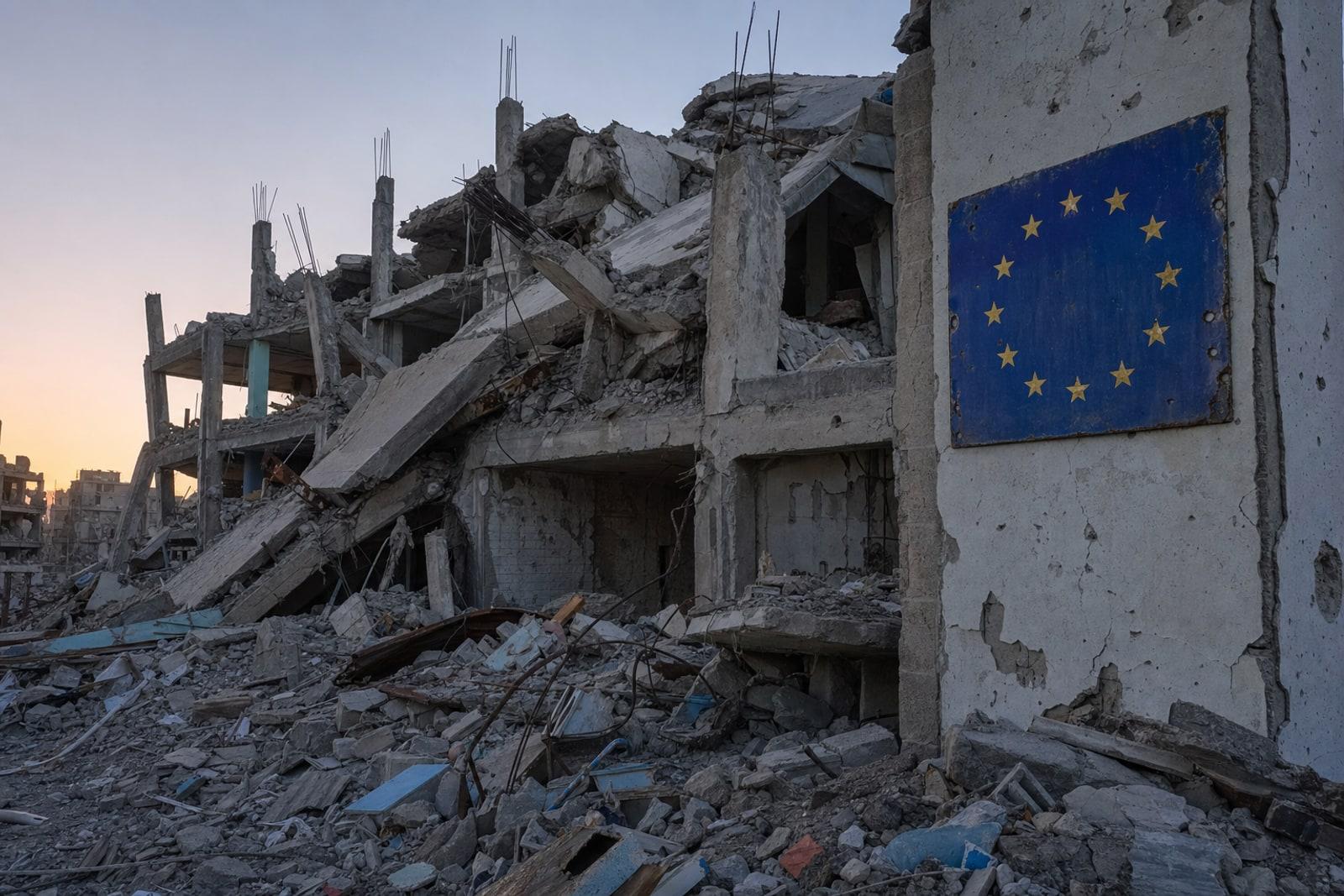
European taxpayers have spent years financing hospitals, water plants and schools for Palestinians. An investigation published this month estimates that Israeli military operations have reduced at least €150 million of that infrastructure to rubble since the Gaza war began — and that Brussels has not recovered a single euro.
The figure comes from a tally compiled by the Brussels news outlet EUobserver, published on 19 June, which drew together data from the European Union's diplomatic service and the United Nations rather than a single official report. It covers buildings and infrastructure financed by the EU and its member states in the Gaza Strip and the occupied West Bank that have been damaged or destroyed since Israel's offensive began on 7 October 2023.
The reporting lands at a delicate moment for European foreign policy, with member states openly split over how far to press Israel and what to do about money that came from their own budgets. It puts a concrete price on a long-running grievance: that the EU keeps rebuilding what Israeli forces knock down, and rarely sees the bill paid.
Hospitals and water plants in ruins
The single most expensive structure on the list is the Gaza European Hospital near Khan Younis, valued at €50.5 million. The referral hospital was built with an EU grant in the late 1980s and has been hit repeatedly during the war; an Israeli strike on its compound in May 2025 killed a senior Hamas commander and more than 20 other people.
The next-largest item is the Southern Gaza Seawater Desalination Plant in Deir al-Balah, together with its 18-kilometre pipeline, put at €30 million. Two further water and energy projects — a central desalination plant in Khan Younis and a "Gas for Gaza" pipeline, worth roughly €15 million each — were left unfinished when the fighting halted construction, according to the investigation.
- Gaza European Hospital, Khan Younis — about €50.5 million
- Southern Gaza desalination plant and pipeline, Deir al-Balah — about €30 million
- Central desalination plant and a gas pipeline — about €15 million each, left unfinished
- West Bank structures — 986 EU-funded buildings demolished over roughly 15 years to mid-2023, per UN data
Damage in the occupied West Bank predates the current war and has accelerated through it. UN figures cited in the investigation count 986 EU-funded structures demolished over roughly 15 years to mid-2023, and the European External Action Service has tracked the steady loss of EU- and member-state-funded schools, water points and homes there for years.
Brussels asks, Israel does not pay
European officials say they have raised the issue with Israel many times without result. A European Commission spokesperson, responding to the investigative outlet Follow the Money, said the bloc had pressed Israel directly.
Israel has been requested on several occasions in the past to return or compensate EU-funded assets that it demolished, dismantled or confiscated.
According to the reporting, the EU and European donors sent at least 16 joint letters to the Israeli government on the matter between 2017 and the end of 2022. Israel has never paid financial compensation. Some capitals cannot even quantify what they have lost: Germany said it had "no solid assessment" of the damage to German-financed projects in Gaza.
The destruction is a fraction of the wider toll. The World Bank estimated in April 2026 that the war had caused some $35.2 billion (about €30.6 billion) in physical damage across Gaza, while a joint EU-UN assessment put recovery and reconstruction needs above $71 billion — a sum that would dwarf any past European investment and raise the question of who rebuilds, and on what terms.
A union divided over how to respond
The money in rubble feeds directly into a harder political argument in Brussels: whether to start downgrading the EU's relationship with Israel. A review by the External Action Service, sent to member states in June 2025, concluded there were grounds for concern about Israel's conduct.
The review found "there are indications that Israel would be in breach of its human rights obligations under Article 2 of the EU-Israel Association Agreement," the 2000 pact that governs trade and political ties. It cited the blockade of humanitarian aid, strikes on hospitals, forced displacement, mass arrests, settlement expansion and settler violence.
Acting on that finding has proved far harder than producing it. Kaja Kallas, the EU's High Representative for foreign affairs who is steering the review, has voiced personal anguish over Gaza while acknowledging the limits of her leverage: "It is very painful for me to see the suffering. When I'm hearing that 50 people have been killed in the line for getting flour, it is painful, of course, I ask myself, what more can we do?"
In April 2026, Spain, Slovenia and Ireland pushed for a vote on suspending the agreement, but Germany and Italy blocked the move. Fully terminating the pact would require the unanimous backing of all 27 member states; lesser steps, such as paring back trade preferences, could in principle pass by a qualified majority, and UN experts have urged Brussels to suspend the deal as a "minimum requirement" under international law.
For now, the EU is left repeating a familiar pattern: financing Palestinian infrastructure, watching some of it destroyed, asking for redress that does not come — and debating, without resolution, whether European money should keep flowing while European credibility, and €150 million of European-built concrete, lies in the rubble.
Frequently asked
- Where does the €150 million figure come from?
- It is a tally published by EUobserver on 19 June 2026, compiling figures from the EU's External Action Service and the United Nations, covering EU- and member-state-funded structures damaged or destroyed in Gaza and the West Bank since 7 October 2023. It is a journalistic compilation of official data, not a single formal Commission report.
- Which projects were most affected?
- The largest losses were the EU-funded Gaza European Hospital near Khan Younis (about €50.5m) and the Southern Gaza Seawater Desalination Plant in Deir al-Balah with its 18km pipeline (about €30m). Two other water and gas projects worth roughly €15m each were left unfinished, and 986 EU-funded structures were demolished in the West Bank over about 15 years.
- Has Israel paid any compensation?
- No. A European Commission spokesperson said Israel had been asked repeatedly to return or compensate demolished EU-funded assets, and the EU sent at least 16 joint letters between 2017 and 2022, but no financial compensation has been paid.
- What is Brussels considering in response?
- An EEAS review found indications that Israel breached Article 2 of the EU-Israel Association Agreement. Options range from suspending the agreement (which needs unanimity) to scaling back trade preferences (possible by qualified majority), but member states such as Germany and Italy have resisted, leaving the EU divided.
Sources(10)
- 1Israel has bombed and bulldozed €150m of EU-funded buildings in Gaza and West Bank – but never paid back a centEUobserver · euobserver.com
- 2The EU has spent millions of euros on Palestinian infrastructure. Israel keeps knocking it downFollow the Money · ftm.eu
- 3Six-Month report on demolitions and confiscations of EU funded structures in the West Bank including East JerusalemEuropean External Action Service (EEAS) · eeas.europa.eu
- 4One Year Report on Demolitions and Seizures in the West Bank including East Jerusalem (1 January – 31 December 2023)European External Action Service (EEAS) · eeas.europa.eu
- 5EU review indicates Israel breached human rights in GazaEuronews · euronews.com
- 6EU report finds 'indications' that Israeli actions in Gaza violate cooperation dealThe Times of Israel · timesofisrael.com
- 7Germany and Italy block bid to suspend EU-Israel trade pactAl Jazeera · aljazeera.com
- 8UN experts call for immediate suspension of EU-Israel trade agreement as 'minimum requirement' under international lawUN OHCHR · ohchr.org
- 9Gaza needs more than $71 billion for recovery and reconstruction, EU-UN report saysEuronews · euronews.com
- 10Gaza European HospitalWikipedia · en.wikipedia.org
Related by topic