Financial centre
Belgium's wealthiest families keep €91 billion parked in Luxembourg
A Le Soir–De Tijd investigation finds 100 of Belgium's richest families hold stakes in 416 Luxembourg companies worth €91 billion, underlining the Grand Duchy's pull despite tax-transparency reform.
By Jonas Thill · · 4 min read
Some €91 billion of assets belonging to Belgium's wealthiest families sits inside Luxembourg companies, according to a joint investigation by the Belgian dailies Le Soir and De Tijd — a figure that confirms the Grand Duchy's status as the destination of choice for the country's richest dynasties, even after years of European pressure for greater tax transparency.
Published on 20 June and built on non-public corporate-registry data, the investigation found that 100 of Belgium's richest families control all or part of 416 Luxembourg companies, holding €91 billion in total assets between them. The 50 wealthiest families alone account for €85.5 billion of that sum. The reporters noted that the total exceeds the entire wealth Luxembourg produces in a single year — the Grand Duchy's annual economic output is in the region of €80–90 billion.
The numbers behind the headline
The €91 billion represents the combined value of the families' shareholdings, real estate, financial investments and other assets routed through the Grand Duchy. It is a striking jump on the last comparable count: an earlier Le Soir–De Tijd investigation in 2018, the so-called LuxFiles, found Belgian families held roughly €48 billion of equity capital — about €54 billion in total assets — in Luxembourg structures.
The wider dataset is broader still. The reporters identified around 9,800 Belgian nationals who fully or partly control some 11,200 Luxembourg companies, making Belgians the third most-represented nationality in the country's business registry, behind French nationals and Luxembourgers themselves.
- €91 billion in assets held by the 100 richest families across 416 companies
- €85.5 billion concentrated in the top 50 families
- 11,200 companies controlled by roughly 9,800 Belgians in total
- €54 billion held through pure letterbox structures
Holdings, funds and letterbox companies
For most of the largest families, the report says, scattered shareholdings are gathered into a single holding company to simplify management. The standard vehicle is the SOPARFI, or société de participations financières; purely private fortunes are often run through an SPF (société de gestion de patrimoine familial), alongside investment funds and Luxembourg life-insurance contracts that have long appealed to Belgian residents.
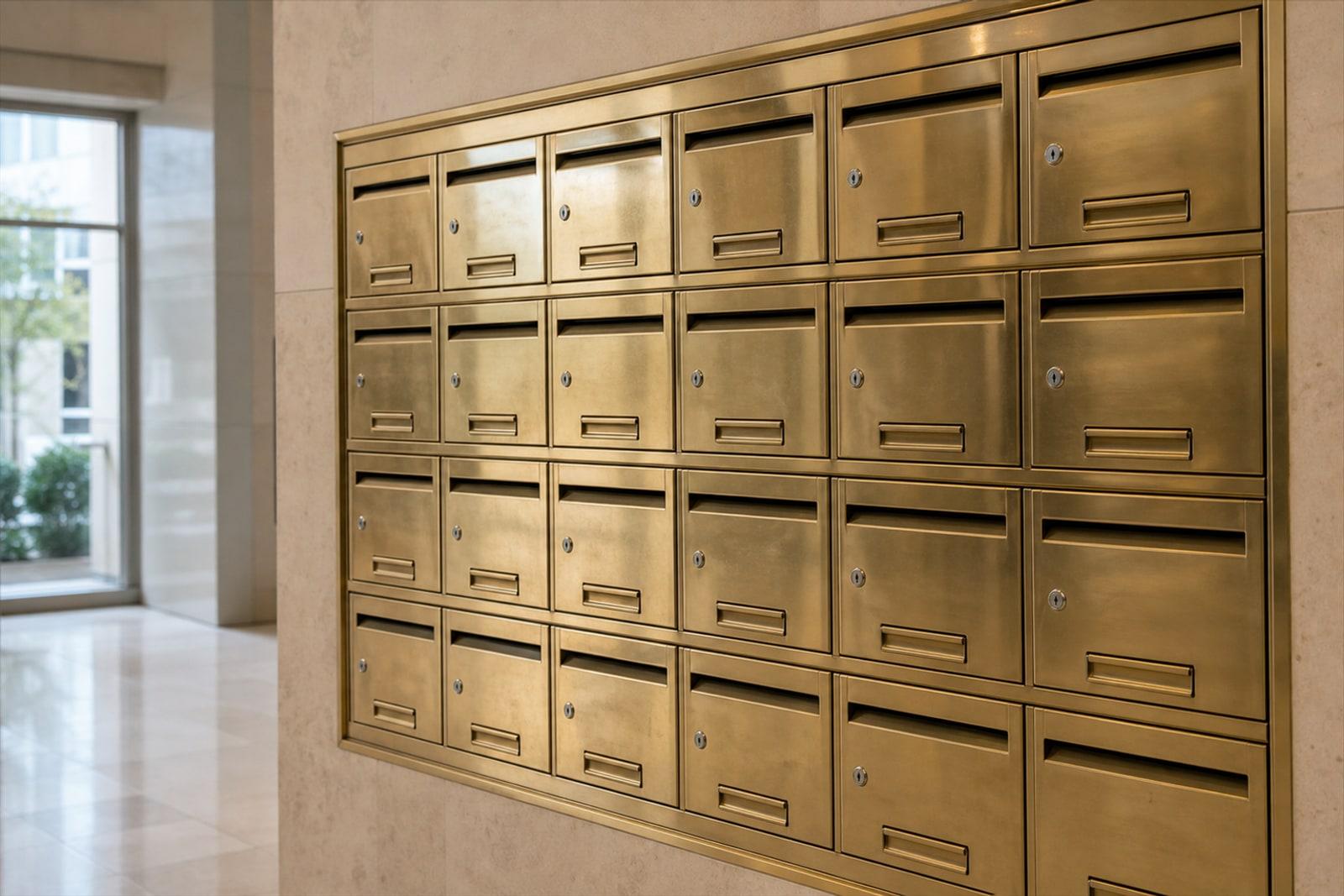
A significant share of the structures, however, have little physical presence. At least 307 of the 11,200 companies employ no staff and have no office in Luxembourg. Among the wealthiest families, just over half — 52 of them — use such letterbox companies, accounting for €54 billion on their own. De Tijd reported that nearly two-thirds of the 100 richest families, 64 in all, benefit from at least one Luxembourg company, frequently a shell used to hold cash, property and luxury assets.
The investigation is careful to stress that the arrangements are not necessarily illegal. They are used by a cross-section of Belgium's elite — executives, heirs, entrepreneurs and professionals — and persist, the reporters note, despite the corporate-tax reform that took effect in 2018.
Why Luxembourg still wins
The pull is largely fiscal. Luxembourg's participation-exemption regime — the local version of the EU parent-subsidiary rules — means dividends received from subsidiaries and capital gains on the sale of qualifying stakes can be fully exempt from tax, subject to threshold and holding-period conditions. Withholding tax on cross-border dividend flows can also be removed under the EU Parent-Subsidiary Directive. For families whose income is largely passive, that treatment is markedly more generous than Belgium's.
Luxembourg's tax legislation is more flexible when it comes to income from dividends and capital gains.
That assessment comes from Luc De Broe, a professor of tax law, who has also pointed out that companies can secure advance "rulings" from the Luxembourg authorities of a kind not available in Belgium. Among the families repeatedly linked to Luxembourg holdings in Belgian coverage are Wittouck (Artal), Van Damme (Patrinvest), de Spoelberch (Verlinvest), D'Ieteren (Arroyo), de Mévius (EPS), Colruyt, Roussis and Frère, several of them tied to the founding shareholders of the brewing giant AB InBev.
A defining feature of Luxembourg's economy
The picture is not static. Economic-substance requirements introduced through the EU's anti-tax-avoidance directive and the OECD's base-erosion project have raised the bar: tax advisers now warn that a holding company must show genuine activity in Luxembourg, not merely a registered address. A Belgian court in Ghent has already denied tax benefits to a SOPARFI that lacked real operations in the Grand Duchy, a sign that the era of the empty mailbox is under growing legal strain.
Even so, the headline number has risen, not fallen, since 2018. For Luxembourg, the figures are a reminder of how central private-wealth management remains to an economy that has built its prosperity on finance — and of why the country continues to attract the capital of its neighbours faster than transparency rules can redirect it.
Frequently asked
- Where does the €91 billion figure come from?
- From a joint investigation by the Belgian newspapers Le Soir and De Tijd, published on 20 June 2026, based on non-public corporate-registry data. It counts the assets of Belgium's 100 wealthiest families held across 416 Luxembourg companies.
- Are these Luxembourg structures illegal?
- No. The investigation stresses the arrangements are not necessarily illegal. They rely on Luxembourg's holding-company and tax regimes, though stricter EU and OECD economic-substance rules now require companies to show genuine local activity.
- What vehicles do the families use?
- Mostly holding companies — the SOPARFI is the standard vehicle — alongside family-wealth companies (SPF), investment funds and Luxembourg life-insurance contracts. Many are letterbox structures with no staff or office in the Grand Duchy.
- How does this compare with previous years?
- It is a sharp increase. A 2018 Le Soir–De Tijd investigation found Belgian families held about €48 billion of equity capital (€54bn in total assets) in Luxembourg, when 80% of the 50 richest families already had structures there.
Sources(7)
- 1Les 50 familles belges les plus riches détiennent 85,5 milliards d'euros d'actifs au LuxembourgLa Libre Belgique · lalibre.be
- 2Groei van ultrarijken versnelt wereldwijd; Luxemburg blijft magneet voor Belgische vermogensBusiness AM · businessam.be
- 3Des Belges (dont Yves Leterme) et leurs milliards dans des 'boîtes aux lettres' au LuxembourgRTBF · rtbf.be
- 4Les Belges les plus riches ont stocké 48 milliards d'euros au LuxembourgVRT NWS · vrt.be
- 5D'où vient la fortune des Belges les plus richesSolidaire · solidaire.org
- 6L'utilisation de la SOPARFI par des résidents belges et la montée en puissance de la substance économiqueLexgo.lu · lexgo.lu
- 7Luxembourg Life Insurance advantages for Belgium ResidentsSogelife · sogelife.com
Related by topic