Fuel taxation
Luxembourg moves to cut farm diesel and aid hauliers amid oil price shock
The government's €432.5m Resilienzpak hands farmers a 15-cent rebate on agricultural diesel and offers logistics firms up to 70% of their fuel overruns — all within EU limits.
By Marc Weber · · 5 min read
Luxembourg's government has moved to soften an energy-price shock for two of its most exposed sectors — farming and freight — adopting on 12 June a package of bills that cut fuel duties, compensate agricultural diesel and offer hauliers up to 70% of their excess fuel costs. The measures translate into law the Resilienzpak 2026, a tripartite accord signed four days earlier between the government, employers, trade unions and the Chamber of Agriculture.
The relief touches one of the Grand Duchy's most distinctive fiscal levers. Low fuel duties have long made Luxembourg a magnet for cross-border refuelling — the so-called Tanktourismus — and a heavy contributor to state revenue. Adjusting them, even temporarily, ripples through both the budget and the price gap that draws drivers from Germany, Belgium and France.
What the bills do
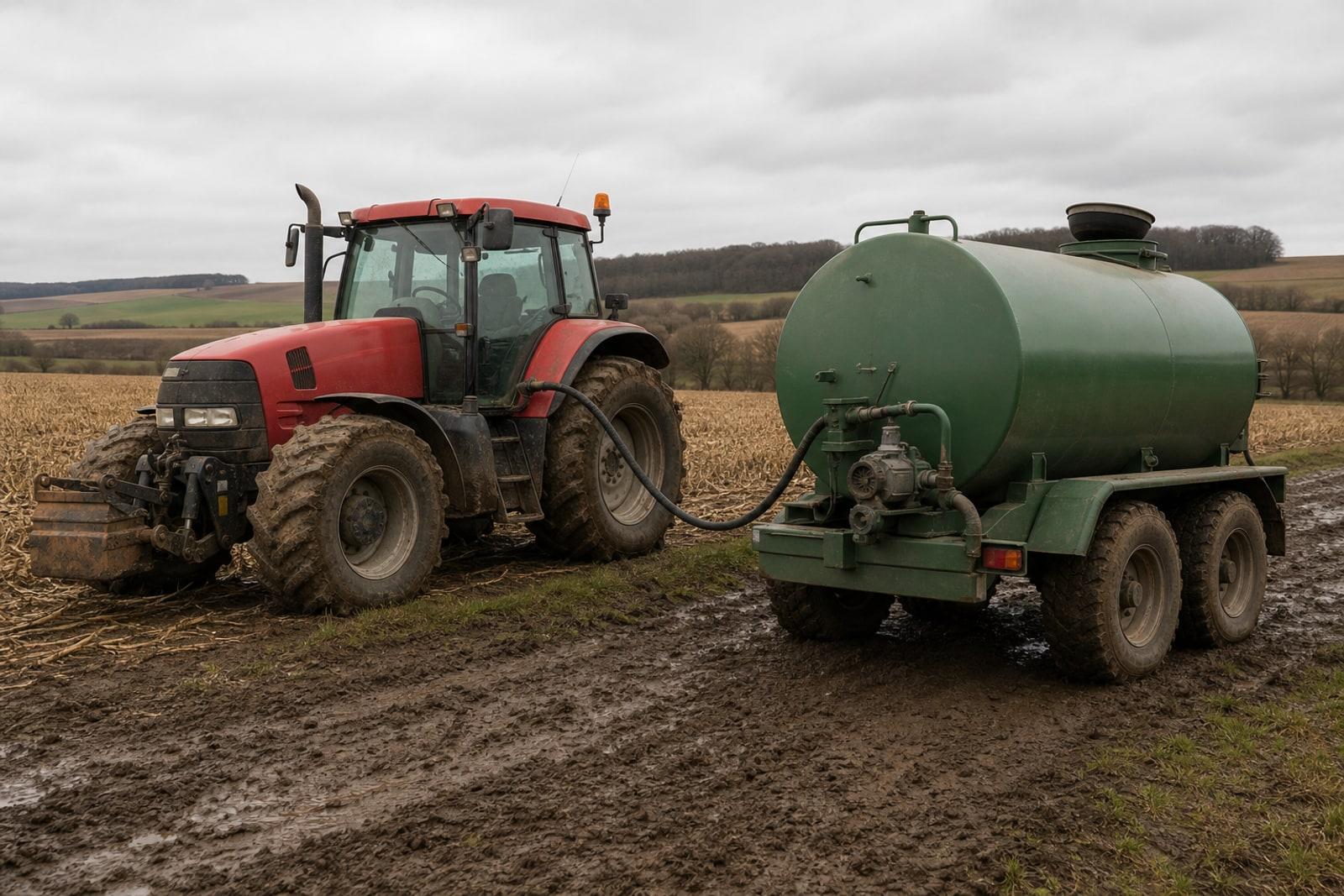
Three instruments matter most. A grand-ducal regulation cuts autonomous excise duties on unleaded petrol and road diesel by 5 cents a litre, including VAT, from 1 July to 31 December 2026. A second bill, amending a 2022 law, introduces a 15-cent-per-litre cash compensation from 1 August to 31 December on gasoil used as heating oil and on diesel used exclusively for agricultural, wine-growing, horticultural, fish-farming and forestry work — the agricultural-diesel relief at the heart of the farm package.
A third bill targets logistics directly. It sets up a temporary aid scheme reimbursing up to 70% of documented fuel cost overruns incurred between March and December 2026 by road and rail freight operators, and by passenger-transport firms that can prove losses on fixed, non-revisable contracts signed before the crisis. The government frames the scheme explicitly within the European Union's temporary state-aid rules, which run until the end of 2026.
The road-fuel rebate is conditional: it applies only while pump prices stay above their level of 1 February 2026. OGBL president Nora Back has noted that the cut may not activate at all if prices fall back — a hedge that ties the relief to the shock that prompted it rather than to a permanent giveaway.
A response to the Strait of Hormuz
The trigger is geopolitical. Since February 2026, the disruption of maritime traffic through the Strait of Hormuz amid the Middle East crisis has upended supply chains and lifted oil-product prices. The national statistics office STATEC warned of slower growth, higher inflation and rising unemployment, and the tripartite partners agreed a time-limited cushion rather than open-ended support.
By mid-June, an easing of the Iran situation had prompted questions over whether the measures were still warranted. Prime Minister Luc Frieden pushed back.
L'accord tripartite reste en vigueur, aussi parce que les effets de la guerre persisteront pendant un certain temps (inflation, prix de l'énergie).
The tripartite accord stays in force, the prime minister said on 16 June, because the effects of the war — inflation and energy prices — would persist for some time. The package was signed on 8 June after the Tripartite Coordination Committee met on 12 May and from 2 to 4 June; Frieden presented it to parliament the following day, and a committee is to review its implementation quarterly from October.
The price tag
Finance Minister Gilles Roth put the total cost of the Resilienzpak at €432.5 million — €180 million in 2026 and €252.5 million in 2027. Of the 2026 spending, anti-inflation energy rebates on electricity, fuel, gas and heating oil account for roughly €60 million, with agricultural aid adding about €5 million; a further €2.5 million of targeted farm support is earmarked for 2027.
Nous avons les marges financières nécessaires pour financer ces mesures.
"We have the financial margins necessary to finance these measures," Roth said, presenting the package. The accord was signed by the government, the employers' federation UEL, the OGBL-LCGB unions, the civil-service confederation CGFP and the Chamber of Agriculture.
How far Luxembourg can go
The Grand Duchy's room for manoeuvre is bounded by Brussels. The EU Energy Taxation Directive sets only minimum excise rates on fuels; member states are free to tax above them, and may apply a reduced "commercial diesel" rate for lorries over 7.5 tonnes, an option used by Spain, France, Belgium, Hungary and Slovenia. Luxembourg's duties sit well above the EU floor, leaving headroom for a temporary cut. The transport aid, meanwhile, must respect the EU crisis framework that caps compensation for energy-cost overruns in road, rail and inland-waterway transport at 70% — the very ceiling the Luxembourg scheme adopts.
Those constraints exist because the stakes are unusually large here. Non-resident drivers account for roughly two-thirds of Luxembourg's road-fuel consumption, according to OECD and International Energy Agency data, and Eurostat figures cited by the campaign group Transport & Environment show road-fuel deliveries per head near five times the EU average. Total fuel-tax revenue was about €1 billion in 2017, close to 5% of government income.
That dependence cuts both ways. With cross-border demand highly price-sensitive, raising duties tends to drive sales — and revenue — away. It is one reason Luxembourg keeps its pump prices competitive, and why even a modest, temporary relief for farmers and hauliers is calibrated as carefully against the budget as against Brussels.
What to watch
- Activation: whether oil prices stay high enough to trigger the conditional road-fuel rebate before it expires at end-2026.
- Parliament: the bills still need to pass the Chamber of Deputies, where the special tripartite committee began work in June.
- State aid: how the transport scheme is implemented within the EU's 70% ceiling and end-2026 deadline.
Frequently asked
- How much relief do farmers get on agricultural diesel?
- A cash compensation of 15 cents per litre, including VAT, on diesel used exclusively for agricultural, wine-growing, horticultural, fish-farming and forestry work, running from 1 August to 31 December 2026. The same rate applies to heating oil.
- What do logistics and transport firms receive?
- A temporary scheme reimburses up to 70% of documented fuel cost overruns incurred from March to December 2026 by road and rail freight operators, and by passenger-transport firms that can show losses on fixed, non-revisable pre-crisis contracts — within EU state-aid limits.
- Why is fuel taxation so sensitive in Luxembourg?
- Low duties draw heavy cross-border 'Tanktourismus': non-residents buy roughly two-thirds of the country's road fuel, and fuel taxes were about 5% of state revenue in 2017, so any change affects both the budget and the cross-border price gap.
- What limits how far Luxembourg can cut fuel taxes?
- The EU Energy Taxation Directive sets minimum excise rates Luxembourg must keep, and the transport aid must respect the EU's temporary state-aid framework, which caps fuel-overrun compensation at 70% and expires at the end of 2026.
Sources(10)
- 1Résumé des travaux du 12 juin 2026 (Conseil de gouvernement)Le gouvernement luxembourgeois · gouvernement.lu
- 2Resilienzpak 2026 (signature de l'accord tripartite, 8 juin 2026)Le gouvernement luxembourgeois · gouvernement.lu
- 3Le Resilienzpak va coûter 432,5 millionsPaperjam · paperjam.lu
- 4Tripartite : combien coûteront les mesures de l'accord ?Les Frontaliers · lesfrontaliers.lu
- 5Accord tripartite: Luc Frieden défend les mesures malgré la paix en IranL'essentiel · lessentiel.lu
- 6« Resilienzpak » : trois questions sur l'accord tripartite du 8 juin 2026Fondation IDEA · fondation-idea.lu
- 7Aides d'État : vers un soutien temporaire pour les entreprises des secteurs les plus touchés par la hausse des prix de l'énergieChambre de Commerce du Luxembourg · cc.lu
- 8Excise Duties on EnergyEuropean Commission – Taxation and Customs Union · taxation-customs.ec.europa.eu
- 9Fuelling oil demand: what happened to fuel taxation in EuropeTransport & Environment · transportenvironment.org
- 10OECD Economic Surveys: Luxembourg 2025 – Managing the green transitionOECD · oecd.org
Related by topic